About Our Firefly (Lightning Bug) Reading Worksheets
Fireflies, also known as lightning bugs, turn warm summer nights into glowing light shows. These small beetles produce their own light using bioluminescence, flashing patterns that look magical but serve very real purposes. Their soft glow helps them communicate, find mates, and warn predators to stay away. Even though they seem delicate, fireflies are full of surprising science.
Learning about fireflies introduces students to fascinating ideas about light, communication, and ecosystems. Fireflies connect land, water, and air as they grow, hunt, glow, and reproduce. Their life cycles show dramatic changes from glowing larvae to short-lived adults. Studying fireflies helps students understand how behavior, environment, and survival strategies work together.
Our firefly worksheets transform wonder into understanding through clear, engaging nonfiction passages. Each worksheet explores a different aspect of firefly life, from glowing communication to habitats, diets, and ecological roles. The readings build strong science vocabulary while strengthening comprehension and critical thinking. By the end, students will see fireflies as more than just pretty lights in the dark.
Meet the Worksheets
Nature's Tiny Lanterns
This worksheet introduces how fireflies create light through bioluminescence. Students learn how flashing helps fireflies communicate, attract mates, and warn predators. The passage connects firefly behavior to habitat needs and ecosystem health. A glowing firefly is actually sending important messages through light.
Shining Beetles
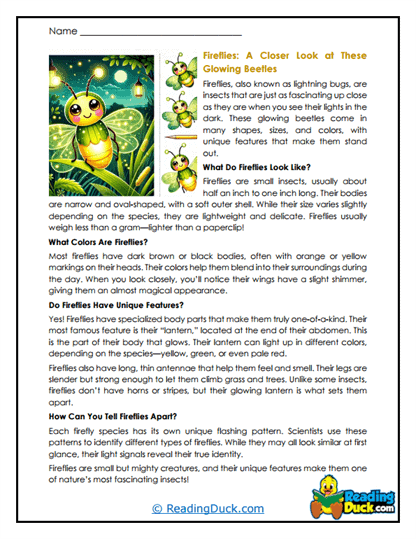
This worksheet explores the physical features that make fireflies unique beetles. Students learn about lantern-like organs, antennae, body shape, and color patterns. The reading helps connect appearance to camouflage and survival. Different firefly species glow in different colors.
Glow Habitats
This worksheet explains where fireflies live and why they prefer warm, humid environments. Students learn about forests, meadows, marshes, and grasslands. The passage highlights how light pollution threatens firefly habitats. Dark, healthy habitats help fireflies thrive.
What's on the Firefly's Menu?
This worksheet explains how firefly diets change as they grow. Students compare what larvae eat versus what adults eat or don't eat at all. The reading highlights fireflies' role in controlling pests. Firefly larvae are skilled nighttime hunters.
Twilight Lives
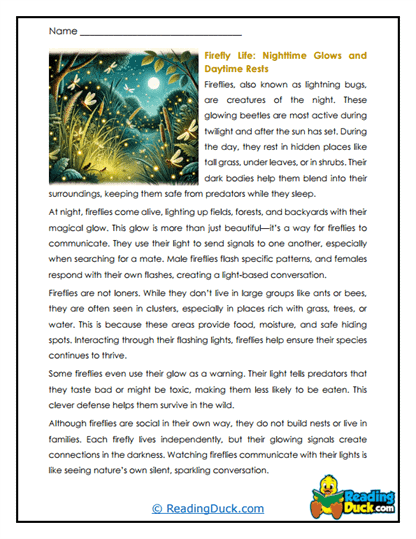
This worksheet describes fireflies' nighttime activity and daytime hiding behavior. Students learn how glowing communication replaces sound-based communication. The passage contrasts day and night behaviors clearly. Fireflies shine brightest when the sun goes down.
Firefly Families
This worksheet explores how fireflies reproduce using flashing patterns like secret codes. Students learn about egg laying, larvae, and glowing glowworms. The reading emphasizes the short adult lifespan focused on reproduction. Firefly adults live just long enough to pass on the glow.
Life Cycle
This worksheet explains the four stages of a firefly's life from egg to adult. Students follow the long larval stage and short adult stage. The passage strengthens understanding of metamorphosis. Fireflies glow during more than one stage of life.
Glowing Conversations
This worksheet focuses on firefly communication using light. Students learn how flashing patterns act like signals or warnings. The reading builds understanding of nonverbal communication in animals. A field of fireflies is full of silent conversations.
Predators and Dangers
This worksheet explores threats fireflies face from predators and environmental changes. Students learn how chemicals and flashing help fireflies defend themselves. The passage connects human actions to population decline. Protecting dark habitats helps fireflies survive.
Eco Lanterns
This worksheet highlights fireflies' important role in ecosystems. Students learn how larvae control pests and adults support food webs. The reading emphasizes fireflies as indicators of environmental health. A glowing meadow often signals a healthy ecosystem.
Graceful Gliders
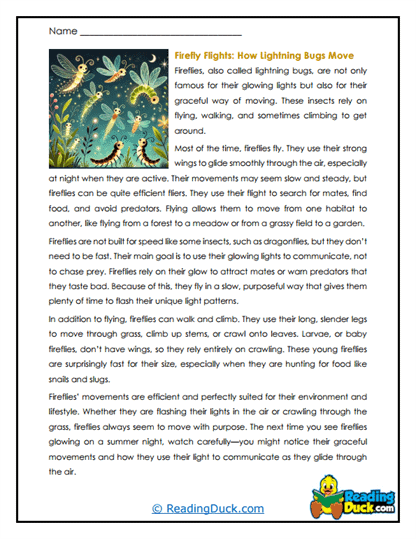
This worksheet explains how fireflies move by flying, walking, and crawling. Students compare adult movement with larval crawling behavior. The passage highlights that fireflies rely more on glow than speed. Gentle flight helps fireflies communicate safely.
Glowing Connections
This worksheet explores firefly relationships with predators, parasites, and other fireflies. Students learn about warning signals and mimicry used for survival. The reading strengthens understanding of ecological interactions. Even glowing insects face complex survival challenges.
All About the Firefly (Lightning Bug)
Where It Lives
Fireflies live in warm regions around the world. They are commonly found in forests, meadows, grasslands, marshes, and near streams. Most species prefer humid environments with tall plants and moisture. Darkness is important for communication through light. Clean, undisturbed habitats support healthy populations.
What It Eats
Firefly larvae are predators that eat snails, worms, slugs, and other small creatures. They use strong jaws and sometimes glowing signals to hunt. Adult fireflies may eat nectar, pollen, or nothing at all, depending on the species. Larvae play the biggest role in pest control. Their diet helps balance ecosystems.
How It Acts
Fireflies are mostly nocturnal and hide during the day. At night, they flash patterns to communicate and find mates. They often gather loosely in areas with food and moisture. Their behavior is calm, slow-moving, and light-focused. Glowing replaces sound as their main signal.
How It Survives
Fireflies survive using bioluminescence, camouflage, and chemical defenses. Their glow can warn predators that they taste bad. Flashing patterns also help confuse enemies. Larvae hide in soil and leaf litter. Survival depends heavily on dark, healthy environments.
How It Raises Babies
Female fireflies lay eggs in moist soil or under leaves. Eggs hatch into glowing larvae after a few weeks. Larvae grow slowly and may live for years before becoming adults. Pupation transforms them into winged beetles. Adults focus on mating and laying eggs before dying.
Is It in Danger?
Firefly populations are declining in many areas. Habitat loss, pesticides, pollution, and light pollution threaten their survival. Fireflies depend on darkness to communicate. Protecting wetlands and reducing artificial light helps them thrive. Conservation efforts can keep summer nights glowing.
Make sure to bookmark our website now.
Enjoy all our free reading worksheets.
Our materials adhere to the principles of the Science of Reading.