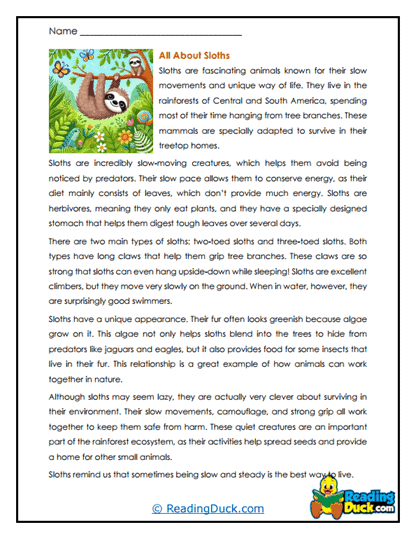
If the rainforest had a mascot for "take it easy," it would definitely be the sloth. These gentle, upside-down dreamers spend their days hanging in the treetops, munching on leaves, and moving so slowly that algae actually grow on their fur. With their sleepy smiles and chill attitudes, sloths are nature's reminder that slow isn't lazy-it's legendary. They're the ultimate proof that sometimes, surviving means slowing way down.
Learning about sloths opens a window into a world where patience beats speed. From their hooked claws to their tree-top homes, every sloth adaptation tells a story about balance and energy conservation. They help rainforests thrive by spreading seeds, feeding insects, and even creating miniature ecosystems in their fur. Studying sloths isn't just about animals-it's about the art of living gently with the planet.
Our Sloth Worksheets turn curiosity into calm discovery. Students will read, imagine, and laugh as they follow these fuzzy slowpokes through the treetops. Each passage builds reading skills through science, storytelling, and plenty of rainforest wonder. It's learning that moves at a sloth's pace-but delivers big-time comprehension and awe.
Meet the Worksheets
Slow Survivor
Students meet the sloth, the rainforest's slow-motion champion. The worksheet explores its diet, species differences, and how slowness actually becomes a superpower for survival. Learners connect cause and effect while expanding vocabulary on ecosystems and adaptation. Fun twist: sloths move so little that they only come down from trees once a week-for bathroom breaks!
Gentle Gripper
This passage examines the sloth's claws, limbs, and algae-covered fur-nature's camouflage combo pack. Students learn how anatomy supports hanging, climbing, and hiding from predators. It strengthens visualization and descriptive comprehension skills. Did you know? Sloths can turn their heads almost all the way around-like furry little owls on vacation.
Rainforest Home
Learners explore the lush tropical forests sloths call home, discovering how vines, leaves, and trees form their entire world. The passage highlights canopy life and threats from deforestation. Students strengthen understanding of habitat and environmental cause and effect. Bonus fact: a sloth can spend its entire life without ever touching the ground!
Leaf Diner
Students peek into the sloth's leafy buffet-slow digestion, plant power, and all. The text connects diet to rainforest health and nutrient cycling. It builds vocabulary and comprehension about energy conservation in ecosystems. Fun fact: it can take a sloth nearly a month to digest one meal-talk about mindful eating!
Night Climber
This worksheet explores the sloth's nocturnal lifestyle and peaceful behavior. Students learn how they hang, swim, and snooze through the night. It reinforces sequencing and behavioral comprehension. Surprise: sloths are surprisingly good swimmers-they can hold their breath for up to 40 minutes!
Rainy Family
Readers follow the tender story of sloth motherhood from gestation to independence. The passage emphasizes patience, protection, and rainforest parenting. It strengthens chronological reading and emotional understanding. Sweet detail: baby sloths cling to their moms like tiny backpacks for months on end!
Tree Life
Students climb through the sloth's entire life cycle-from fuzzy newborns to wise tree dwellers. The passage builds sequencing and vocabulary around growth and survival. It's a calm journey through the rhythm of rainforest life. Fun side note: sloths can live up to 30 years, most of it spent hanging upside down in pure peace.
Quiet Talkers
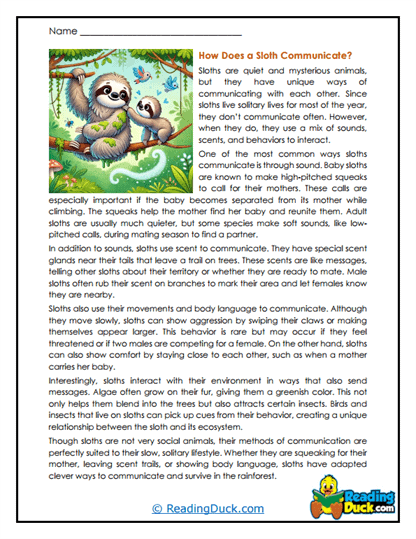
This worksheet dives into the sloth's silent language of scents, calls, and gentle gestures. Students practice inferential reading as they interpret subtle communication clues. The text enhances understanding of animal intelligence and adaptation. Strange but true: baby sloths have a unique "cry" that their mothers can recognize instantly, even in a crowded canopy.
Forest Peril
Students confront the dangers sloths face-from predators to deforestation and disease. The passage builds problem-solution comprehension and conservation awareness. It connects natural threats to human impact in clear, thoughtful ways. Hopeful note: planting just one native tree can give a sloth a new home!
Canopy Helper
Here, sloths become rainforest recyclers, hosting tiny ecosystems right in their fur. Students explore how sloths aid biodiversity and nutrient cycling. It strengthens summarizing and synthesis skills in informational reading. Fun extra: moths live in sloth fur, feed on its algae, and help fertilize trees when they fall-eco-teamwork at its finest!
Tree Traveler
Students study the science of sloth motion-slow climbs, lazy crawls, and surprising swimming. The text ties movement to metabolism and defense. It builds compare-and-contrast comprehension about adaptations. Bonus: sloths can rotate their limbs nearly backward-perfect for grabbing branches from any angle!
Symbiotic Friends
This worksheet explores how sloths team up with moths, birds, and insects in the name of rainforest balance. Students classify relationships as mutualism, commensalism, or parasitism. It encourages critical comprehension and ecological curiosity. Quirky fact: each sloth is basically a "moving garden," carrying algae and bugs wherever it goes!
All About the Sloth
Where It Lives
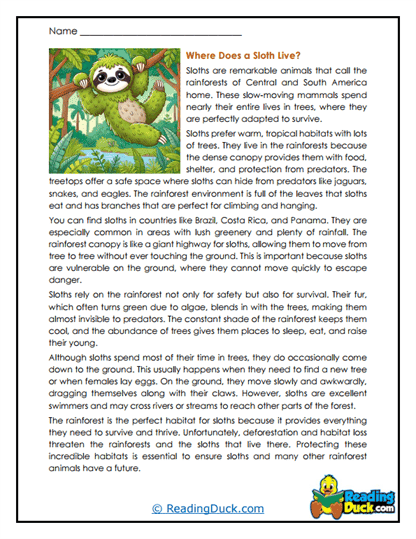
Sloths are the tree-dwellers of Central and South America's tropical rainforests. They live high in the canopy, surrounded by leaves, vines, and misty green air. Every branch is their highway, hammock, and hideout rolled into one. Think of them as gentle ghosts of the jungle-quiet, hidden, and utterly at home among the trees.
What It Eats
Sloths are dedicated vegetarians who dine slowly on leaves, flowers, and the occasional fruit. Their stomachs are like built-in compost bins, digesting food so slowly it can take weeks. By munching and pooping strategically, they help fertilize new plants below. In other words, they're eco-friendly eaters who never rush a meal.
How It Acts
The sloth lifestyle is all about energy efficiency. They move just enough to survive-sleeping 15 to 20 hours a day and climbing only when necessary. Solitary by nature, they prefer peace, quiet, and a good tree branch. But don't let the slow pace fool you-they're masters of stealth and survival.
How It Survives
Sloths use camouflage, stillness, and algae-colored fur to disappear into the leaves. Their slow metabolism keeps them from needing much food or movement. When danger comes, they rely on patience and clever climbing instead of speed. They're not lazy-they're simply experts in the art of conservation.
How It Raises Babies
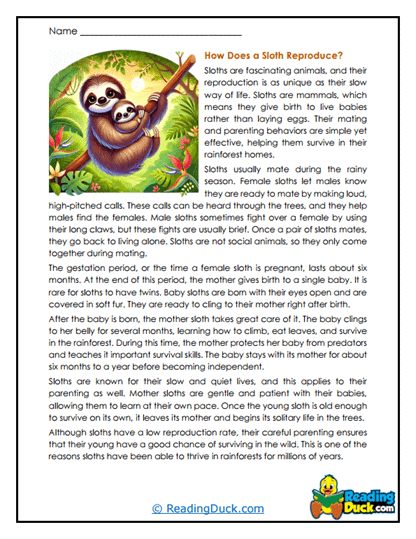
A mother sloth is a lesson in love and patience. She carries her baby everywhere, teaching it to climb, hang, and eat leaves at its own pace. After months of cuddly lessons, the young sloth sets off to find its own tree. It's like a very slow graduation ceremony-with hugs included.
Is It in Danger?
Sadly, yes-sloths face habitat loss, hunting, and deforestation. As rainforests shrink, their slow lives become even riskier. Conservationists are working hard to protect their treetop homes and plant new forests. Every tree saved gives these gentle creatures another chance to nap safely under the rainforest sky.
Make sure to bookmark our website now.
Enjoy all our free reading worksheets.
Our materials adhere to the principles of the Science of Reading.