Dragonflies are some of the oldest and most impressive insects on Earth, gliding through the air with shimmering wings and incredible speed. These agile fliers have been around for hundreds of millions of years, long before humans ever looked up to watch them dance over water. With nearly 360-degree vision, powerful wings, and lightning-fast reflexes, dragonflies are built for life in motion. Their graceful flight hides the fact that they are highly skilled hunters.
Learning about dragonflies introduces students to fascinating ideas about adaptation, ecosystems, and life cycles. Dragonflies play an important role in nature by controlling insect populations and serving as food for other animals. Their lives connect land and water, making them excellent examples of how ecosystems overlap. Studying dragonflies helps students see how physical traits and behaviors work together for survival.
Our dragonfly worksheets turn curiosity into discovery through engaging, science-rich reading passages. Each worksheet focuses on a different aspect of dragonfly life, from flight and hunting to habitats, communication, and development. The texts build strong scientific vocabulary while strengthening comprehension and critical thinking. By the end, students will never look at a dragonfly the same way again.
Meet the Worksheets
Sky Sprinters
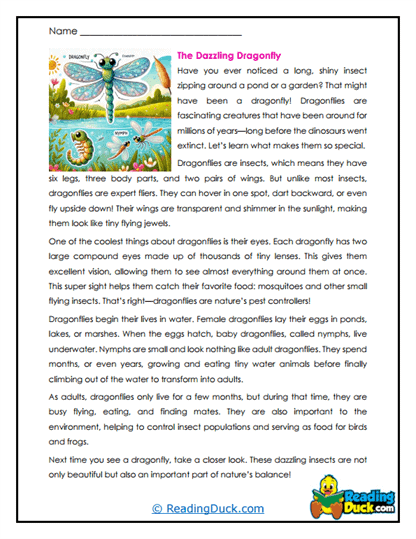
This worksheet introduces dragonflies and explains what makes them such ancient and powerful insects. Students learn about dragonfly body parts, flight abilities, eyesight, and their role as insect predators. The reading builds comprehension by connecting physical traits to survival and life cycle stages. Dragonflies can hover, fly backward, and even fly upside down with ease.
Shimmer Scouts
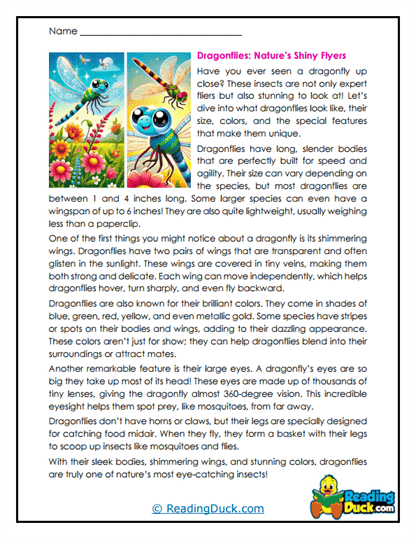
This worksheet explores the physical features that make dragonflies so eye-catching and effective hunters. Students learn about wing structure, coloration, compound eyes, and basket-shaped legs used to catch prey. The passage helps readers connect anatomy to movement and survival. A dragonfly's eyes allow it to see almost everything around it at once.
Wetland Wanderers
This worksheet explains where dragonflies live and why water is essential to their life cycle. Students learn about wetlands, ponds, rivers, and other water-rich habitats used for breeding and development. The reading strengthens understanding of habitats, migration, and environmental health. Dragonflies are often a sign that water ecosystems are clean and balanced.
Predator Pros
This worksheet focuses on dragonflies as skilled predators both in the air and underwater. Students learn what dragonflies eat and how they capture prey using speed, vision, and specialized legs. The passage connects hunting strategies to survival advantages. Even as nymphs, dragonflies are fierce underwater hunters.
Daylight Drifters
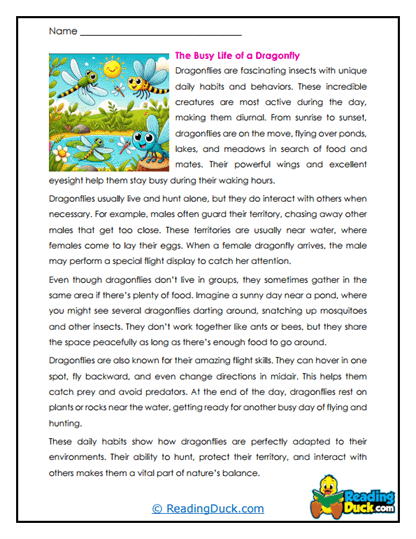
This worksheet describes how dragonflies spend their days flying, hunting, defending territory, and resting at night. Students learn about diurnal behavior, mating habits, and territory guarding. The reading helps students track daily behavior patterns. Unlike many insects, dragonflies prefer being active in full daylight.
River Rituals
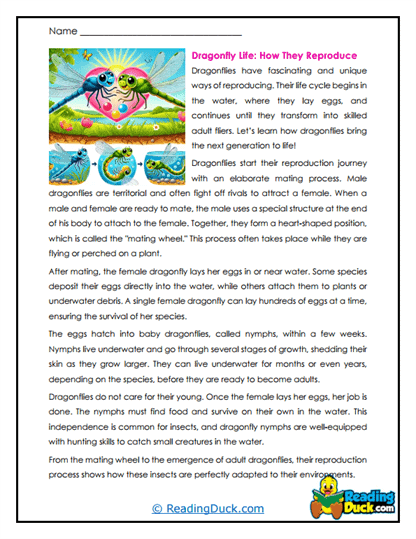
This worksheet explores how dragonflies reproduce and develop from eggs to aquatic nymphs. Students learn about mating displays, egg-laying methods, and underwater growth stages. The passage builds understanding of reproduction and metamorphosis. Much of a dragonfly's life happens beneath the surface of the water.
Cycle Soarers
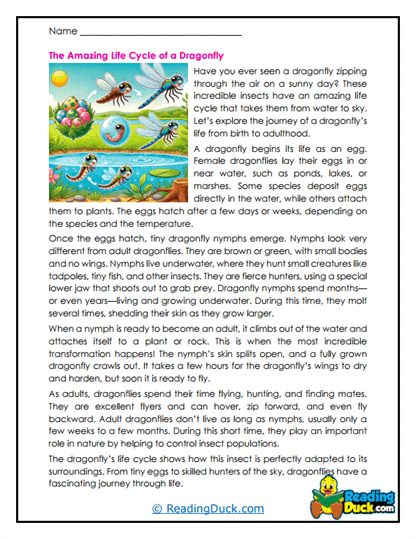
This worksheet details the complete dragonfly life cycle from egg to nymph to adult. Students learn how nymphs molt and grow underwater before emerging to become winged adults. The reading strengthens sequencing and life cycle comprehension. Some dragonflies spend years growing underwater before ever taking flight.
Motion Messengers
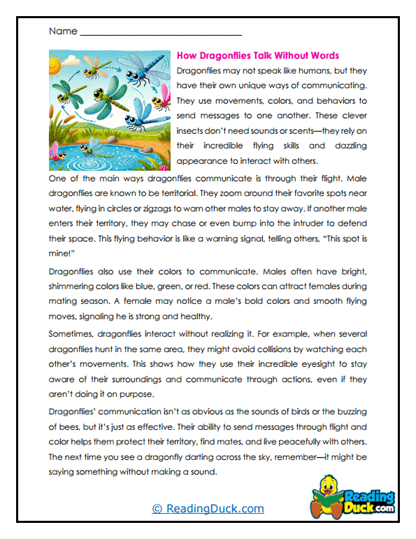
This worksheet explains how dragonflies communicate using movement, color, and flight patterns instead of sound. Students learn how visual signals help dragonflies defend territory and attract mates. The passage highlights subtle communication through behavior. Dragonflies can "talk" using only motion and color.
Threat Trackers
This worksheet explores the predators and environmental threats dragonflies face. Students learn how pollution, habitat loss, and climate change affect dragonfly populations. The reading connects threats to survival strategies like speed and agility. Protecting wetlands helps protect dragonflies too.
Balance Keepers
This worksheet highlights the important role dragonflies play in maintaining ecosystem balance. Students learn how dragonflies control insect populations and support food webs. The passage emphasizes their role as indicators of environmental health. A healthy dragonfly population often means a healthy ecosystem.
Aero Aces
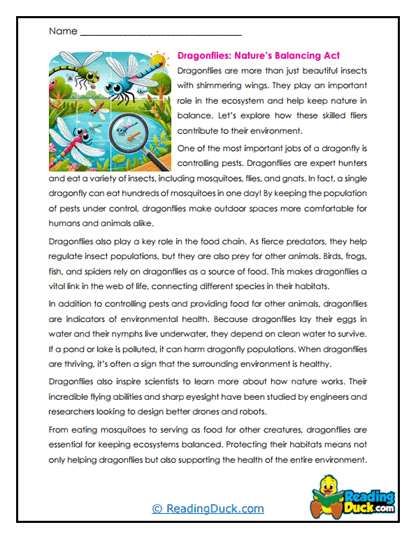
This worksheet explores dragonflies' incredible flying abilities and precision movement. Students learn about hovering, backward flight, rapid turns, and high speeds. The passage also explains how nymphs move underwater using jet propulsion. Dragonflies are expert movers in both air and water.
Species Connectors
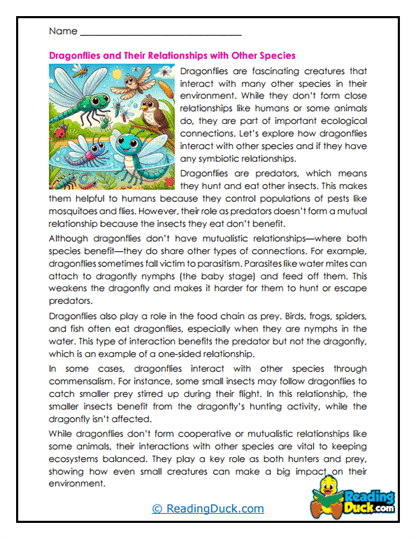
This worksheet examines the ecological relationships dragonflies have with other species. Students learn about predation, parasitism, and commensalism involving dragonflies. The reading strengthens understanding of ecosystem interactions. Dragonflies are deeply connected to many parts of the food web.
All About the Dragonfly
Where It Lives
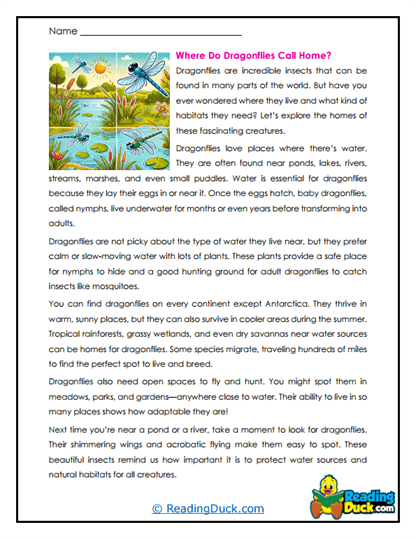
Dragonflies live on every continent except Antarctica. They are most commonly found near freshwater habitats like ponds, lakes, rivers, streams, and wetlands. Some species thrive in tropical climates, while others live in temperate or dry regions. Water is essential because dragonflies lay eggs and grow as nymphs there. Healthy water sources attract dragonflies.
What It Eats
Dragonflies are carnivores that feed on mosquitoes, flies, gnats, bees, and other small insects. They catch prey while flying using their strong legs and sharp vision. Dragonfly nymphs hunt underwater, feeding on small aquatic animals. Their diet helps control pest populations. This makes dragonflies valuable to both ecosystems and humans.
How It Acts
Dragonflies are active during the day and spend much of their time flying. They patrol territories, hunt prey, and search for mates. Males often guard water areas to protect breeding sites. Dragonflies rest at night on plants or rocks. Their behavior is fast-paced and alert.
How It Survives
Dragonflies survive using speed, agility, and excellent eyesight. Their wings allow quick turns and sudden stops to escape predators. Large compound eyes help them detect movement instantly. As nymphs, they use camouflage and quick strikes to hunt underwater. These adaptations make them highly successful hunters.
How It Raises Babies
Female dragonflies lay eggs in or near water. Eggs hatch into aquatic nymphs that live underwater for months or years. Nymphs molt many times as they grow. When ready, they emerge from the water and transform into adults. This dramatic change prepares them for life in the air.
Is It in Danger?
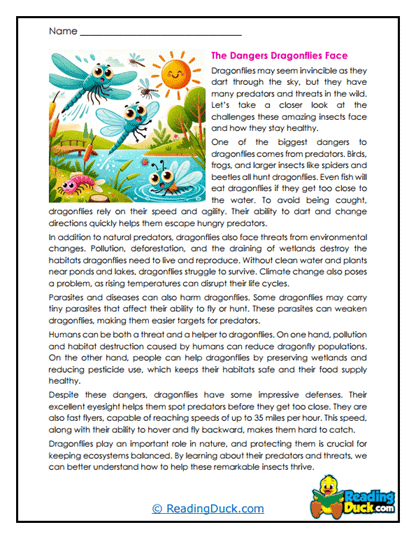
Many dragonfly species are stable, but some are threatened by pollution and habitat loss. Wetland destruction and dirty water reduce breeding areas. Dragonflies are considered indicators of environmental health. Protecting clean water helps ensure their survival. Conservation efforts benefit dragonflies and many other species.
Make sure to bookmark our website now.
Enjoy all our free reading worksheets.
Our materials adhere to the principles of the Science of Reading.