If tanks could eat grass and enjoy a good mud bath, they'd be called rhinoceroses. These thick-skinned giants look like prehistoric superheroes-massive, armored, and crowned with horns that seem straight out of a fantasy novel. But behind that tough exterior is a surprisingly gentle grazer that just wants some peace, shade, and fresh greens. The rhino might look unstoppable, but it's also one of the planet's most endangered masterpieces of nature.
Learning about rhinos means stepping into a story of strength, balance, and resilience. They shape entire landscapes, mowing grasslands into new habitats and creating watering holes that help hundreds of other species. Every rhino fact is a lesson in biology, adaptation, and courage. And let's be honest-any animal that can weigh two tons yet still sprint faster than your bicycle deserves a little classroom respect.
Our Rhino Worksheets turn this mighty creature into an unforgettable learning companion. Students explore everything from rhino families and habitats to conservation and communication. They'll connect science, reading, and imagination through engaging passages that feel more like field trips than lessons. It's an educational safari-minus the mosquitoes.
Meet the Worksheets
Mighty Rhino
Students meet the rhino as nature's armored vegetarian-powerful, peaceful, and essential to its environment. The worksheet explores species differences, diet, and threats from poaching and habitat loss. Learners identify cause and effect while building scientific vocabulary about mammals and ecosystems. Did you know rhinos can run faster than most golf carts despite looking like moving boulders?
Thick-Skinned Giant
This lesson zooms in on the rhino's physical design-wrinkled armor plates, solid horns, and unstoppable endurance. Students discover how skin texture, horn growth, and body structure all contribute to survival. It builds descriptive writing skills while connecting anatomy to adaptation. Fun fact: rhino skin can be over two inches thick-but it's still sensitive enough to feel a tick!
Wild Habitats
Learners journey across Africa and Asia to explore where rhinos call home-from dusty savannas to lush wetlands. The text highlights species adaptations to different environments and the conservation parks that protect them. It strengthens understanding of geography and environmental cause-and-effect. Bonus: a rhino's favorite "spa day" involves rolling in mud for hours-ultimate natural sunscreen!
Gentle Grazer
Students discover the rhino's plant-powered diet and the difference between grazers and browsers. They'll learn about species' feeding behaviors and the massive meals needed to fuel such heavyweights. The passage connects biology with ecology through easy-to-understand examples. Surprise: white rhinos can eat up to 120 pounds of grass a day-basically an entire lawn!
Calm Wanderer
This worksheet explores how rhinos spend their days-wandering, wallowing, and minding their own business. Students follow behavioral patterns like mud-bathing, scent-marking, and gentle communication. They'll learn new vocabulary while analyzing cause and effect in animal behavior. Fun twist: rhinos love mud so much, they've turned it into a lifestyle.
Gentle Giants
Students trace the tender story of rhino motherhood-from long pregnancies to protective parenting. They learn how calves grow under their mother's watchful horn and how conservation helps future generations. The passage reinforces sequencing and empathy through science-based facts. Heartwarming detail: rhino mothers are known to "sing" low rumbles to calm their calves.
Life Journey
Readers follow the rhino from tiny calf to towering adult in this life-cycle adventure. They'll identify growth stages, threats, and survival challenges through clear chronological structure. The passage strengthens comprehension of transition words and sequencing. Little-known truth: some rhinos can live nearly 50 years-making them long-term residents of the wild!
Sound Signals
This worksheet decodes the secret language of rhinos-grunts, snorts, and even squeaks. Students interpret body language and sound as tools for communication and defense. It develops inferential reading by linking behavior to meaning. Quirky fact: rhinos have "friendship calls" that can be heard more than a mile away!
Endangered Strength
Students tackle the serious topic of poaching, habitat loss, and climate change-and the efforts to reverse them. The text blends problem-solving with hopeful conservation stories. It teaches evaluation skills while expanding environmental vocabulary. Hopeful twist: rhino horns can regrow-proving that nature knows how to heal if we let it.
Nature's Engineer
This worksheet turns rhinos into ecosystem architects. Students learn how rhinos create waterholes, spread seeds, and trim grasslands for other animals to thrive. It's all about interconnected systems and biodiversity. Surprise ending: without rhinos, many African landscapes would turn into overgrown jungles-good for vines, bad for balance!
Powerful Runner
Students explore the physics of rhino motion-how 6,000 pounds of muscle can charge at 30 mph. They'll connect structure to function, from toes to torso. The reading builds vocabulary like endurance and adapted while thrilling the imagination. Fun fact: when rhinos run, birds often hitch a ride for the view!
Symbiotic Bonds
Learners meet the rhino's loyal sidekick-the oxpecker bird-and other species that share its space. They'll classify relationships as mutualism, commensalism, or parasitism through vivid examples. The text sharpens analytical reasoning about ecological teamwork. Bonus: oxpeckers even act as rhino alarms, squawking when danger's near-nature's very own security system!
All About the Rhinoceros
Where It Lives
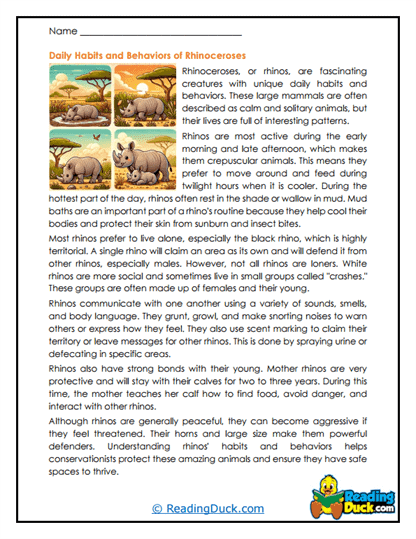
Rhinoceroses roam across Africa's grassy plains and Asia's dense jungles. They love areas with plenty of shade, mud, and water to drink or wallow in. From the wide savannas of Kenya to the forests of India, each species carves out its own territory. Think of them as nature's landscape managers, keeping ecosystems balanced one hoofprint at a time.
What It Eats
Despite their fearsome horns, rhinos are peaceful plant-eaters. They graze on grasses, nibble on leaves, and occasionally sample fruits or shrubs. Each species has a different dining style-white rhinos lower their heads like lawnmowers, while black rhinos stretch high for leafy snacks. Their appetite is massive, and their table manners? Let's just say they prefer the "all-you-can-eat buffet" approach.
How It Acts
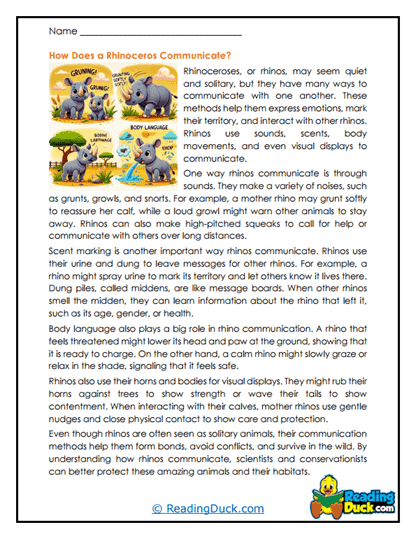
Most rhinos are calm, solitary wanderers who enjoy quiet mornings and sunset strolls. They communicate through grunts, snorts, and an impressive amount of nose wrinkles. Rhinos are territorial but rarely aggressive unless threatened, preferring peace over battle. And if you ever hear one "talking," that's just rhino gossip across the grasslands.
How It Survives
A rhino's body is a fortress-thick skin, strong legs, and a horn built for defense and digging. They use mud baths to stay cool, ward off parasites, and show off their spa-day style. Their excellent hearing and smell make up for poor eyesight, turning them into sensory superheroes. Despite their bulk, rhinos can run faster than a horse for short bursts-talk about horsepower!
How It Raises Babies
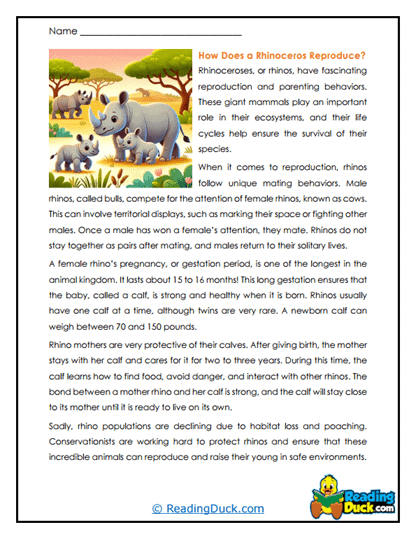
Mother rhinos are devoted and patient teachers. Calves stick close for years, learning to graze, drink, and stay alert from mom's gentle nudges. Each step in their journey prepares them for independence in a wild world. Watching a baby rhino try to charge for the first time is like seeing a toddler with too much confidence-it's adorable and unstoppable.
Is It in Danger?
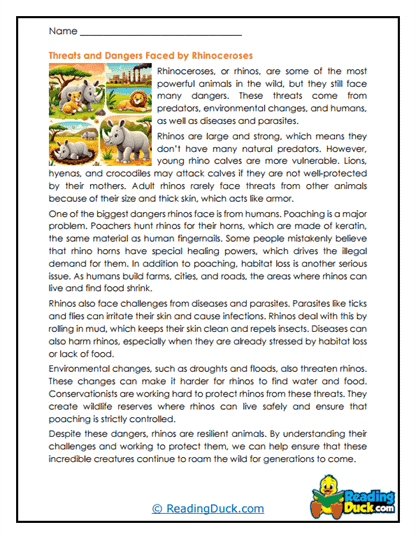
Sadly, yes-rhinos are among the most endangered animals on Earth. Poaching for horns and shrinking habitats have left some species critically at risk. But conservation heroes are fighting back with anti-poaching patrols and protected reserves. Every rhino saved keeps the heartbeat of the savanna strong, reminding us that even giants need guardians.
Make sure to bookmark our website now.
Enjoy all our free reading worksheets.
Our materials adhere to the principles of the Science of Reading.