If nature needed tiny, fuzzy superheroes, it would call the bumblebees. These chunky charmers buzz from flower to flower wearing bright stripes, furry coats, and wings that somehow flap fast enough to keep their round bodies airborne. They're nature's power-pollinators-lifting pollen, spreading life, and saving ecosystems one buzz at a time. And despite their cute appearance, they're some of the hardest-working insects on the planet.
Learning about bumblebees means understanding teamwork, timing, and the delicate relationships that keep plants alive. These bees know how to communicate through sound and movement, build colonies with perfect division of labor, and survive harsh seasons with incredible resilience. They're little bundles of biology in motion, showing students how ecosystems depend on the tiny behaviors of tiny creatures.
Our Bumblebee Worksheets mix science and storytelling to help students explore pollination, communication, survival, and life cycles with confidence. Each passage strengthens comprehension while connecting reading to environmental responsibility. It's literacy with buzz, biology with charm-and plenty of surprises tucked between the flowers.
Meet the Worksheets
Honey Hustlers
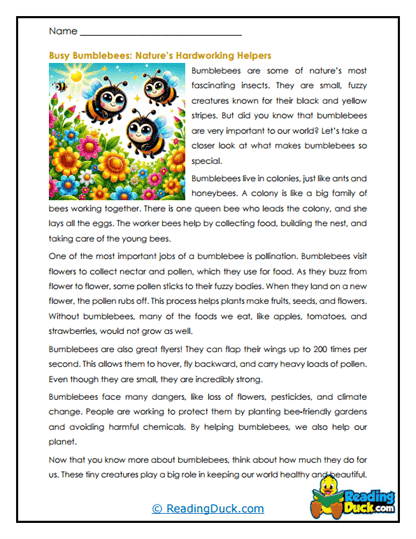
Students meet bumblebees as busy helpers who pollinate plants, build colonies, and work together for survival. The passage explains their roles in food production and highlights dangers such as habitat loss and pesticides. It strengthens comprehension by teaching students to identify main ideas and scientific vocabulary. Fun fact: bumblebees can vibrate their bodies to shake pollen loose-a technique called buzz pollination that tomatoes absolutely adore!
Stripe Showcase
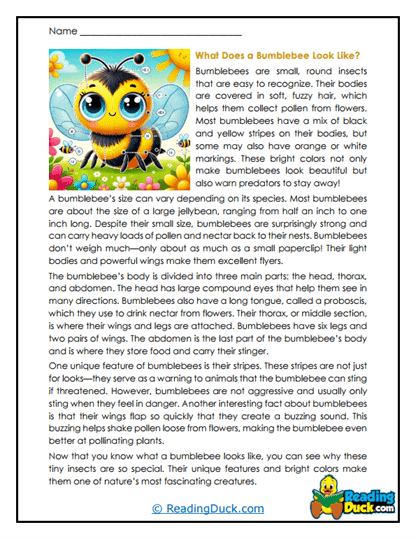
This worksheet explores bumblebee anatomy, from fuzzy hairs to wings, stripes, and pollen baskets. Students learn how each body part helps bees fly, stay warm, or gather food. It builds vocabulary and encourages deeper observation of biological structures. Bonus: different bee species can wear orange, yellow, white, or even rusty-red stripes-nature's own fashion show.
Habitat Hunters
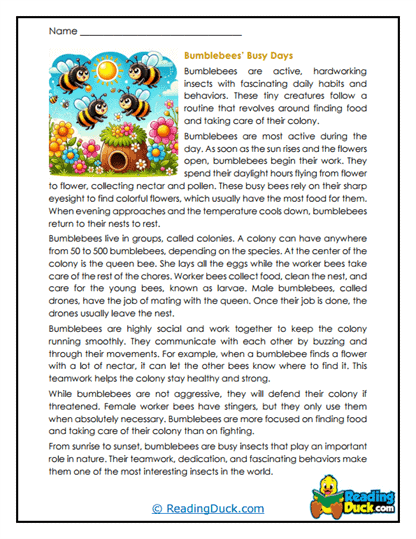
Readers discover bumblebee homes in meadows, gardens, forests, and grassy fields. The passage connects floral abundance to colony success and explains how nest placement affects survival. It strengthens cause-and-effect reading skills. Cool detail: some bumblebees nest in abandoned mouse burrows-the "AirBee&Bee" of the meadow.
Nectar Nibblers
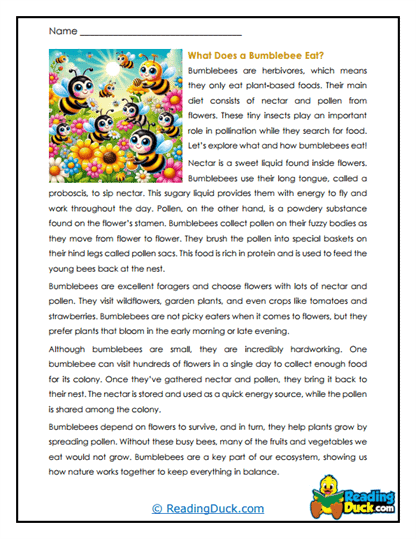
Students follow bumblebees on their food-finding missions, learning how tongues, hairs, and movement help them gather pollen and nectar. The text explains how herbivore diets support entire ecosystems. It builds sequencing, vocabulary, and ecological understanding. Sweet fact: bumblebees can visit dozens of flowers per minute during peak foraging!
Colony Choreographers
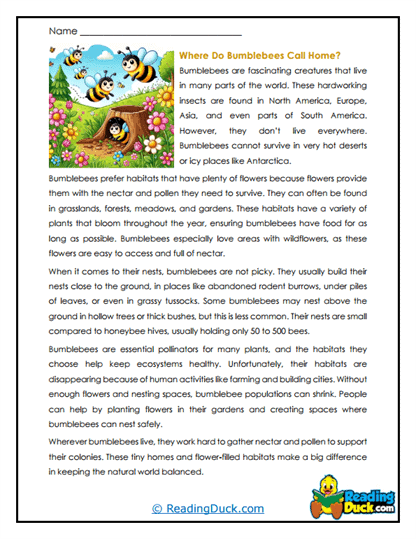
This worksheet reveals the daily routines of bumblebees as they work, forage, share information, and care for the colony. Students practice identifying patterns and roles in nonfiction text. It strengthens vocabulary and comprehension of teamwork in animal societies. Fun note: worker bees often "wake up" sleepy nestmates by gently bumping or tapping them-bee alarm clocks.
Queen's Journey
Students trace the seasonal life of a queen bumblebee, from spring emergence to nest building, larva feeding, and new queen preparation. The passage strengthens sequential comprehension and life-cycle vocabulary. It also builds ecological awareness about environmental timing. Fascinating truth: a queen bumblebee hibernates alone underground for months before starting her entire colony from scratch.
Cycle Stars
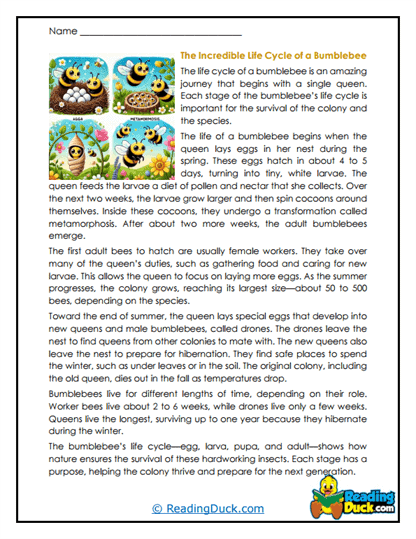
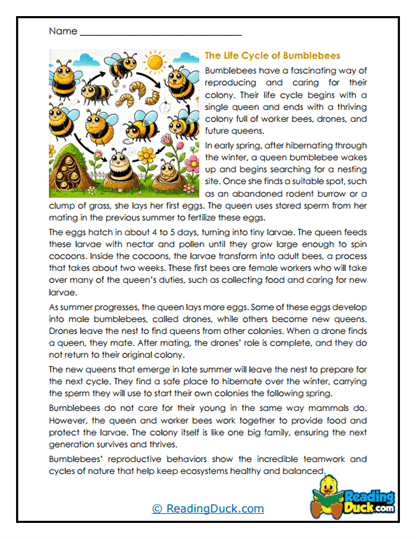
This worksheet outlines the bumblebee life cycle from egg to larva to pupa to adult. Students practice recognizing stages, transitions, and metamorphosis. It deepens vocabulary and strengthens structured science reading. Amazing detail: during metamorphosis, a bumblebee pupa reorganizes its entire body into wings, legs, and fuzzy stripes-shape-shifting at its finest.
Buzz Talkers
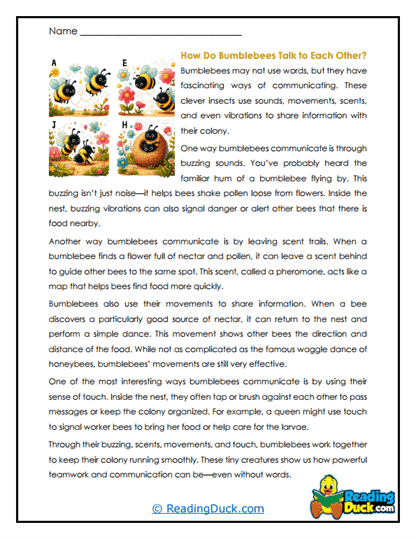
Students learn how bumblebees communicate through buzzing, scent trails, dances, and gentle touches. The passage connects signals to behaviors like danger warnings and food sharing. It builds inference skills and communication vocabulary. Fun twist: bumblebees buzz at different frequencies depending on whether they're flying, talking, or shaking pollen loose!
Survival Squad
This worksheet explores threats such as predators, parasites, pesticides, climate change, and habitat loss. Students identify cause-and-effect relationships while learning how bees defend themselves. It builds conservation vocabulary and environmental reasoning. Sobering fact: warming temperatures can cause flowers to bloom earlier, leaving hungry bees without meals.
Garden Guardians
Students discover how bumblebees act as pollination superheroes-helping plants reproduce, supporting food chains, and maintaining biodiversity. The passage builds understanding of interdependence and ecosystem balance. It strengthens scientific vocabulary and comprehension. Sweet reminder: planting a few native flowers can feed hundreds of hungry bees.
Wing Whirl
Readers explore bumblebee flight-fast wingbeats, hovering skills, and heavy-lift capabilities. Students learn how fuzzy legs collect pollen and how wings adjust for carrying loads. It supports comprehension of adaptation and biological function. Fun fact: scientists say bumblebee flight shouldn't technically work, but bees do it anyway-nature's joyful rule-breakers!
Relationship Rangers
This worksheet examines bumblebees' ecological relationships with flowers, mites, birds, and more through mutualism, parasitism, and commensalism. Students practice classification and critical thinking. It builds vocabulary about ecological interactions and interdependence. Fascinating detail: flowers and bumblebees co-evolved, meaning they shaped each other's development over millions of years.
All About the Bumblebee
Where It Lives
Bumblebees thrive in gardens, meadows, forests, and grasslands where flowers bloom abundantly. They nest in shallow underground burrows, grassy hollows, or sheltered outdoor spaces. These habitats provide nectar, water, and materials needed for colony survival. Wherever blossoms dance in the breeze, bumblebees soon follow.
What It Eats
Bumblebees rely on nectar for energy and pollen for protein. Their long tongues and fuzzy hairs help them collect these resources efficiently while feeding many plants in return. Their meals fuel not only their own colonies but entire ecosystems. Every sip supports the circle of life.
How It Acts
Bumblebees are incredibly social workers, buzzing through the day to gather food, clean the hive, and care for young bees. They communicate through vibrations, scents, and movement to coordinate every task. Their routines keep the colony organized and responsive. In bee society, teamwork makes the honey work.
How It Survives
Adaptation is a bumblebee's best tool. Their fuzz keeps them warm in chilly weather, their stripes warn predators, and their wings help them maneuver through wind and rain. They defend the nest, follow scent trails, and adjust for seasonal changes. These traits ensure that even fragile creatures can survive strong environmental challenges.
How It Raises Babies
Bumblebee queens lay eggs that develop into larvae, spin cocoons, and transform into adults. Worker bees feed larvae royal jelly or pollen until they grow strong. Each new bee contributes to hive success, whether gathering nectar or protecting the nest. It's a finely tuned family system built on cooperation.
Is It in Danger?
Sadly, yes. Bumblebees face threats from habitat loss, pesticides, climate shifts, and disease. Without them, countless plants-and food chains-would collapse. Conservation efforts, gardens full of native flowers, and reduced chemical use can help restore populations. Protecting bumblebees means protecting the health of our planet.
Make sure to bookmark our website now.
Enjoy all our free reading worksheets.
Our materials adhere to the principles of the Science of Reading.