Cockroaches are the ultimate plot twist of the insect world. They've been around since before dinosaurs, can survive conditions that would make other creatures faint, and somehow manage to squeeze into places that look physically impossible. With flat bodies, lightning-fast legs, and senses tuned for survival, cockroaches are basically nature's tiny escape artists. Love them or loathe them, they are undeniably impressive.
Learning about cockroaches is a crash course in adaptation, resilience, and ecosystems. These insects play important roles in nature by recycling nutrients, feeding other animals, and surviving in environments ranging from rainforests to deserts. At the same time, their relationship with humans is complicated, making them a great example of how animals can be both helpful and troublesome. Studying cockroaches helps students understand balance in ecosystems and how survival strategies evolve.
Our cockroach worksheets turn curiosity (and maybe a little squeamishness) into meaningful learning. Each worksheet explores a different aspect of cockroach life, from their armor-like bodies to their secretive nighttime habits. The passages are engaging, approachable, and packed with science-backed facts that make these insects less mysterious and more fascinating. By the end, students may not want a cockroach as a pet-but they'll definitely respect its skills.
Meet the Worksheets
Survival Champs
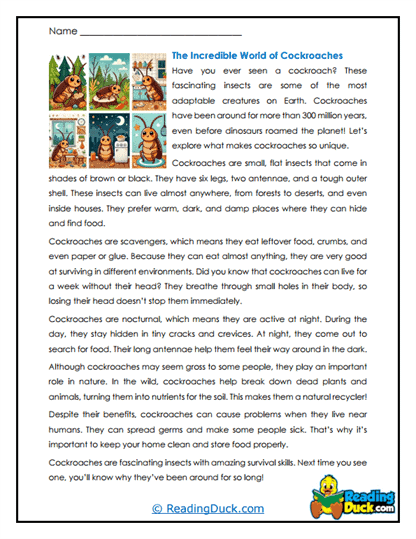
This worksheet introduces cockroaches as some of the most adaptable survivors on Earth, explaining their bodies, habits, and lifestyles. Students learn how breathing holes, scavenging diets, and flexible habitats support long-term survival. It builds comprehension while encouraging students to weigh both the benefits and risks cockroaches bring to ecosystems and human spaces. Surprisingly, cockroaches can live weeks without food, which is not a skill most snack-loving humans share.
Armor Runners
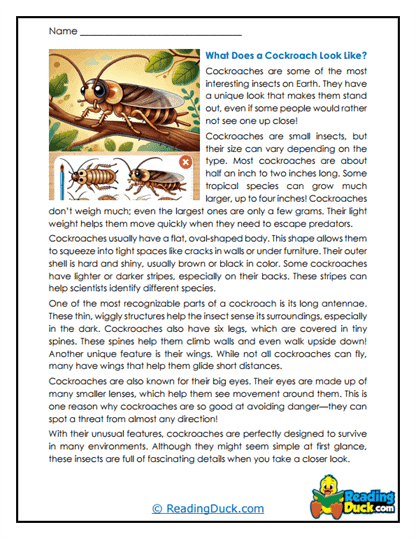
This worksheet focuses on the physical features that help cockroaches thrive, from flat bodies to spiky legs and tough outer shells. Students connect anatomy to function by exploring how each body part supports movement, sensing danger, and escaping predators. It strengthens descriptive reading skills and introduces scientific vocabulary in a concrete way. A cockroach's body shape is so effective it can flatten itself to fit into cracks thinner than a coin.
Habitat Explorers
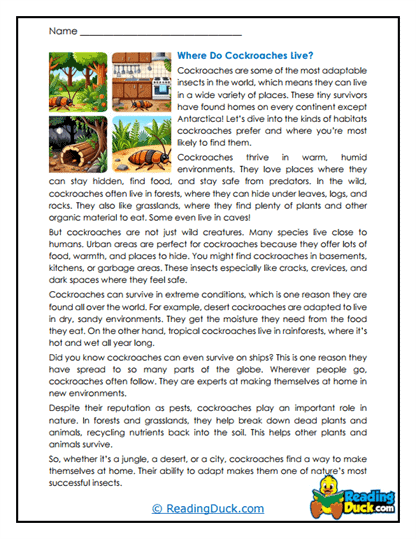
This worksheet takes students on a tour of the many environments cockroaches call home, including forests, deserts, homes, and ships. It explains how cockroaches find shelter, warmth, and food while avoiding danger across vastly different ecosystems. Students practice comparing habitats and understanding environmental adaptation. Some cockroaches are so good at traveling that they've hitchhiked across oceans without buying a ticket.
Cleanup Crew
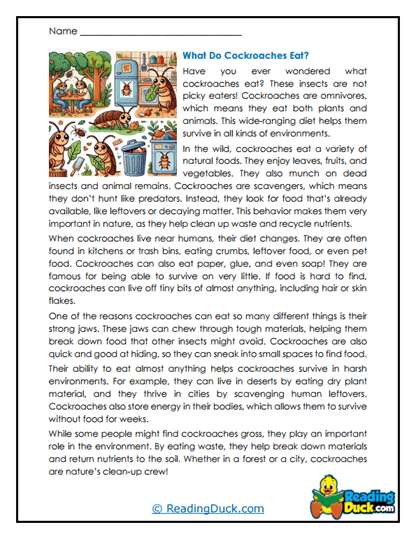
This worksheet explains what cockroaches eat and how their scavenger diets help recycle nutrients. Students learn how cockroaches fit into food chains and why decomposition matters for healthy ecosystems. The reading builds vocabulary around omnivores and nutrient cycling. Ironically, cockroaches help clean nature even though humans rarely thank them for it.
Night Navigators
This worksheet explores cockroach behavior, especially their nocturnal routines and stealthy movement. Students learn how antennae, pheromones, and hiding spots help cockroaches survive nighttime dangers. It encourages readers to identify examples that support main ideas about behavior and adaptation. Cockroaches prefer the dark so much that flipping on a light feels like a surprise party they didn't ask for.
Colony Creators
This worksheet dives into cockroach reproduction and explains how their life cycle supports population growth. Students learn about mating behaviors, egg cases called oothecae, and the growth of nymphs through molting stages. It strengthens understanding of biological processes and cause-and-effect relationships. One cockroach egg case can hold dozens of eggs, which explains why infestations grow fast.
Molt Masters
This worksheet explains the cockroach life cycle from egg to adult, focusing on growth through molting. Students practice sequencing events and understanding how each stage prepares the insect for survival. The reading builds vocabulary related to development and adaptation. Unlike butterflies, cockroaches skip the makeover phase and stick with a practical design.
Signal Senders
This worksheet explores how cockroaches communicate using scents, antennae, vibrations, and movement. Students connect communication behaviors to safety, organization, and survival. It strengthens scientific literacy by introducing terms like pheromones and signaling. Cockroach conversations may be silent, but they are very informative in the insect world.
Danger Dodgers
This worksheet examines the predators and threats cockroaches face in both natural and human environments. Students learn how cockroaches respond to danger through speed, hiding, and adaptability. It builds cause-and-effect comprehension skills within ecological systems. Despite their reputation, cockroaches spend most of their lives trying not to get eaten.
Ecosystem Recyclers
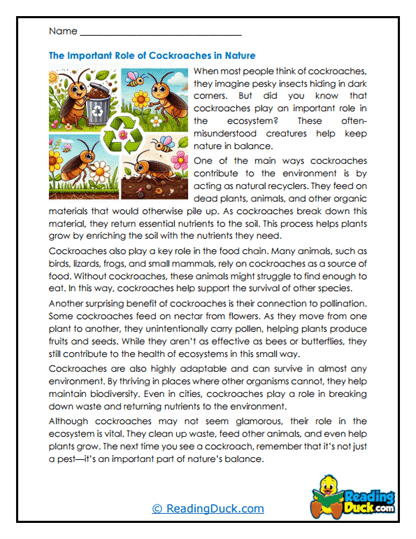
This worksheet highlights the ecological importance of cockroaches as nutrient recyclers. Students learn how breaking down organic matter supports soil health, food chains, and biodiversity. It helps learners identify positive environmental contributions often overlooked. Even animals with bad reputations can be ecological heroes in disguise.
Motion Masters
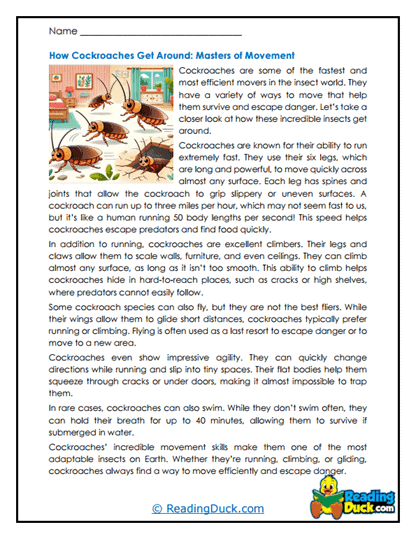
This worksheet explores how cockroaches move, from sprinting and climbing to gliding and swimming. Students analyze how movement supports survival in complex environments. Vocabulary related to locomotion and agility is reinforced through engaging examples. A cockroach can run so fast that, scaled to human size, it would break Olympic records.
Web Weavers
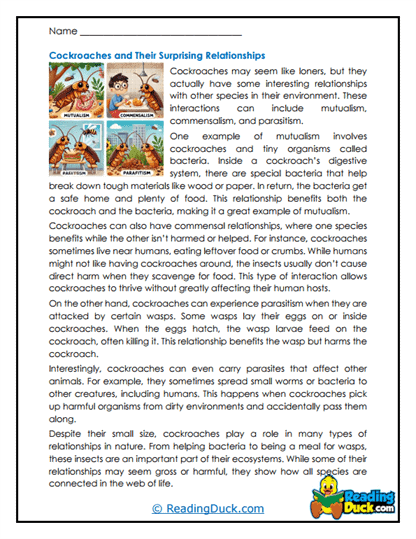
This worksheet explores the ecological relationships cockroaches form with other organisms. Students compare mutualism, commensalism, and parasitism using real-world examples. It deepens understanding of how species interact within ecosystems. Even cockroaches have roommates, helpers, and freeloaders in their tiny worlds.
All About the Cockroach
Where It Lives
Cockroaches live on nearly every continent and thrive in a wide range of environments. They can be found in forests, grasslands, deserts, caves, and human buildings. Some species prefer warm, humid climates, while others tolerate dry or cooler regions. Their flexibility makes them one of the most widespread insects on Earth. If there's shelter and food, a cockroach can probably make itself at home.
What It Eats
Cockroaches are omnivores with extremely flexible diets. They eat plants, animals, decaying matter, crumbs, paper, and just about anything organic. This scavenging behavior helps recycle nutrients back into the environment. In natural ecosystems, their eating habits support soil health and food chains. In homes, their menu choices are less appreciated.
How It Acts
Most cockroaches are nocturnal and prefer to stay hidden during the day. They rely on sensitive antennae to explore surroundings and detect danger. Many species communicate using pheromones to find food and stay grouped together. Their behavior is cautious, fast, and highly efficient. Cockroaches don't want trouble-they just want snacks and shelter.
How It Survives
Cockroaches survive through speed, toughness, and adaptability. Their hard outer shells protect them from injury, while flat bodies let them hide in tight spaces. They can survive long periods without food and tolerate harsh conditions. Some species even regenerate lost legs. Survival is basically their full-time job.
How It Raises Babies
Cockroaches reproduce using egg cases called oothecae. These cases protect multiple eggs until they hatch into nymphs. Nymphs resemble small adults and grow through several molts. Most cockroaches don't provide parental care, but producing many offspring increases survival chances. Quantity is part of their long-term strategy.
Is It in Danger?
Most cockroach species are not endangered and are very stable worldwide. However, some forest-dwelling species face threats from habitat loss and pollution. Cockroaches play important ecological roles that are often overlooked. Protecting ecosystems helps maintain balance-even for insects humans dislike. Conservation isn't just about cute animals.
Make sure to bookmark our website now.
Enjoy all our free reading worksheets.
Our materials adhere to the principles of the Science of Reading.