Beetles are nature's armored adventurers-tiny tanks with dazzling colors, powerful jaws, and enough species diversity to make any biologist dizzy. With over 400,000 known species, beetles come in glowing greens, fiery reds, glossy blacks, and even neon yellows. Some can lift objects many times their own weight, others light up the night, and many recycle the world faster than any compost bin. They're everywhere, doing everything... quietly, efficiently, and usually out of sight.
Learning about beetles means diving into a world where adaptations rule and survival strategies get wonderfully weird. They can swim, burrow, fly, dig, glow, and even roll dung with Olympic-level determination. Beetles hold ecosystems together by cleaning up waste, pollinating plants, and controlling pests-talk about multitasking! Understanding their role shows students that even the smallest creatures can have enormous ecological influence.
Our Beetle Worksheets transform these hidden heroes into a lively learning adventure. Students build reading comprehension while exploring beetle life cycles, anatomy, habitats, communication, and environmental impact. Every passage blends vivid science with approachable nonfiction structure. It's the perfect mix of curiosity, literacy, and "whoa, I didn't know beetles could do THAT!"
Meet the Worksheets
Power Beetles
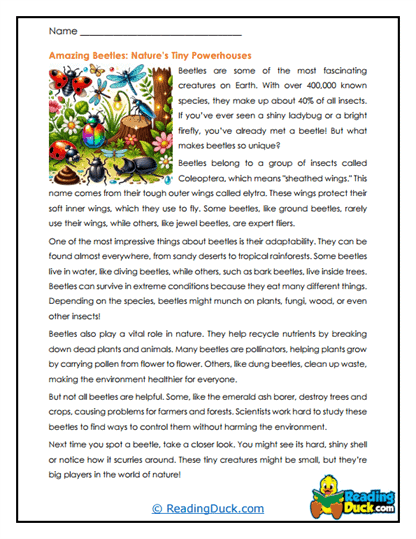
Students meet beetles as some of the most successful insects on Earth, learning about hard wing covers, adaptability, and ecological benefits. The passage also explains how beetles break down plants, clean waste, and pollinate-while acknowledging that a few species can cause trouble. It builds comprehension of main ideas and scientific vocabulary. Fun fact: beetles make up nearly one-quarter of all known animals-Mother Nature really loves their design!
Glossy Giant
This worksheet explores beetle bodies-elytra, horns, pincers, colors, and even bioluminescent glow. Students connect these features to survival strategies like hiding, fighting, and attracting mates. It supports descriptive reading and biological vocabulary. Incredible detail: some rhinoceros beetles can lift objects 100 times their own weight-tiny superheroes with six legs.
Habitat Hunters
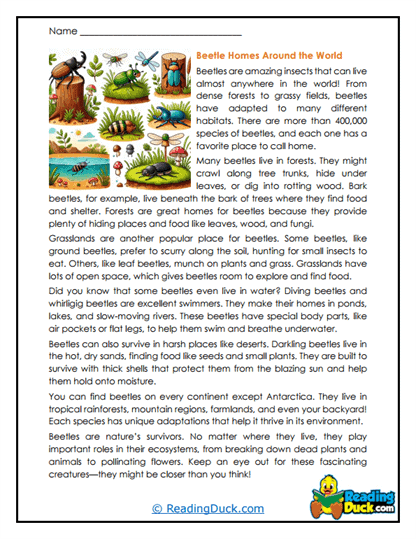
Readers travel through forests, deserts, wetlands, and grasslands to discover beetles living under bark, in soil, in water, and everywhere in between. The passage explains how beetles adapt to heat, cold, dryness, and darkness. It strengthens comprehension of habitat and environmental relationships. Cool note: beetles live on every continent-except Antarctica. (Even beetles don't want frostbite!)
Menu Masters
Students learn how beetles can be plant eaters, predators, scavengers, or all of the above. The text explains how jaws, senses, and searching behaviors connect to their diets and habitats. It builds classification and ecological vocabulary. Yummy truth: ladybugs can eat up to 50 aphids a day-tiny but mighty pest-control pros.
Busy Beetle Life
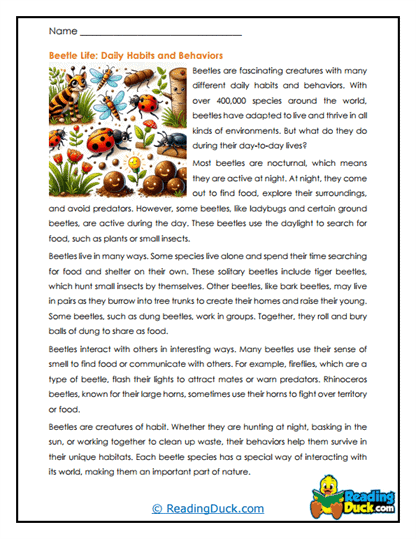
This worksheet explores beetles' foraging, hiding, caring for young, and navigating their world-day or night. Students practice identifying behavioral patterns and linking them to survival. It builds vocabulary and ecological reasoning. Fun twist: some beetles use stinky smells to scare off predators-perfume with a purpose!
Reproduction Roadmap
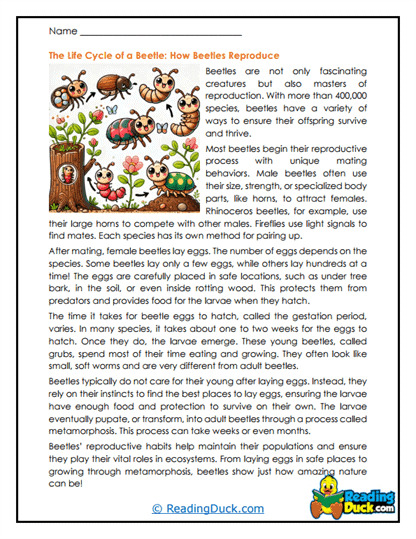
Students follow beetles through courtship dances, egg-laying, larval care, and protective strategies. The passage builds understanding of sequential biological events. It strengthens comprehension and science vocabulary. Fascinating fact: some beetle parents guard their eggs or even bring food to their larvae-devoted moms and dads in tiny armor!
Metamorph Magic
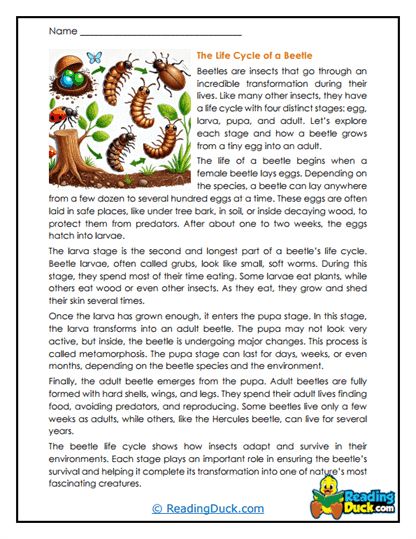
This reading breaks down beetle metamorphosis from egg to larva to pupa to adult. Students learn how bodies transform, molt, and grow specialized traits. It reinforces sequencing and biological literacy. Magical detail: some beetle pupae wiggle or click when disturbed-nature's "Do Not Disturb" sign.
Signal Senders
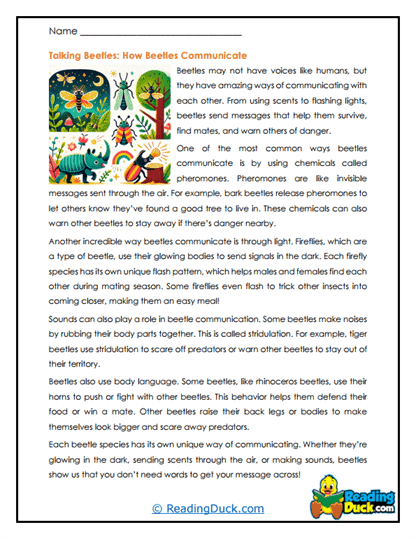
Students explore beetle communication using scents, light flashes, sounds, and movements. The passage compares signals across species and links them to survival. It builds inferential thinking and scientific vocabulary. Sparkly fact: fireflies (a type of beetle!) use their glow to flirt, warn predators, and even "talk" across meadows.
Threat Trackers
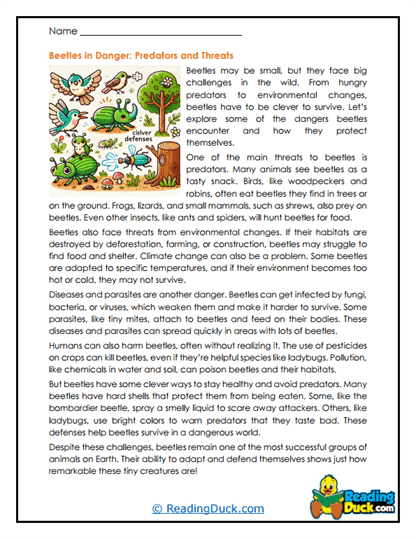
Readers study the dangers beetles face-predators, parasites, pollution, climate change, and habitat loss. The text shows beetle defenses such as shells, camouflage, and dramatic behaviors. It strengthens problem-solution comprehension. Impressive twist: bombardier beetles can spray boiling chemicals from their abdomen-defense level: expert.
Ecosystem Engineers
This passage shows how beetles keep ecosystems stable by recycling nutrients, controlling pests, and pollinating plants. Students identify multiple supporting examples to understand ecological roles. It builds environmental literacy and holistic thinking. Amazing fact: dung beetles can bury dung faster than most animals can make it-Earth's most dedicated cleanup crew.
Motion Masters
Students explore how beetles run, fly, climb, and swim using specialized legs, claws, and wings. The worksheet connects locomotion to habitat needs and survival. It strengthens descriptive comprehension. Fun tidbit: water beetles can trap air under their wings and dive like scuba divers-oxygen tanks included!
Nature Neighbors
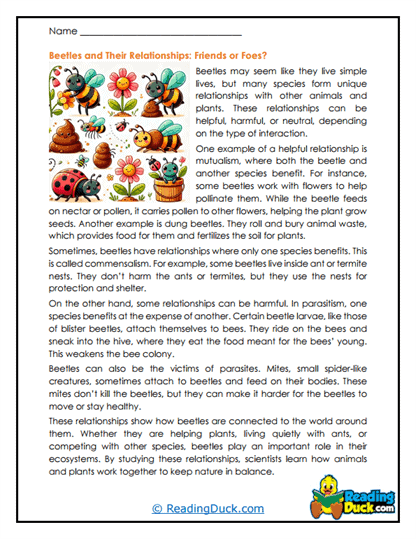
This reading examines beetles' relationships with plants, termites, mites, and more through mutualism, commensalism, and parasitism. Students practice classification and ecological reasoning. It builds vocabulary and analytical skills. Fascinating fact: some beetles live inside ant or termite nests as "guests"... until the hosts realize they're freeloading!
All About the Beetle
Where It Lives
Beetles live in nearly every habitat on Earth-under rocks, inside logs, deep in soil, high in treetops, and even underwater. Their tough bodies and creative adaptations let them thrive in deserts, wetlands, forests, and fields. Wherever life exists, beetles are already there with a job to do. Their global success makes them one of nature's most versatile survivors.
What It Eats
Beetles eat almost anything: leaves, fruit, seeds, fungi, insects, carrion, nectar-even rotting wood. Each species fills a unique role in the food chain, shaping landscapes with every bite. Herbivores prune plants, carnivores control pests, and scavengers clean up leftovers. Their diets help ecosystems run smoothly and sustainably.
How It Acts
Beetles are busy-bodied creatures with habits that range from sneaking through soil to soaring through night skies. Some dig tunnels, others patrol leaves, and many follow scent trails like tiny detectives. Their behaviors help them stay fed, hidden, and safe. Every movement reflects millions of years of adaptation.
How It Survives
Beetles survive through armor-like shells, camouflage colors, strong jaws, and sometimes chemical defenses. Their wings let them escape danger, while their bodies handle heat, cold, drought, and storms. Many play dead, spray liquids, or burrow to avoid predators. They don't just live in nature-they outsmart it.
How It Raises Babies
Female beetles lay eggs in protected places-inside wood, underground, or near food sources. Larvae hatch hungry and ready to grow, molting multiple times before becoming pupae. Adults emerge fully formed and ready to find mates, feed, and continue the cycle. It's a life system built for resilience and renewal.
Is It in Danger?
Many beetles thrive, but others face threats from pesticides, habitat loss, pollution, and climate changes. Their roles in pollination, decomposition, and pest control make their decline a serious ecological concern. Conservation efforts protect beetle habitats and biodiversity. Saving beetles helps save the systems that support all life-including us.
Make sure to bookmark our website now.
Enjoy all our free reading worksheets.
Our materials adhere to the principles of the Science of Reading.