Houseflies are tiny insects that children see almost every day, but there is much more to them than buzzing around the kitchen or backyard. These fast-moving insects have amazing body features that help them fly, find food, and survive in many different environments. Students will discover how houseflies live, grow, and interact with nature through fun nonfiction reading passages. Learning about houseflies also helps children understand ecosystems, animal behavior, and the important role insects play in the world around us.
Our houseflies worksheets help students build strong reading comprehension and nonfiction skills while learning interesting science facts. Children practice finding main ideas, understanding details, and learning new vocabulary connected to habitats, life cycles, movement, and ecosystems. These passages also encourage critical thinking as students explore how houseflies can be both helpful and harmful in nature. Along the way, students strengthen fluency, reading confidence, and the ability to explain scientific ideas clearly.
Studying houseflies can inspire children to become more curious observers of the natural world. As students learn how these insects survive and adapt, they develop stronger scientific thinking and problem-solving skills. Reading informational texts about animals also helps children feel more comfortable with nonfiction reading in school and everyday life. With engaging topics and meaningful learning opportunities, these worksheets encourage students to explore science with confidence and curiosity.
Meet the Worksheets
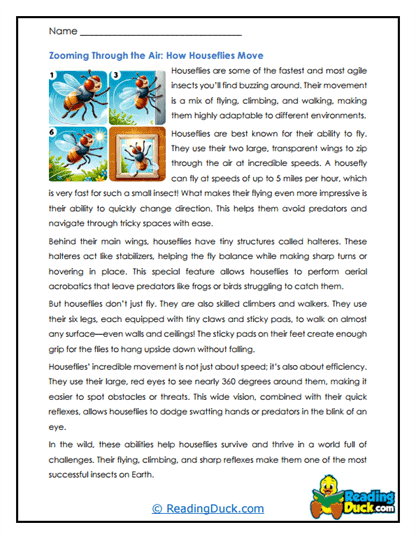
Air Zoomers
Students learn about the amazing movement skills that help houseflies fly, climb, and escape danger. The worksheet encourages readers to explore how wings, sticky feet, and special body parts work together during movement. Children strengthen comprehension and science vocabulary while connecting body structures to survival. Students are often surprised to learn that houseflies can even walk upside down on ceilings.
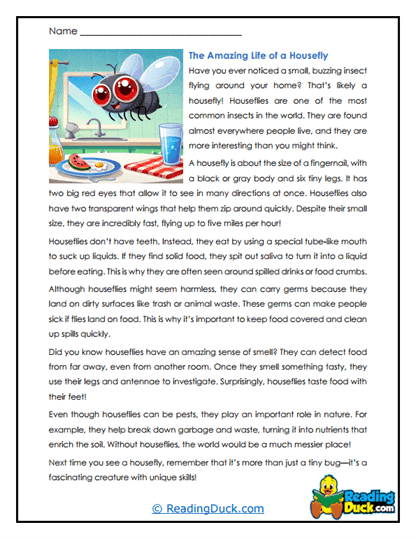
Buzzing Visitors
This worksheet introduces students to the world of houseflies and explains why these insects are both useful and troublesome. Readers explore how houseflies eat, move, and interact with their environment through engaging nonfiction text. The passage supports reading comprehension, vocabulary growth, and critical thinking skills. Children also discover how houseflies help break down waste and recycle nutrients in nature.
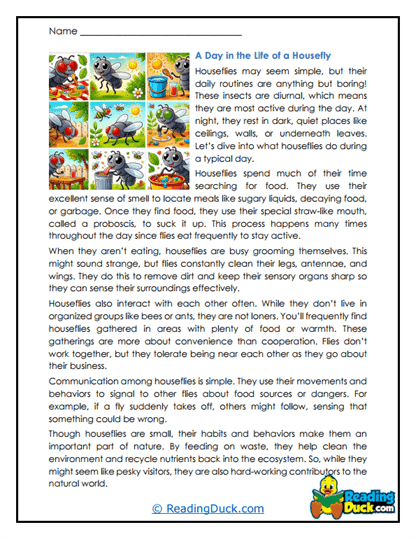
Daily Flyers
Students explore what a typical day looks like for a busy housefly. The passage guides readers through activities such as feeding, grooming, and avoiding predators during daylight hours. Children practice sequencing skills and improve understanding of chronological events in nonfiction reading. Many students enjoy learning how carefully flies clean their wings and antennae to stay alert.
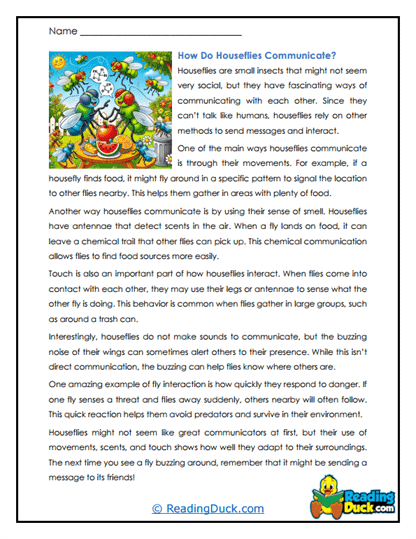
Fly Signals
This worksheet teaches students about the surprising ways houseflies communicate with one another. Readers examine how movement, scents, touch, and buzzing sounds help flies respond to food and danger. The passage strengthens close-reading skills while introducing new vocabulary related to behavior and interaction. Students may be amazed to learn that tiny insects can send signals to nearby flies.
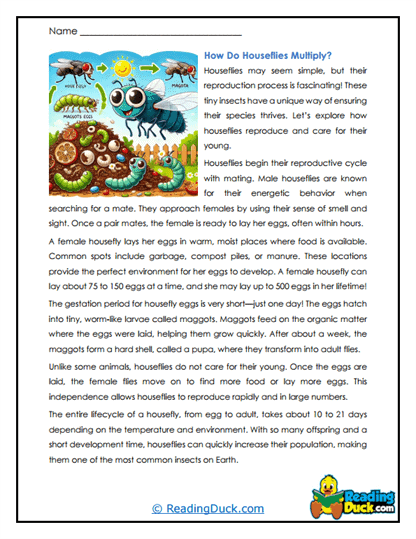
Growing Flies
Students learn how houseflies develop from eggs into adult insects through several stages of growth. The worksheet explains how maggots hatch, feed, and eventually transform into adult flies. Readers strengthen sequencing and organizational thinking while building science vocabulary. Children often find it fascinating how quickly houseflies can reproduce and grow.
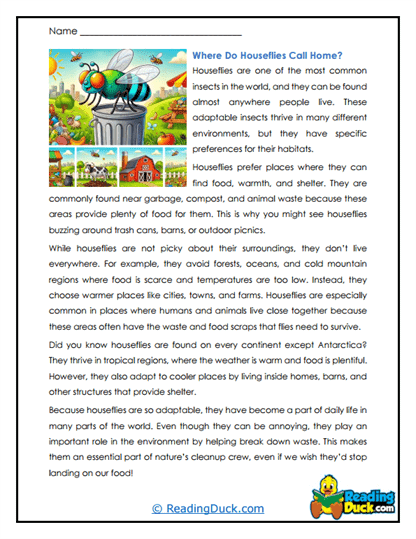
Housefly Homes
This passage explores the habitats where houseflies live and explains why they are often found near people. Students investigate how warm places with food, shelter, and waste help flies survive in many environments. The worksheet supports comprehension skills by helping readers connect animals with their habitats. Students also gain a better understanding of how adaptable houseflies are around the world.
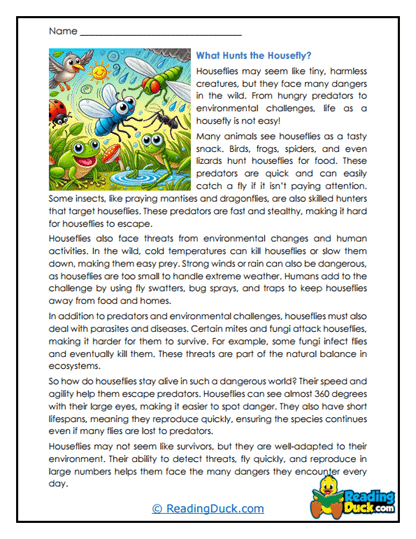
Hunters Above
Students discover the many predators and dangers that houseflies face in nature every day. The passage explains how birds, spiders, frogs, and other animals hunt flies while environmental threats also challenge their survival. Readers practice identifying problems and solutions while building nonfiction reading skills. Children learn how quick reflexes and fast flying help houseflies escape danger.
Life Cycle
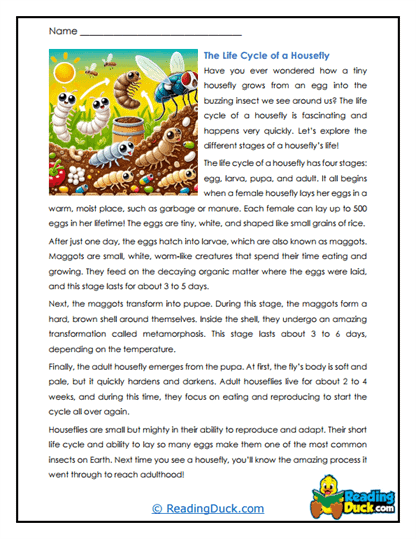
This worksheet explains the complete life cycle of a housefly from egg to adult. Students follow each stage closely while learning about larvae, pupae, and metamorphosis. The passage builds sequencing, vocabulary, and comprehension skills through clear scientific explanations. Readers often enjoy seeing how quickly a tiny egg can become a fully grown fly.
Menu Time
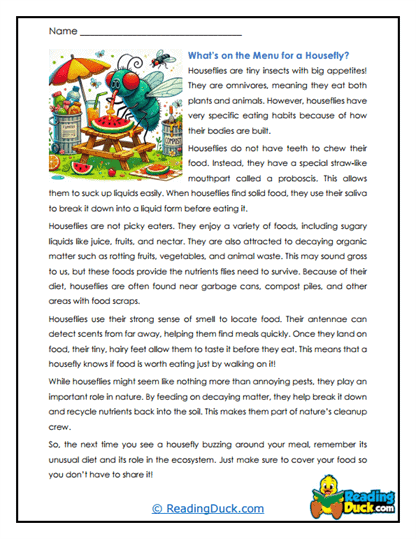
Students learn about the foods houseflies eat and the special mouthparts they use to drink liquids. The worksheet explores how flies locate food using taste sensors and a strong sense of smell. Readers improve comprehension while learning cause-and-effect relationships between body parts and survival. Children are usually interested to discover that flies taste food with their feet.
Tiny Buzzers
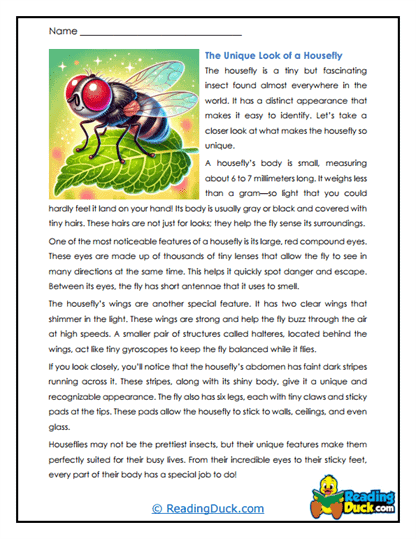
This passage takes a closer look at the body parts that make houseflies unique insects. Students learn about compound eyes, transparent wings, sticky feet, and tiny hairs that help flies survive. The worksheet encourages close reading and careful observation of animal adaptations. Readers gain a deeper appreciation for how even very small creatures are specially designed for life.
Tiny Helpers
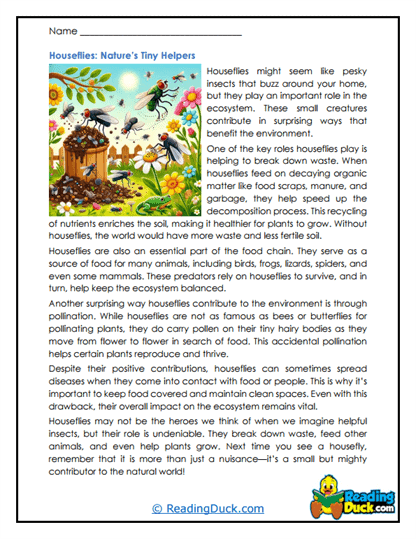
Students explore the important role houseflies play in ecosystems despite often being considered pests. The passage explains how flies help decompose waste, pollinate plants, and provide food for other animals. Readers strengthen nonfiction comprehension while learning how living things depend on one another in nature. Children often begin to see houseflies in a new and more thoughtful way after reading.
Unexpected Connections
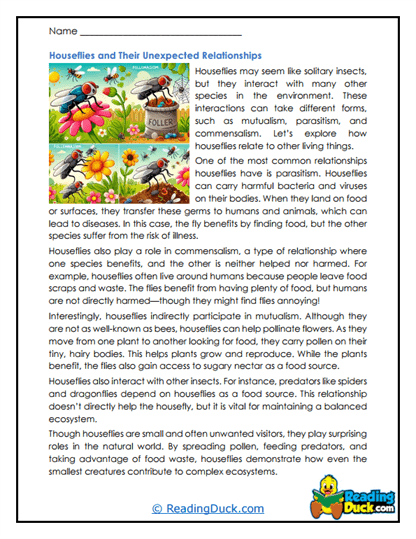
This worksheet examines the many relationships houseflies have with plants, animals, and people. Students learn about pollination, predator-prey relationships, parasitism, and other interactions found in ecosystems. The passage encourages higher-level thinking as readers compare different kinds of connections in nature. Students discover that even tiny insects can have a large impact on the environment.
A Better Look At Houseflies
Houseflies may seem ordinary, but they are important parts of ecosystems all over the world. These insects help break down decaying materials, recycle nutrients into the soil, and provide food for many animals. Their quick movements, special body structures, and fast life cycles make them interesting examples of adaptation and survival. By studying houseflies, students learn how even small creatures can play big roles in nature and science.
Reading about houseflies also helps children become stronger readers, thinkers, and observers. Students practice understanding nonfiction texts, learning scientific vocabulary, and explaining ideas using evidence from what they read. Exploring animal behavior and ecosystems encourages curiosity and helps children pay closer attention to the natural world around them. With each passage, students build confidence, strengthen comprehension skills, and discover that science can be exciting and fun.
Make sure to bookmark our website now.
Enjoy all our free reading worksheets.
Our materials adhere to the principles of the Science of Reading.