Grasshoppers are some of the most interesting insects students can study. These amazing jumpers can leap long distances, hide from predators with camouflage, and survive in many different habitats around the world. Our Grasshopper Worksheets help children explore how these insects live, grow, move, and survive in nature. As students learn about grasshoppers, they also discover how even tiny creatures play an important role in the environment.
Learning about grasshoppers helps students build strong science and reading skills at the same time. Children practice reading nonfiction text, learning new vocabulary, and understanding how animals adapt to survive. These worksheets also help students connect science concepts to the real world by exploring food chains, habitats, communication, and ecosystems. By studying grasshoppers, students become better readers, thinkers, and observers of the natural world around them.
Understanding insects like grasshoppers can inspire curiosity that lasts for years. Students learn how living things depend on one another and how nature stays balanced through many different relationships. These activities also encourage children to ask questions, think critically, and enjoy discovering new scientific ideas. Over time, learning about animals and ecosystems helps students build confidence and develop a deeper appreciation for science and nature.
Meet the Worksheets
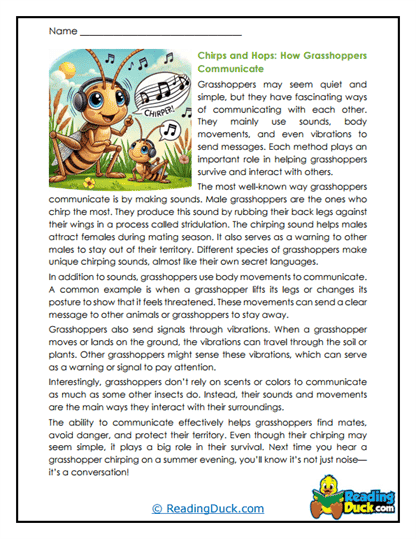
Chirps and Hops
Students discover the fascinating ways grasshoppers communicate with one another. They learn how chirping sounds, body movements, and vibrations help grasshoppers attract mates and warn others of danger. This worksheet strengthens close-reading and critical-thinking skills through detailed informational text. Readers also realize that insects communicate in many more ways than people often expect.
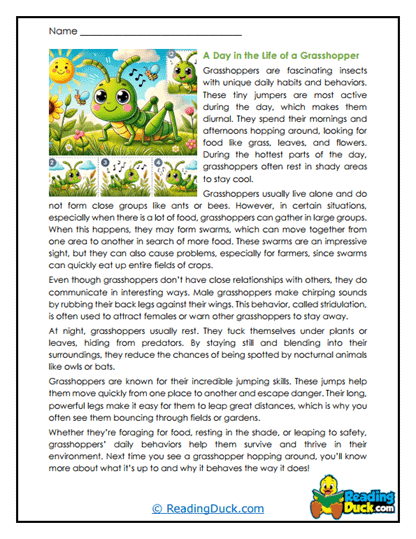
Daily Hopper
Students follow a grasshopper through a typical day filled with eating, resting, communicating, and escaping predators. They learn how grasshoppers use sounds, movement, and camouflage to survive from morning to night. This worksheet helps students practice sequencing and understanding events in chronological order. Children also gain insight into how animal behaviors help creatures adapt to their surroundings.
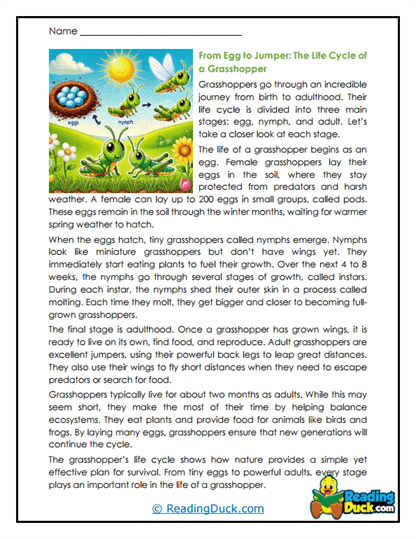
From Egg to Jumper
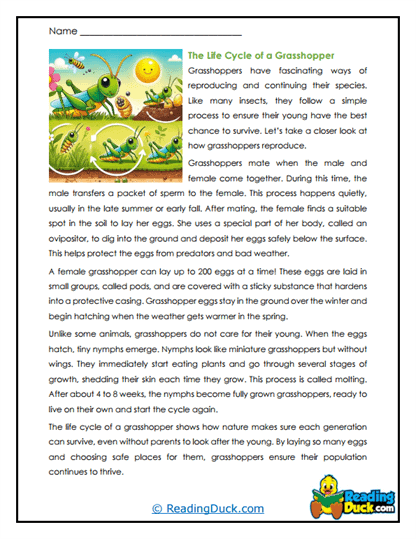
Students trace the complete journey of a grasshopper from tiny eggs hidden underground to active adults. They read about egg pods, molting, growth, and the survival skills grasshoppers develop over time. This worksheet supports reading fluency and helps students explain step-by-step scientific processes clearly. Children also learn how each stage of life prepares grasshoppers for survival in nature.
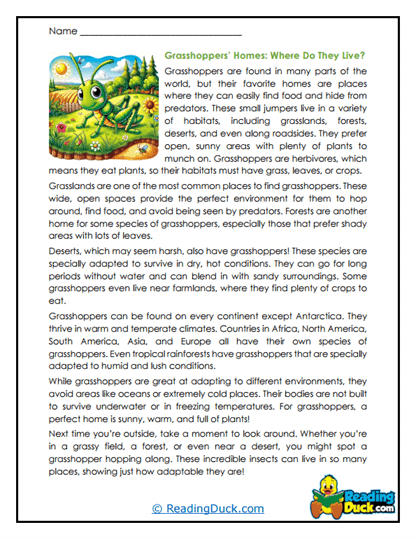
Grasshopper Homes
Students explore the many habitats where grasshoppers live around the world. They discover how these insects survive in grasslands, deserts, forests, and other environments by adapting to different conditions. This worksheet builds comprehension and vocabulary skills through descriptive nonfiction reading. Students also learn how habitats provide animals with food, shelter, and protection from danger.
Jumping Wonders
Students learn about the unique features that make grasshoppers such fascinating insects. They explore how grasshoppers jump, fly, hide from predators, and survive in different environments. This worksheet strengthens nonfiction reading skills while helping students build scientific vocabulary and comprehension strategies. Children also discover that even small insects play an important role in ecosystems and food chains.
Life Cycle
Students learn about the stages of a grasshopper's life from egg to adult. They discover how nymphs grow through molting and how each stage helps grasshoppers survive and reproduce. This worksheet strengthens sequencing, comprehension, and scientific vocabulary skills. Readers also see how nature follows organized patterns that support life and growth.
Nature's Neighbors
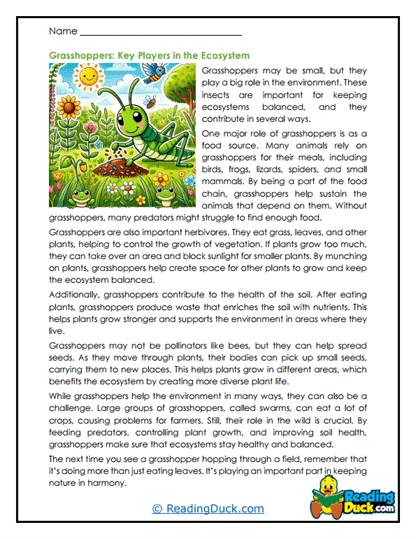
Students learn how grasshoppers help keep ecosystems healthy and balanced. They explore how grasshoppers support food chains, control plant growth, and return nutrients to the soil. This worksheet strengthens students' understanding of cause-and-effect relationships in nature. Children also discover how every living thing contributes to the balance of an ecosystem.
Nature's Partners
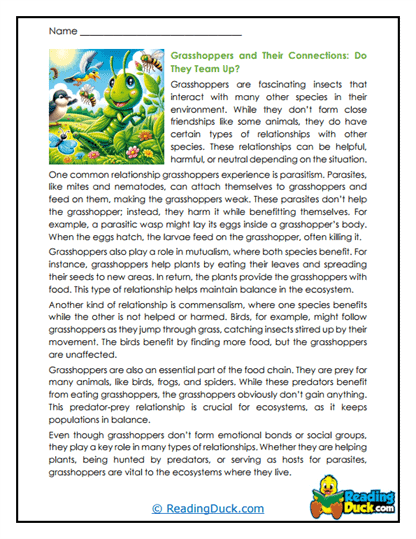
Students explore the different relationships grasshoppers have with other organisms in nature. They learn about predator-prey relationships, parasitism, commensalism, and how grasshoppers help ecosystems function. This worksheet builds analytical thinking and vocabulary development through rich informational reading. Students also gain a stronger understanding of how living things depend on one another for survival.
Predator Problems
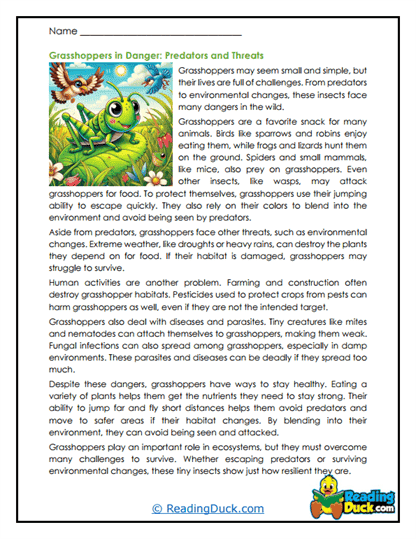
Students explore the many dangers grasshoppers face in the wild. They learn about predators, habitat loss, droughts, parasites, and other threats that challenge grasshopper survival. This worksheet helps students practice identifying problems and solutions while building nonfiction comprehension skills. Readers also gain a deeper understanding of how resilience helps animals survive difficult conditions.
Sky Hoppers
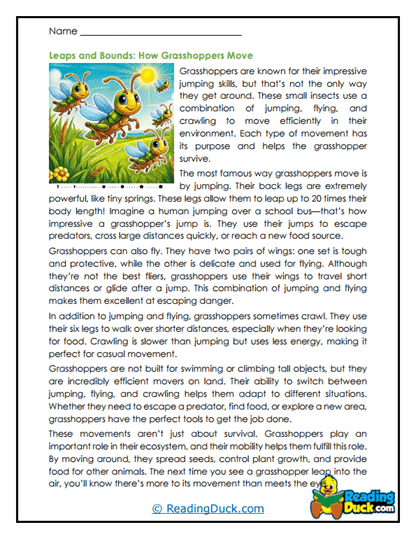
Students study the many ways grasshoppers move through their environments. They learn how jumping, flying, gliding, and crawling help these insects escape predators and search for food. This worksheet improves comprehension by connecting body structures to important survival functions. Readers also enjoy visualizing the amazing athletic abilities of these powerful insects.
Tiny Explorers
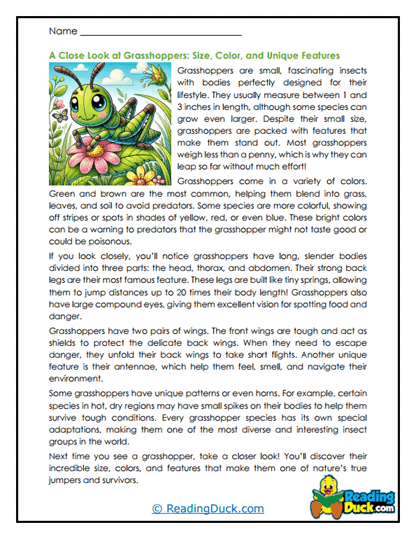
Students examine the physical features and body parts of grasshoppers in greater detail. They learn how different structures, such as wings, antennae, and powerful legs, help grasshoppers survive in nature. This worksheet helps students understand cause-and-effect relationships while improving close-reading and observation skills. Readers also gain a deeper appreciation for the many creative adaptations found in the insect world.
What's on the Menu?
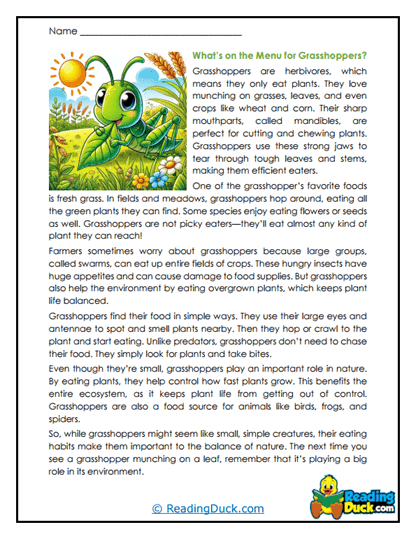
Students learn about the feeding habits of grasshoppers and why they are considered herbivores. They read about how grasshoppers chew plants, affect gardens and crops, and support food chains in nature. This worksheet strengthens students' ability to identify main ideas and supporting details in informational text. Readers also discover how even tiny eating habits can have a large impact on ecosystems.
A Better Look At Grasshoppers
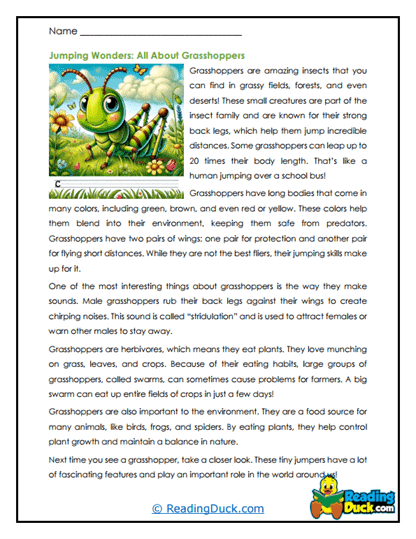
Grasshoppers may seem small, but they are full of interesting features and behaviors. These insects can jump many times the length of their own bodies and use camouflage to stay hidden from predators. Grasshoppers live in many different habitats around the world and help keep ecosystems balanced by eating plants and serving as food for other animals. Their movements, sounds, and life cycles make them exciting creatures for students to study and understand.
Learning about grasshoppers also helps students become stronger readers and scientists. As children explore nonfiction passages, they practice finding important details, learning new vocabulary, and explaining scientific ideas clearly. Studying animals encourages curiosity and helps students understand how nature works together as one connected system. Most importantly, these worksheets show students that every living thing-even a tiny grasshopper-has an important place in the world.
Make sure to bookmark our website now.
Enjoy all our free reading worksheets.
Our materials adhere to the principles of the Science of Reading.