Mosquitoes are tiny insects that children often notice buzzing around during warm weather, but there is much more to these creatures than itchy bites. These fascinating insects go through several life stages and have special body features that help them survive in many environments around the world. Students will learn how mosquitoes grow, move, communicate, and interact with nature through engaging nonfiction reading passages. Studying mosquitoes also helps children understand ecosystems, food chains, and how animals adapt to survive.
Our mosquitoes worksheets help students build important reading comprehension and science skills while exploring interesting facts about insects. Children practice identifying main ideas, understanding sequences, and learning new vocabulary connected to habitats, life cycles, ecosystems, and animal behavior. These passages also encourage critical thinking as students discover how mosquitoes can be both helpful and harmful in nature. As students read and explain what they learn, they strengthen fluency, communication, and confidence with nonfiction texts.
Learning about mosquitoes encourages children to become curious observers and thoughtful readers. Students discover how even small insects can have important roles in ecosystems by serving as pollinators and food sources for other animals. Reading informational texts about science also helps children improve problem-solving, observation, and analytical thinking skills. With engaging topics and meaningful lessons, these worksheets inspire students to explore the natural world with confidence and curiosity.
Meet the Worksheets
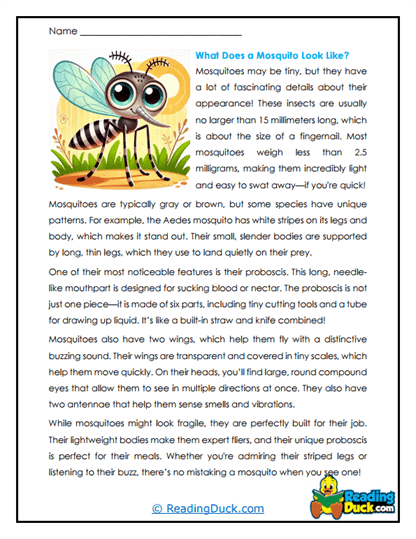
Buzzing Bodies
Students learn about the special body parts that help mosquitoes survive and move through their environments. The passage explains how wings, antennae, compound eyes, and the proboscis each serve important purposes. Readers strengthen observation and comprehension skills by connecting body structures to specific functions. Children are often fascinated by how mosquitoes can detect heat, movement, and smells from far away.
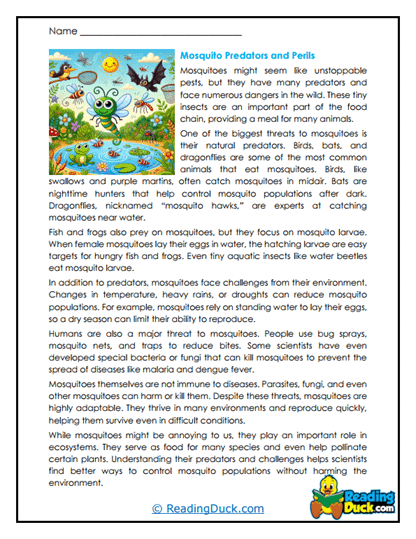
Dangerous Waters
This worksheet explores the many predators and environmental dangers mosquitoes face throughout their lives. Students learn how birds, bats, frogs, fish, and insects help control mosquito populations in nature. The passage strengthens critical thinking and comprehension by helping readers identify problems and survival strategies. Children also discover that mosquitoes remain important members of food chains despite being viewed as pests.
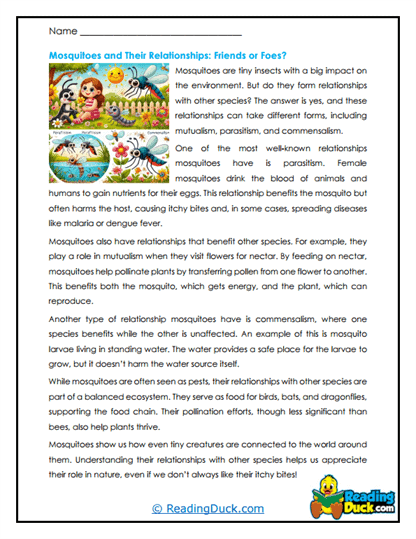
Friends or Foes
Students explore the many relationships mosquitoes have with plants, animals, and aquatic environments. The passage introduces interactions such as parasitism, mutualism, and commensalism through clear scientific examples. Readers practice comparing different ecosystem relationships while building advanced nonfiction vocabulary. Students gain a deeper understanding of how living things depend on one another in nature.
Hovering Fliers
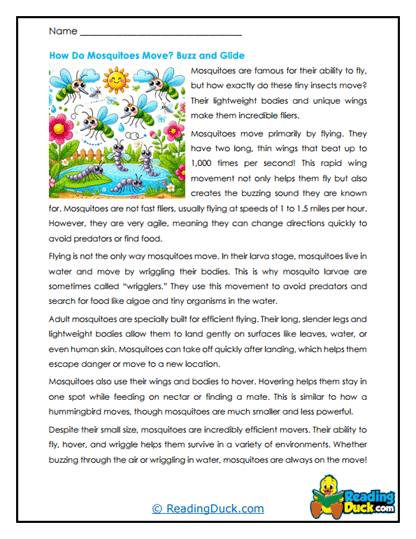
This worksheet explains the remarkable ways mosquitoes move through the air and water. Students learn how adult mosquitoes hover and glide while larvae wiggle through water during early life stages. The passage helps readers connect movement with survival and adaptation in different habitats. Children often enjoy learning why mosquito larvae are sometimes called "wigglers."
Life Journey
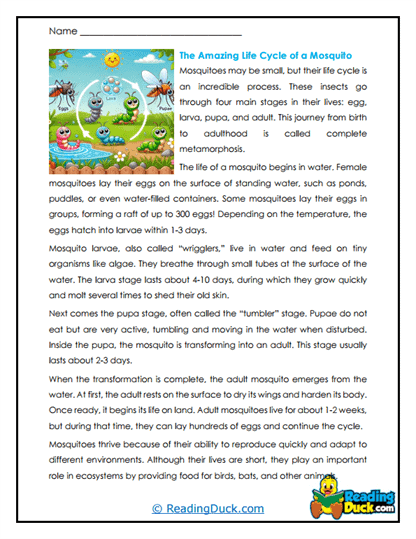
Students follow the complete life cycle of a mosquito from egg to adult insect. The worksheet explains how mosquitoes grow through the stages of egg, larva, pupa, and adult. Readers strengthen sequencing and organizational thinking while learning scientific vocabulary. Students are often surprised by how quickly mosquitoes can complete their life cycle in warm environments.
Nectar Hunters
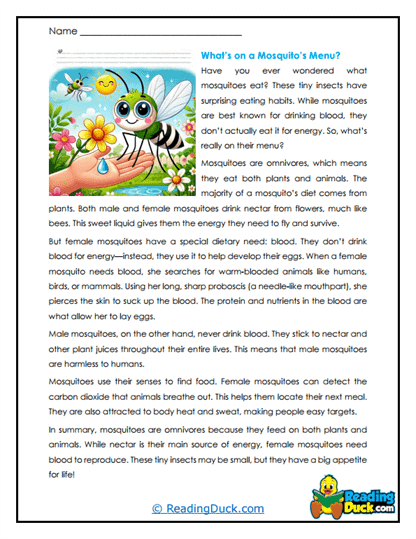
This passage teaches students about the feeding habits of mosquitoes and the differences between males and females. Readers discover that both male and female mosquitoes drink nectar, while females also need blood to produce eggs. The worksheet strengthens comprehension and cause-and-effect thinking through examples of survival and reproduction. Children may be surprised to learn that male mosquitoes never bite humans or animals.
Tiny Titans
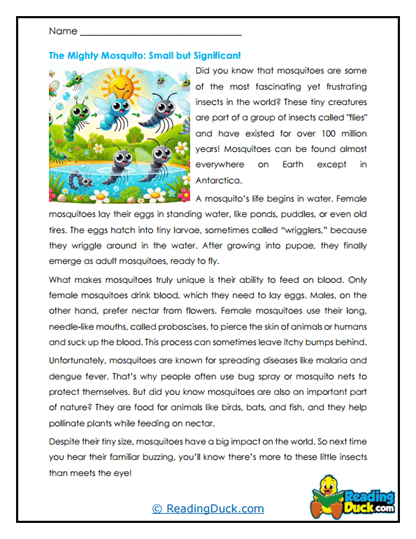
Students are introduced to the fascinating world of mosquitoes and their role in ecosystems. The passage explains mosquito life cycles, feeding habits, and how these insects contribute to food chains and pollination. Readers improve nonfiction comprehension and vocabulary skills while exploring scientific concepts. Children begin to see mosquitoes as more complex creatures than they first imagined.
Twilight Buzzers
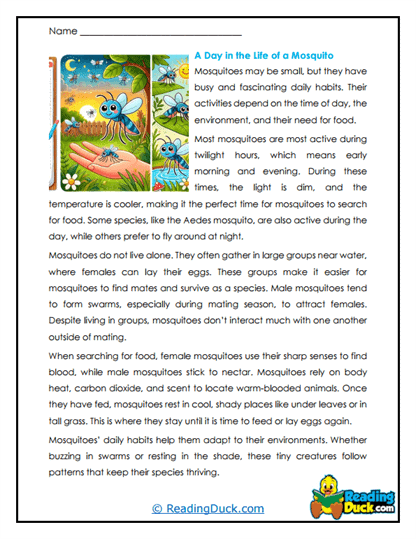
This worksheet explores the daily habits and routines of mosquitoes during twilight hours. Students learn how mosquitoes search for food, gather near water, and locate animals using heat and scent. The passage strengthens sequencing and comprehension skills by following behaviors in order. Readers also discover why mosquitoes are often more active during cooler evening hours.
Water Beginnings
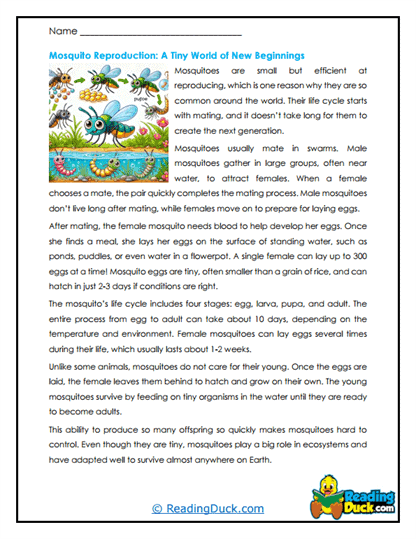
Students learn how mosquitoes reproduce and develop through four stages of growth. The worksheet explains how eggs hatch into larvae before transforming into pupae and flying adults. Readers build sequencing and science vocabulary skills while following the life cycle step by step. Children often find it interesting that mosquitoes spend much of their early life living in water.
Water Wanderers
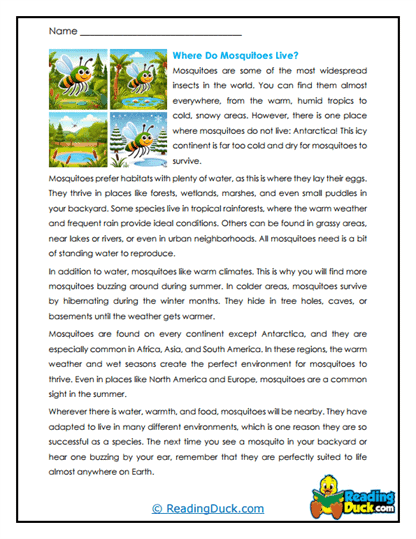
This passage explores the habitats where mosquitoes live and explains why standing water is so important to their survival. Students investigate wetlands, ponds, puddles, and urban areas where mosquitoes can reproduce and thrive. The worksheet helps readers connect animals with the environments that meet their needs. Students also learn why mosquitoes are found in nearly every part of the world except Antarctica.
Wetland Workers
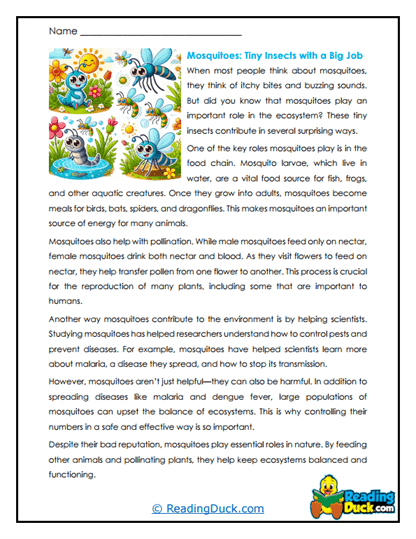
Students discover the important role mosquitoes play in ecosystems even though they are often considered pests. The passage explains how mosquitoes provide food for fish, frogs, birds, bats, and other animals. Readers strengthen comprehension and analytical thinking while learning about food chains and pollination. Children begin to understand how mosquitoes help maintain balance in nature.
Wingbeat Messages
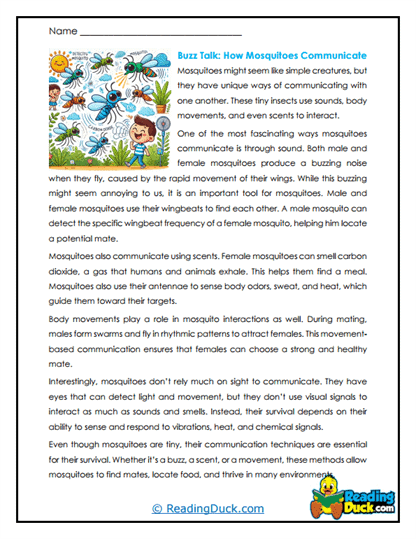
This worksheet teaches students about the unique ways mosquitoes communicate with one another. Readers learn how buzzing wingbeats, scents, heat, and body odors help mosquitoes locate mates and food sources. The passage supports close reading and vocabulary development through detailed explanations of insect behavior. Students are often amazed by the advanced ways tiny insects interact with their surroundings.
A Better Look At Mosquitoes
Mosquitoes are some of the most widespread insects on Earth and can be found in many habitats near water and warm climates. Although they are often known for spreading diseases and causing itchy bites, mosquitoes also play important roles in ecosystems. Their larvae provide food for aquatic animals, while adult mosquitoes become meals for birds, bats, frogs, and spiders. By learning about mosquitoes, students gain a better understanding of food chains, habitats, adaptation, and the balance of nature.
Reading about mosquitoes helps children become stronger readers while building scientific curiosity and observation skills. Students practice understanding nonfiction texts, learning academic vocabulary, and explaining scientific ideas clearly using evidence from what they read. Exploring topics like life cycles, movement, and ecosystems also helps children improve sequencing, comprehension, and critical thinking skills. These engaging passages encourage students to ask questions, think deeply about nature, and grow into confident lifelong learners.
Make sure to bookmark our website now.
Enjoy all our free reading worksheets.
Our materials adhere to the principles of the Science of Reading.