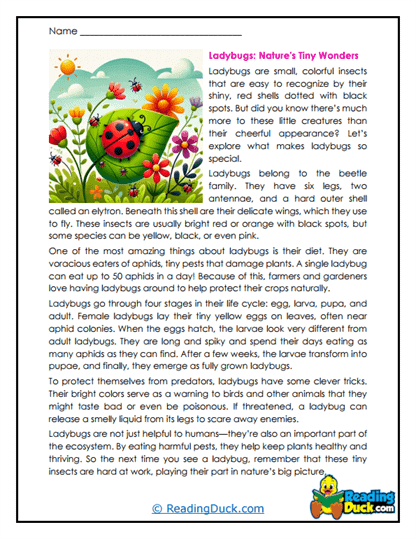
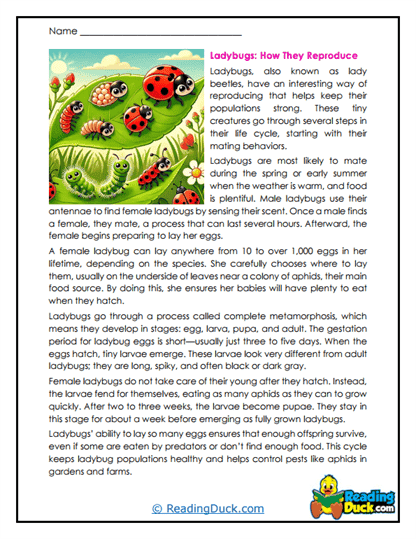
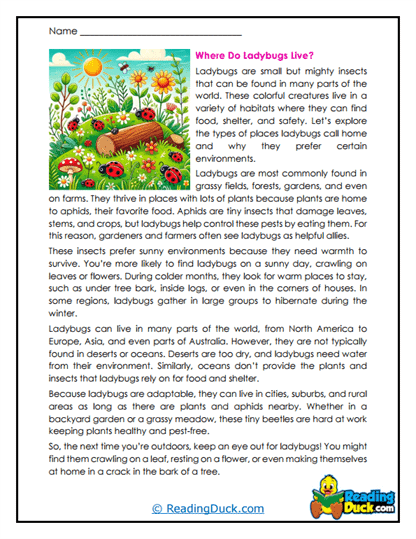
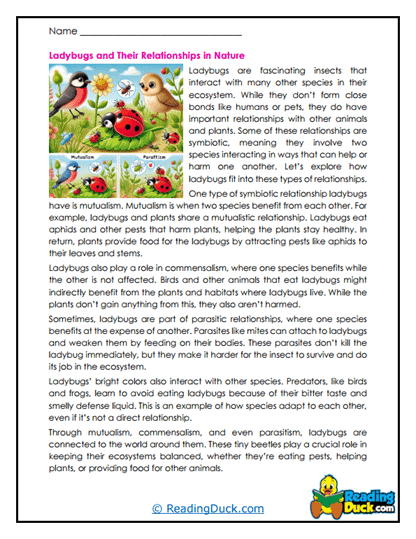
Ladybugs are tiny insects that many children recognize right away because of their bright colors and spotted shells. These helpful beetles are more than just pretty garden visitors because they play an important role in nature by eating harmful pests. Students will explore how ladybugs grow, move, survive, and help protect plants and crops. Learning about ladybugs helps children connect science ideas to the world they see in gardens, parks, and backyards every day.
Our ladybugs worksheets help students strengthen nonfiction reading skills while building science knowledge and vocabulary. Children practice identifying main ideas, understanding details, and learning new words related to habitats, life cycles, ecosystems, and animal behavior. These engaging passages also encourage critical thinking as students discover how ladybugs protect themselves, communicate, and interact with other living things. As students read and discuss these topics, they improve fluency, comprehension, and confidence with informational texts.
Studying ladybugs encourages children to become curious observers of the natural world. Students learn that even the smallest creatures can make a big difference in keeping ecosystems healthy and balanced. Reading about insects also helps children develop stronger scientific thinking, problem-solving skills, and careful observation habits. With fun and educational passages to explore, these worksheets help students grow into confident readers and excited young learners.
Meet the Worksheets
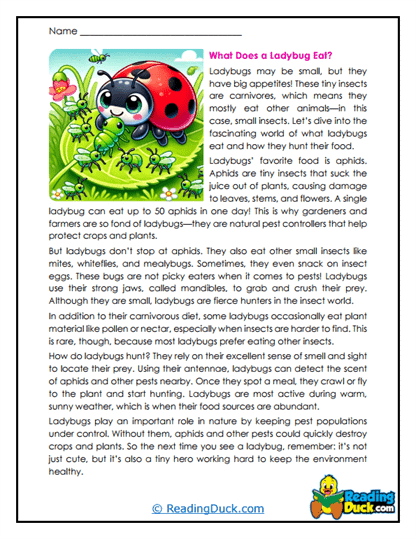
Aphid Chasers
Students learn why ladybugs are known as helpful predators in gardens and farms. The worksheet explains how ladybugs hunt aphids and other tiny pests that damage plants. Readers strengthen comprehension and cause-and-effect thinking while learning about food chains and ecosystems. Children are often amazed by how many pests one small ladybug can eat in a single day.
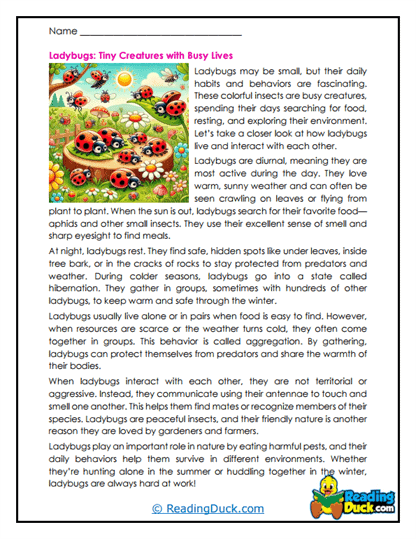
Busy Beetles
This passage gives students a closer look at the daily routines and behaviors of ladybugs. Readers explore how ladybugs search for food, stay warm, and gather together during colder months. The worksheet supports sequencing and comprehension skills by helping students follow events in order. Students also discover that ladybugs communicate in gentle ways using scent and touch.
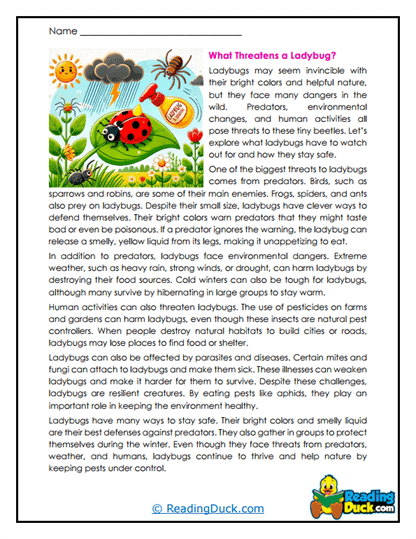
Danger Ahead
Students discover the many dangers ladybugs face in nature and how they stay safe from harm. The passage explains how predators, weather, and environmental changes can threaten ladybug populations. Readers practice identifying problems and solutions while building stronger nonfiction reading skills. Children often enjoy learning about the bright warning colors and defensive liquids ladybugs use for protection.
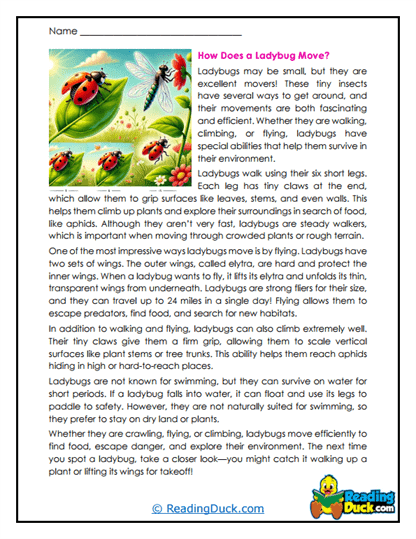
Flying Spots
This worksheet explores the different ways ladybugs move through their environments. Students learn how ladybugs use their wings, legs, and protective shells to climb, crawl, and fly. The passage strengthens comprehension by connecting body structures with movement and survival. Readers may be surprised to learn that ladybugs can travel long distances while searching for food and shelter.
Garden Guardians
Students are introduced to the fascinating world of ladybugs and their important role in nature. The worksheet explains how ladybugs help gardens and farms by eating pests that damage plants. Readers build vocabulary and nonfiction comprehension skills while learning about life cycles and adaptations. Children come away with a greater appreciation for how tiny insects can help the environment in big ways.
Growing Spots
This passage explains how ladybugs reproduce and develop through complete metamorphosis. Students follow the stages from egg to larva, pupa, and finally adult ladybug. The worksheet helps readers strengthen sequencing and science vocabulary skills. Many students are surprised to discover that young ladybug larvae look very different from adult ladybugs.
Ladybug Homes
Students explore the many habitats where ladybugs live and thrive around the world. The passage explains why gardens, farms, forests, and grassy areas provide food and shelter for these insects. Readers improve comprehension by connecting animals to the environments where they survive best. Children also learn how ladybugs adapt during changing seasons by gathering together in warm places.
Nature Connections
This worksheet explores the many relationships ladybugs have with plants, animals, and insects in ecosystems. Students learn about mutualism, commensalism, parasitism, and predator-prey interactions through real examples. The passage encourages higher-level thinking while helping readers compare different types of relationships in nature. Students gain a better understanding of how all living things are connected in ecosystems.
Secret Signals
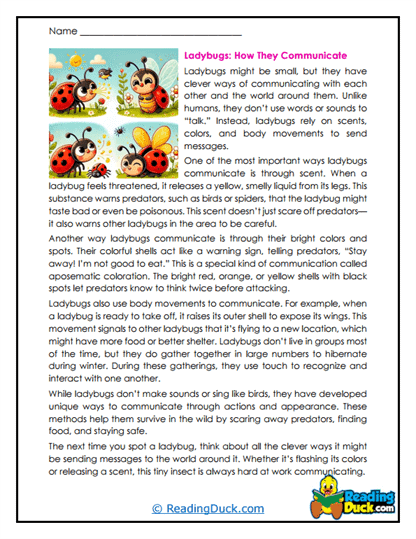
Students learn about the clever ways ladybugs communicate and protect themselves from predators. The worksheet explains how colors, scents, and defensive liquids help ladybugs send warning signals. Readers strengthen close-reading and analytical thinking skills while exploring animal behavior. Children often find it interesting that ladybugs use communication methods without making sounds.
Spotted Beauties
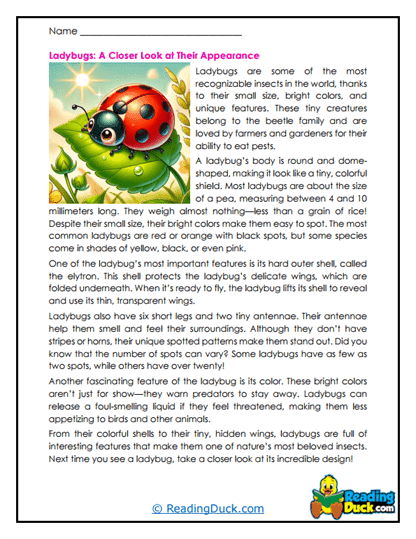
This passage gives students a detailed look at the appearance and body structure of ladybugs. Readers learn about shells, wings, antennae, legs, and the bright colors that help ladybugs survive. The worksheet encourages observation and close-reading skills by connecting body parts with their functions. Students also discover that ladybugs come in many different colors and spot patterns.
Spotted Stages
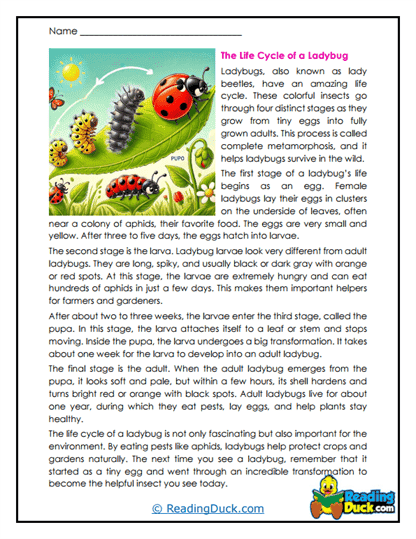
Students follow the complete life cycle of a ladybug from egg to adult beetle. The passage explains how ladybugs go through metamorphosis and why each stage is important for survival. Readers strengthen sequencing and organizational thinking while learning scientific vocabulary. Children are often fascinated by the dramatic transformation ladybugs experience as they grow.
Tiny Heroes
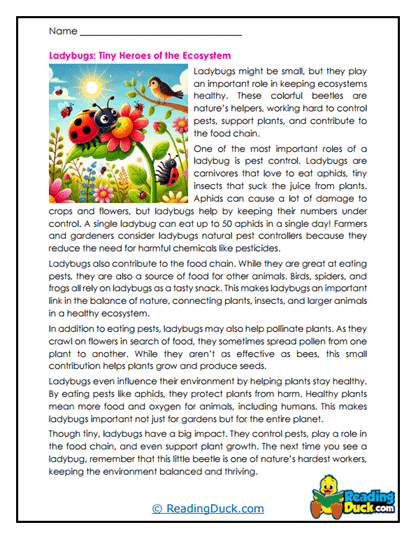
This worksheet teaches students about the important role ladybugs play in healthy ecosystems. Readers learn how ladybugs protect plants, support gardens, and become part of the food chain. The passage strengthens comprehension by helping students identify main ideas and supporting details. Students begin to understand that even tiny insects can have a very large impact on nature.
A Better Look At Ladybugs
Ladybugs are some of the most helpful insects found in gardens, farms, and natural habitats around the world. These colorful beetles protect plants by eating pests like aphids that can damage crops and flowers. Ladybugs also play important roles in food chains and ecosystems because they serve as food for birds, frogs, and other animals. By learning about ladybugs, students gain a deeper understanding of how insects help keep nature balanced and healthy.
Reading about ladybugs helps children become stronger readers while encouraging scientific curiosity and observation. Students practice understanding nonfiction text, learning new vocabulary, and explaining ideas clearly using evidence from what they read. Exploring topics like life cycles, habitats, and adaptations also helps children build confidence with science concepts and informational reading. These engaging passages encourage students to stay curious, ask thoughtful questions, and enjoy discovering more about the natural world.
Make sure to bookmark our website now.
Enjoy all our free reading worksheets.
Our materials adhere to the principles of the Science of Reading.