About Our Stick Insect Reading Comprehension Worksheets
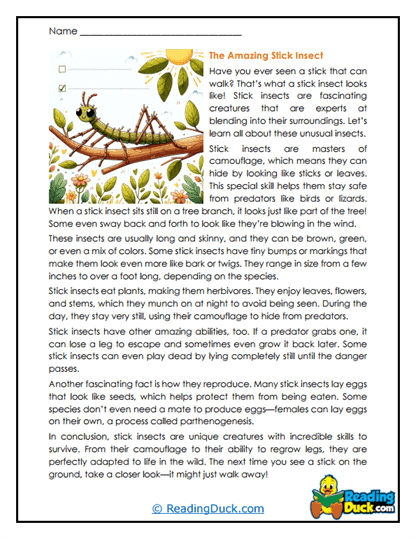
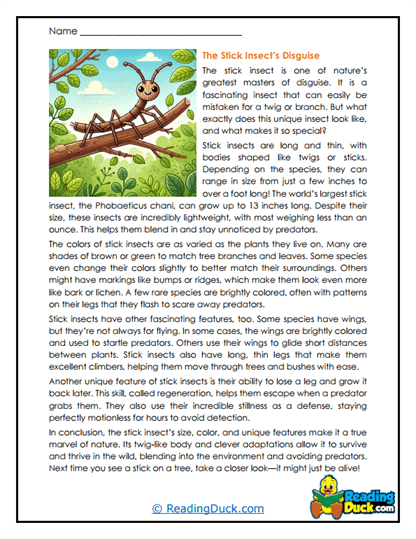
Stick insects are some of the most fascinating creatures in the insect world. Their ability to look like twigs, leaves, and branches helps them stay hidden from predators and survive in many different habitats. Learning about stick insects introduces students to important science topics such as adaptation, camouflage, habitats, and life cycles. These remarkable insects show how animals develop special traits to meet the challenges of their environment.
Our Stick Insect Reading Comprehension Worksheets help students build strong nonfiction reading skills while exploring the natural world. As they read, students practice finding main ideas, identifying supporting details, expanding vocabulary, and understanding cause-and-effect relationships. The passages also encourage critical thinking by helping students connect animal behaviors to survival strategies. These are valuable skills that support success in science, reading, and everyday learning.
Studying stick insects helps children become more observant and curious about the world around them. They learn to ask questions, look closely at evidence, and think about how living things interact with their environments. These worksheets also build confidence by giving students opportunities to read and understand engaging informational texts independently. We hope these activities inspire a lifelong appreciation for nature and a love of learning.
Meet the Worksheets
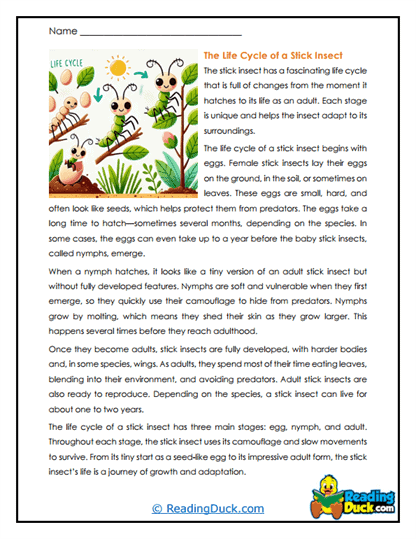
Camouflage Journey
Students learn about the life cycle of a stick insect from egg to adult. The passage guides readers through each stage of growth, including hatching and molting. This worksheet strengthens sequencing skills and helps students understand scientific processes. It shows how every stage helps the insect become a successful master of camouflage.
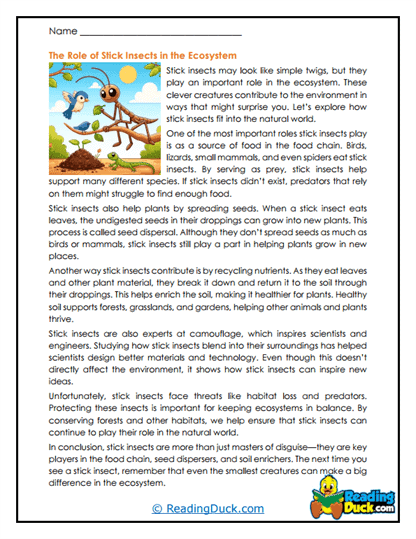
Forest Contributors
Students discover the important role stick insects play in ecosystems. They explore how these insects support food webs, nutrient recycling, and even scientific research. The reading helps build comprehension while introducing ecosystem-related vocabulary. Readers come away with a greater appreciation for how even small creatures make a big difference.
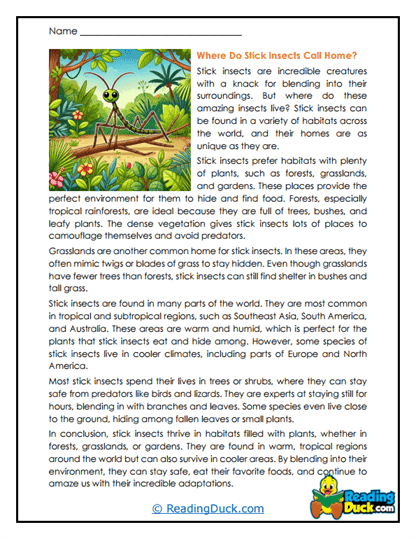
Leafy Homes
Students explore the habitats where stick insects live and thrive. They learn how forests, gardens, grasslands, and tropical regions provide food and protection. This worksheet helps readers understand the connection between animals and their environments. It highlights how survival often depends on having the right habitat.
Masters of Disguise
Students are introduced to the amazing adaptations that make stick insects so difficult to spot. They learn about camouflage, defense strategies, reproduction, and regeneration. The passage supports nonfiction comprehension through detailed explanations and scientific vocabulary. Readers quickly see why stick insects are considered some of nature's best hidden creatures.
Nature Connections
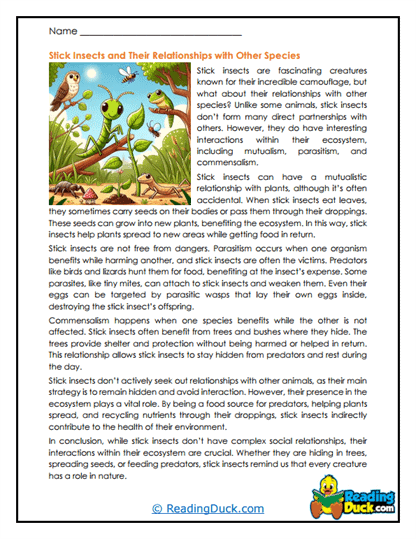
Students examine the relationships stick insects have with other organisms in their ecosystems. They explore concepts such as mutualism, parasitism, and commensalism through real-world examples. This worksheet encourages higher-level thinking and comparison skills. It helps readers understand how all living things are connected in nature.
Nature's Messages
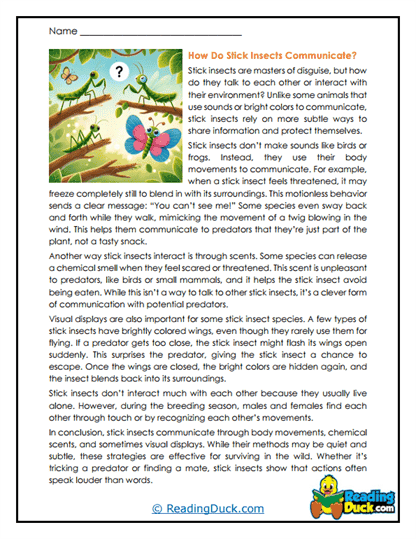
Students learn how stick insects communicate through movement, scent, and defensive behaviors. They investigate how these quiet insects send signals without making loud sounds. The reading develops close-reading skills while exploring animal behavior. Readers discover that communication in nature can be subtle yet highly effective.
Quiet Grazers
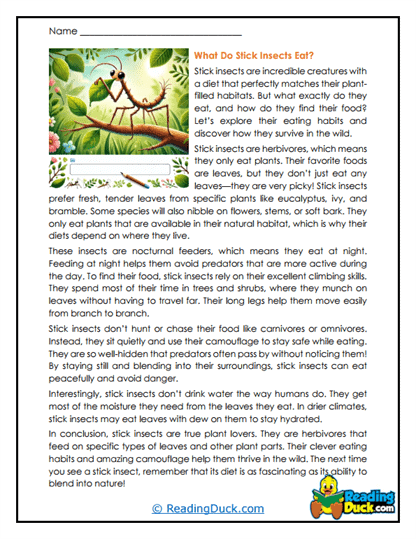
Students learn about the plant-based diet of stick insects and how they find food safely. They explore the connection between feeding habits, camouflage, and nighttime activity. This worksheet helps readers understand how behavior and physical traits work together. It provides an interesting look at how herbivores survive in the wild.
Seed-Like Beginnings
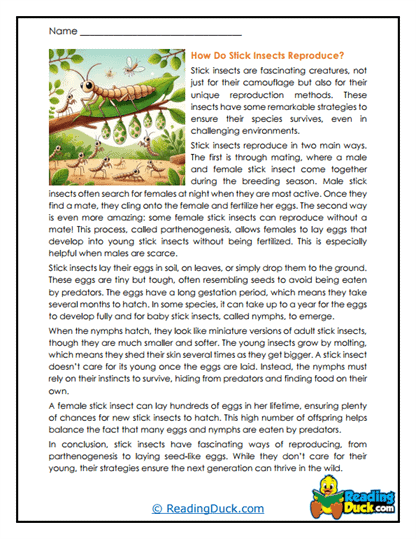
Students investigate the fascinating ways stick insects reproduce and begin life. They learn about seed-like eggs, nymphs, and the unique process of parthenogenesis. The passage strengthens sequencing and scientific vocabulary skills. Readers gain insight into the creative survival strategies found in nature.
Steady Steps
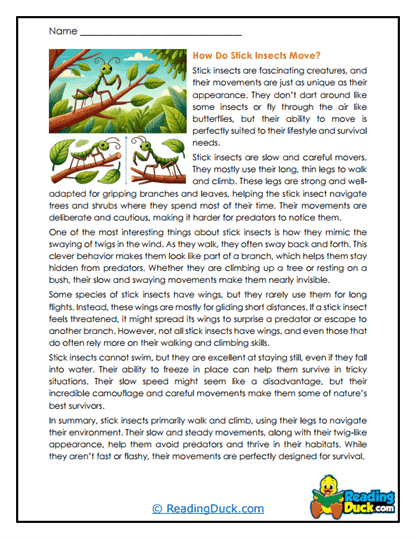
Students explore how stick insects move through their environments with care and precision. They learn how swaying, climbing, and even gliding can help these insects avoid danger. The reading connects movement to survival and adaptation. It shows that even simple actions can play an important role in staying safe.
Twig Defenders
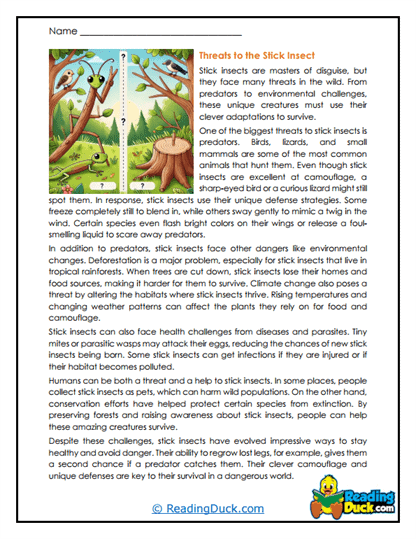
Students discover the challenges stick insects face from predators and environmental threats. They examine the many defenses these insects use, including camouflage, mimicry, and regeneration. This worksheet strengthens understanding of problem-and-solution relationships in nonfiction texts. Readers learn that survival often depends on a combination of clever adaptations.
Twig Tricks
Students take a closer look at the physical traits that make stick insects excellent at hiding. They explore how body shape, color, and behavior combine to create effective camouflage. The passage develops observation skills and supports vocabulary growth. It demonstrates how appearance can be a powerful survival tool.
Twig Travelers
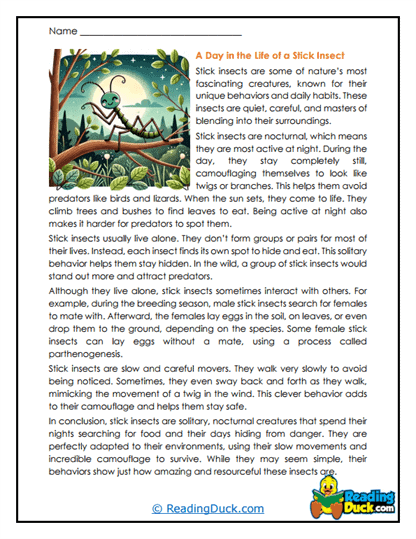
Students learn about the daily routines and behaviors of stick insects. They follow these nocturnal insects as they spend their days hidden and their nights searching for food. This worksheet supports sequencing and comprehension through descriptions of daily life. Readers discover how patience and careful movement help stick insects survive.
A Better Look At Stick Insects
Stick insects are excellent examples of how animals adapt to their surroundings. Their camouflage, movement, feeding habits, and life cycles all help them survive in ecosystems around the world. By studying these insects, students learn important scientific ideas about habitats, food webs, adaptation, and environmental relationships. The more they explore stick insects, the more they see how every living thing plays a role in nature.
Reading about stick insects also helps students become stronger readers and thinkers. They practice gathering information, recognizing patterns, and explaining scientific concepts using evidence from the text. These activities encourage curiosity, careful observation, and thoughtful discussion. With each passage, students build skills that support both academic success and a deeper appreciation for the natural world.
Make sure to bookmark our website now.
Enjoy all our free reading worksheets.
Our materials adhere to the principles of the Science of Reading.