About Our Termite Reading Comprehension Worksheets
Termites are some of the most organized and hardworking insects on Earth. While they are often known for chewing wood, termites play a much larger role in nature by breaking down dead plantsand helping recycle nutrients back into the soil. Their colonies function like busy underground cities, with each termite performing an important job. Learning about termites gives students a fascinating look at teamwork, adaptation, and life in the natural world.
Our Termite Reading Comprehension Worksheets help students strengthen important nonfiction reading skills while exploring science concepts in an engaging way. As they read, students practice identifying main ideas, finding supporting details, building vocabulary, and understanding cause-and-effect relationships. The passages also encourage critical thinking by helping readers connect termite behaviors to their survival and success. These skills support learning across reading, science, and many other subjects.
Studying termites encourages children to become curious observers and thoughtful learners. They discover how even small insects can have a major impact on ecosystems and how cooperation helps living things thrive. Along the way, students gain confidence reading informational texts and explaining scientific ideas. We hope these worksheets inspire a deeper appreciation for nature and a lifelong interest in learning.
Meet the Worksheets
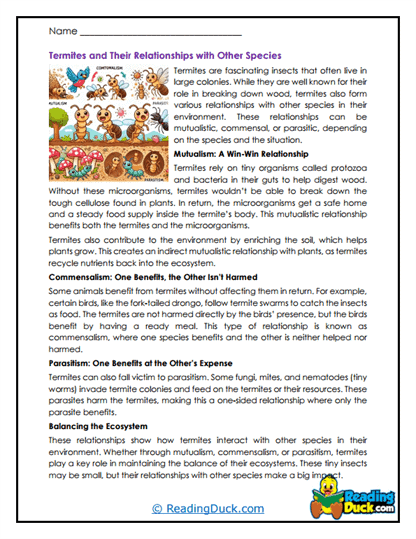
Connected Colonies
Students explore the many relationships termites have with other living things in their environments. They learn about mutualism, commensalism, parasitism, and the important partnerships termites form with microorganisms. This worksheet strengthens comprehension while introducing key ecology concepts. Readers discover that termites are connected to a much larger web of life than they might expect.
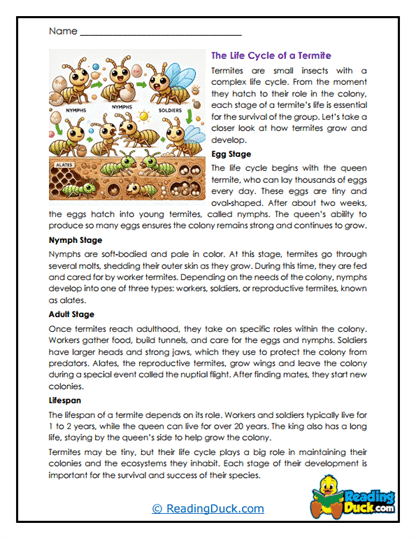
From Egg to Worker
Students follow the fascinating life cycle of a termite from egg to adulthood. They learn how young termites grow, molt, and eventually take on specialized roles within the colony. The passage develops sequencing skills and strengthens understanding of biological processes. Readers gain a deeper appreciation for the complex structure of termite societies.
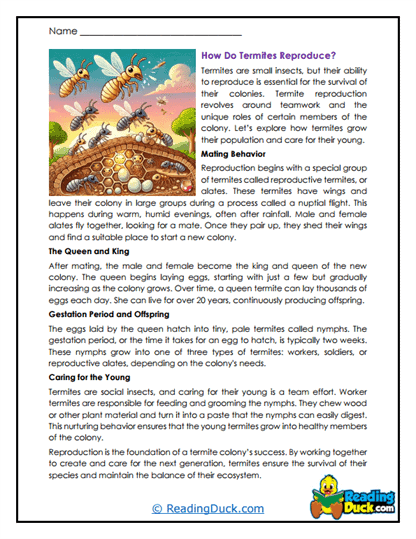
Future Colonies
Students learn how new termite colonies begin and grow. They explore mating flights, the roles of kings and queens, and how young termites are cared for after hatching. This worksheet builds comprehension while introducing life cycle and reproduction concepts. It highlights the remarkable teamwork involved in raising the next generation.
Hidden Cities
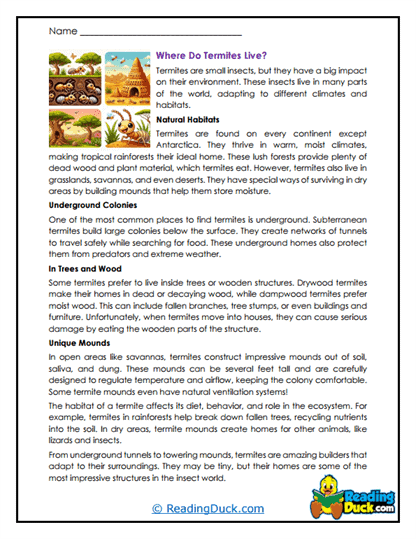
Students discover the incredible places termites call home. They explore underground colonies, forest habitats, wooden structures, and towering termite mounds found around the world. The reading helps students connect habitat features with survival needs. It shows how termites create carefully designed homes that support thousands of colony members.
Nature's Cleanup Crew
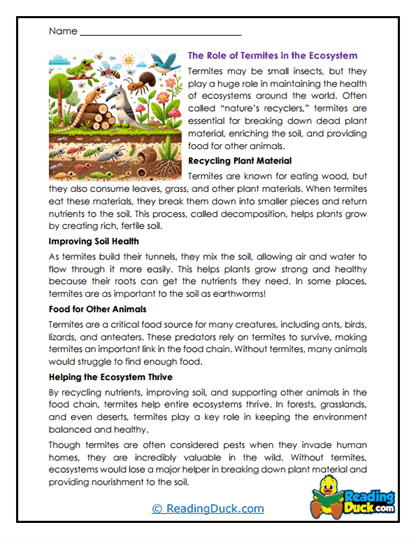
Students learn about the important environmental role termites play as decomposers. They discover how termites break down dead plants and return valuable nutrients to the soil. This worksheet strengthens understanding of ecosystems and nutrient cycles. Readers see how termites help keep natural environments healthy and productive.
Nature's Construction Crew
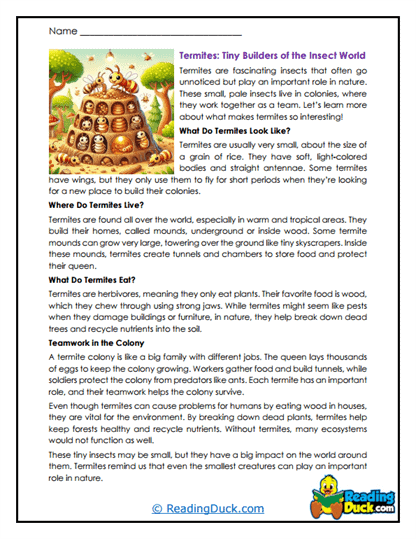
Students are introduced to the world of termites and the organized colonies they build. They learn about workers, soldiers, queens, and the important jobs each performs. The passage strengthens nonfiction reading skills while building science vocabulary. It helps readers understand that termites are much more than household pests.
Purposeful Travelers
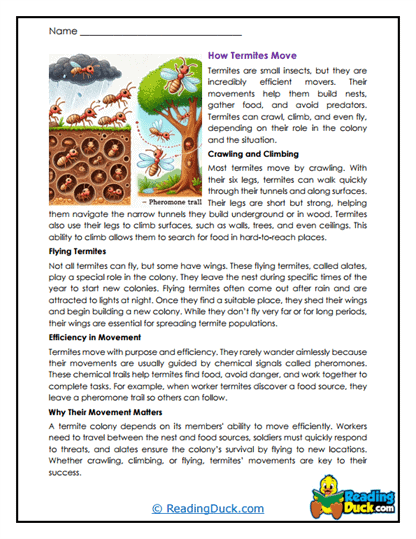
Students explore how termites move through their environments and why movement is essential for colony survival. They learn about tunnel systems, pheromone trails, and the unique flying behavior of reproductive termites. This worksheet helps readers connect movement with function and adaptation. It demonstrates how organized travel helps termites work together efficiently.
Silent Messages
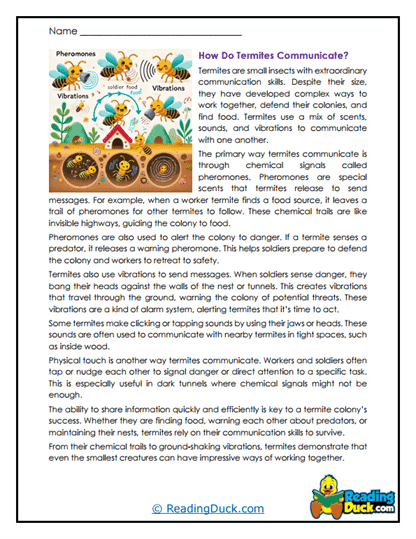
Students discover how termites communicate inside their dark underground colonies. They learn about pheromones, vibrations, and other signals that help termites coordinate their activities. The reading strengthens analytical thinking and cause-and-effect understanding. Readers are often surprised by how effectively termites communicate without spoken language.
Surviving the Odds
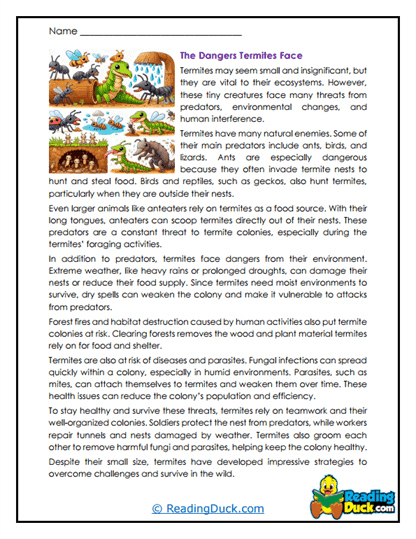
Students examine the many dangers termites face in nature. They learn about predators, environmental challenges, parasites, and the defensive strategies termites use to survive. This worksheet develops problem-and-solution reading skills and critical thinking. It highlights the resilience that helps termite colonies endure difficult conditions.
Teamwork in Action
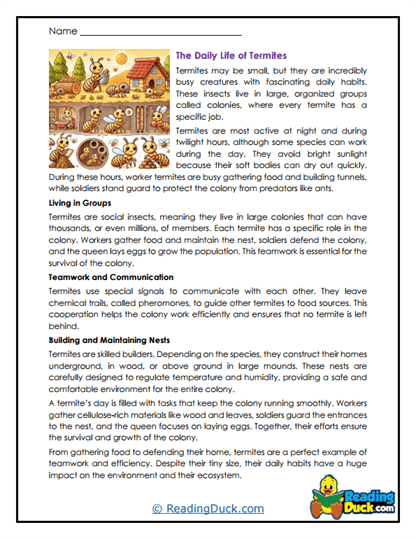
Students get a closer look at the daily routines inside a termite colony. They follow workers, soldiers, and queens as each contributes to the colony's success. The passage supports sequencing and comprehension by showing how different tasks work together. Readers see teamwork in action on a remarkable scale.
Underground Architects
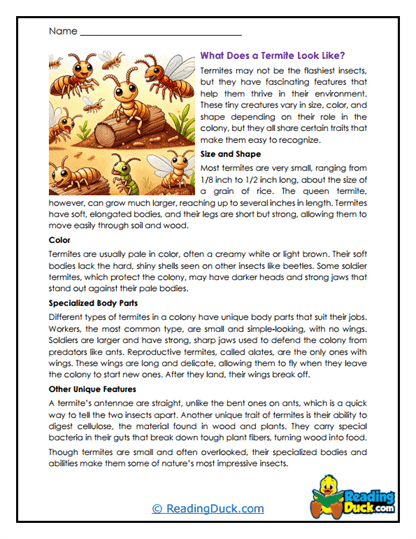
Students investigate the physical features that help termites perform specialized jobs. They learn about antennae, jaws, body structures, and the microorganisms that aid digestion. This worksheet strengthens observation and comparison skills. It reveals how each body part helps termites thrive within their colonies.
Woodland Diners
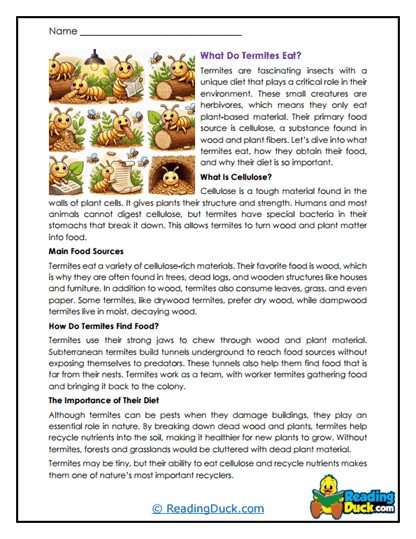
Students explore the unique diet of termites and their ability to digest cellulose. They learn how termites break down wood and plant materials with help from special microorganisms. The passage builds understanding of cause-and-effect relationships in nature. Readers discover how termite feeding habits benefit ecosystems by supporting decomposition.
A Better Look At Termites
Termites are among the most successful social insects on the planet. Their colonies rely on cooperation, communication, and specialized roles to survive and grow. Beyond their reputation as wood-eaters, termites play an essential role in ecosystems by recycling nutrients, improving soil health, and supporting food webs. Studying termites helps students understand how living things adapt and contribute to the balance of nature.
Reading about termites also helps students become stronger readers and thinkers. They practice analyzing information, learning scientific vocabulary, identifying patterns, and explaining ideas using evidence from the text. These skills build confidence across many subjects while encouraging curiosity about the natural world. With every passage, students gain a greater appreciation for the complex and fascinating lives of these hardworking insects.
Make sure to bookmark our website now.
Enjoy all our free reading worksheets.
Our materials adhere to the principles of the Science of Reading.