About Our Stink Bug Reading Comprehension Worksheets
Stink bugs are some of the most recognizable insects in the world thanks to their unusual defense system. These shield-shaped insects can release a strong odor when threatened, but there is much more to them than their famous smell. They live in many different habitats, interact with countless plants and animals, and play important roles in ecosystems. Learning about stink bugs helps students discover how insects survive and adapt in the natural world.
Our Stink Bug Reading Comprehension Worksheets help students build strong nonfiction reading skills while exploring fascinating science topics. As they read, students practice finding main ideas, identifying supporting details, learning new vocabulary, and understanding cause-and-effect relationships. The passages also encourage critical thinking by showing how physical traits and behaviors help stink bugs survive. These skills support success in reading, science, and everyday problem-solving.
Studying stink bugs helps children become more curious and observant learners. They learn to ask questions, examine evidence, and think about how living things interact with their environments. Along the way, students build confidence in reading informational texts and discussing scientific ideas. We hope these worksheets inspire a greater appreciation for nature and a lifelong love of learning.
Meet the Worksheets
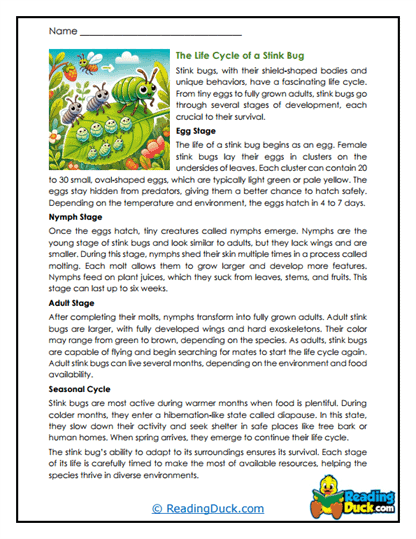
Backyard Transformations
Students explore the complete life cycle of a stink bug from egg to adult. They follow each stage of development and learn how nymphs grow through a series of molts. This worksheet strengthens sequencing skills and helps students understand biological growth processes. Readers gain a clear picture of how young insects develop into mature adults.
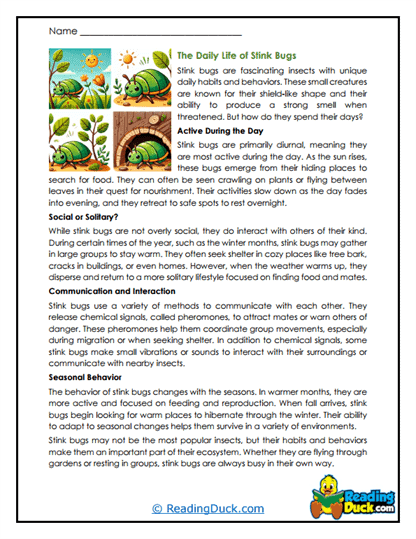
Busy Beetles
Students learn about the daily activities and seasonal behaviors of stink bugs. They discover how these insects search for food, communicate, and prepare for changing weather conditions. The passage builds comprehension skills while helping readers understand animal behavior. It offers an interesting look at how insects adjust their routines throughout the year.
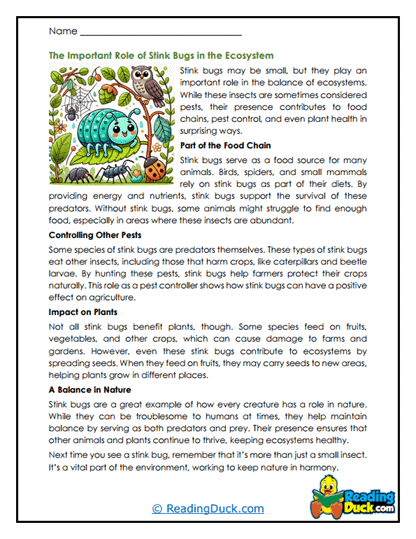
Ecosystem Helpers
Students discover how stink bugs contribute to the balance of ecosystems. They explore the ways these insects support food webs, nutrient movement, and natural pest control. This worksheet helps readers connect individual species to larger environmental systems. It shows that even unpopular insects can have important ecological roles.
Garden Grazers
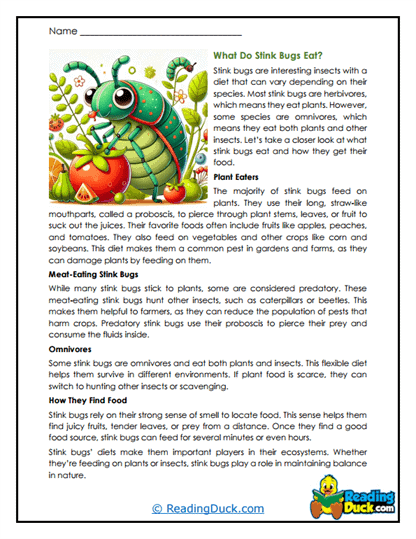
Students investigate the feeding habits of stink bugs and the foods they eat. They learn about specialized mouthparts and how different species may feed on plants or other insects. The reading strengthens understanding of animal diets and adaptations. Readers see how feeding behaviors influence survival and ecosystem health.
Garden Travelers
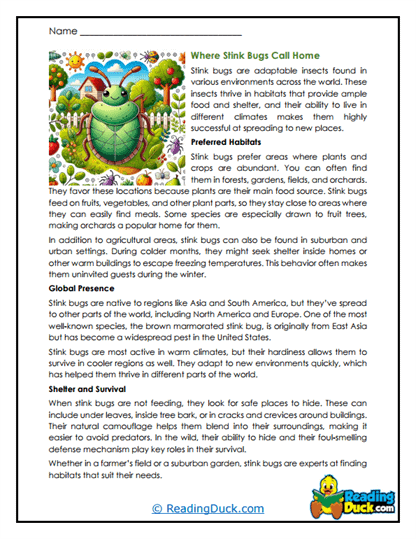
Students explore the habitats where stink bugs live around the world. They examine how these adaptable insects survive in gardens, forests, farms, and even neighborhoods. This worksheet builds comprehension by connecting animals to their environments. It highlights the impressive ability of stink bugs to adjust to changing conditions.
Scented Messages
Students learn about the unique ways stink bugs communicate with one another. They explore how pheromones, vibrations, and body movements help these insects share information. The passage develops close-reading skills while introducing fascinating animal behaviors. Readers discover that communication can happen in many forms beyond sounds and words.
Smelly Defenders
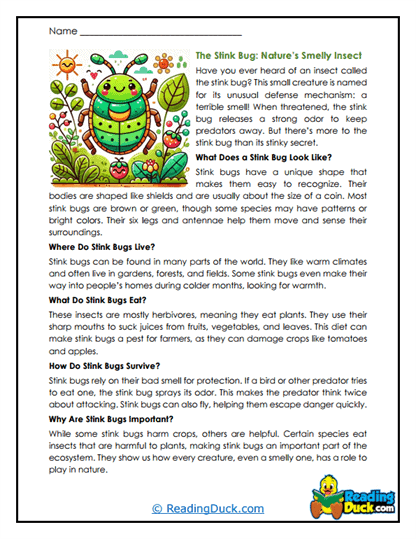
Students are introduced to the fascinating world of stink bugs and their famous defense system. They learn how odor production, body shape, and behavior help these insects stay safe from predators. This worksheet strengthens nonfiction comprehension and scientific vocabulary development. It encourages students to look beyond appearances and appreciate nature's adaptations.
Smelly Survivors
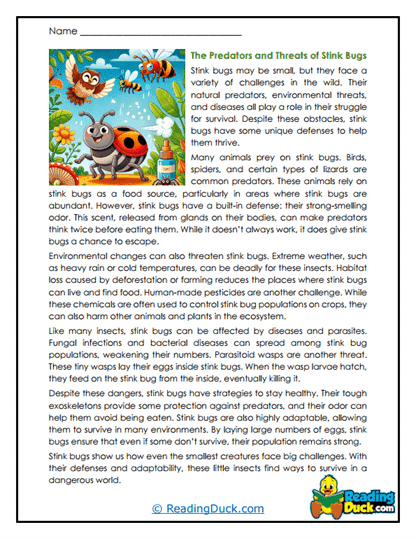
Students examine the challenges stink bugs face in the wild. They learn about predators, environmental threats, and the adaptations that help these insects endure difficult conditions. The passage strengthens problem-and-solution reading skills and critical thinking. Readers see how resilience and adaptation work together in nature.
Steady Climbers
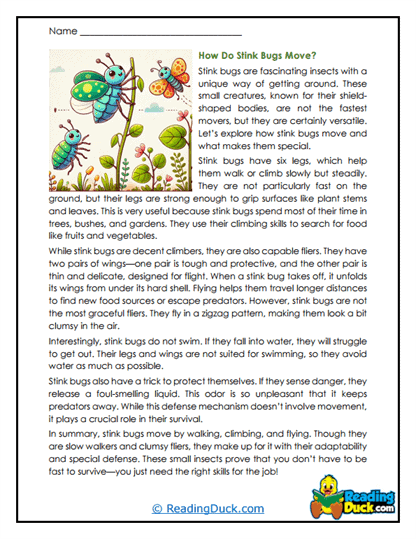
Students discover how stink bugs move through their environments using walking, climbing, and flying. They explore how body structures support different types of movement and survival strategies. This worksheet helps readers connect physical traits with function. It reveals how mobility gives stink bugs flexibility in finding food and avoiding danger.
Tiny Armor
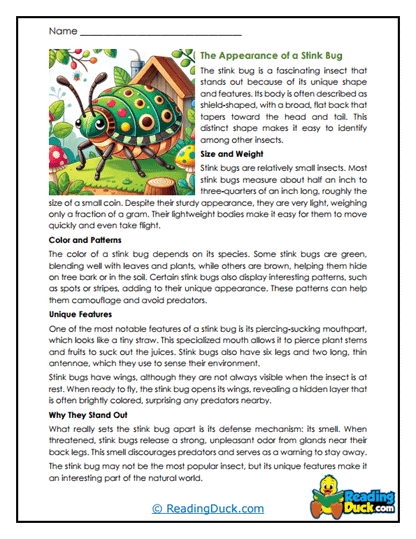
Students take a closer look at the physical features that make stink bugs unique. They learn about antennae, wings, mouthparts, and the shield-like shape of the insect's body. The reading strengthens observation skills and scientific understanding. Readers gain insight into how anatomy supports survival.
Tiny Beginnings
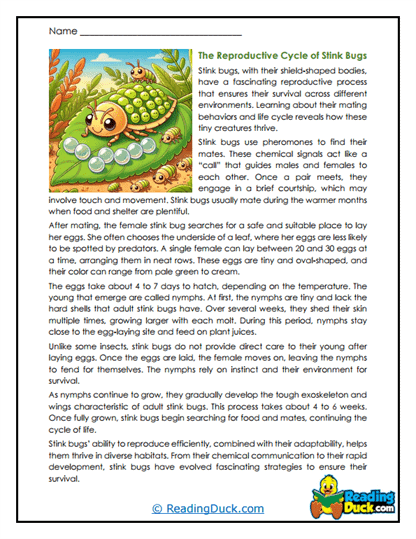
Students learn how stink bugs reproduce and begin their life cycle. They explore the role of pheromones, egg-laying behaviors, and the development of young nymphs. This worksheet helps strengthen sequencing and vocabulary skills. It provides an engaging introduction to insect reproduction and growth.
Unexpected Relationships
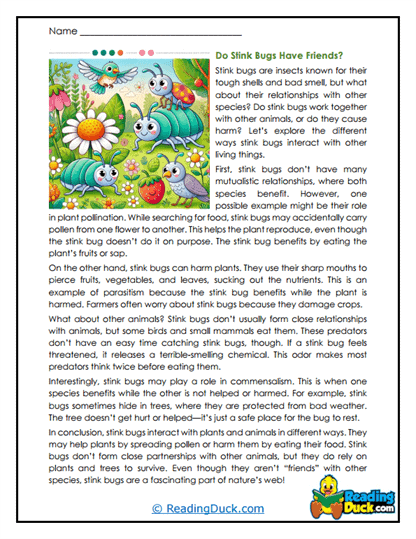
Students explore the many ways stink bugs interact with plants, animals, and other organisms. They learn about concepts such as predation, pollination, parasitism, and commensalism through real-world examples. The passage develops higher-level thinking by encouraging students to compare different ecological relationships. Readers gain a deeper understanding of how species are connected within ecosystems.
A Better Look At Stink Bugs
Stink bugs are much more than insects with an unusual smell. Their feeding habits, communication methods, life cycles, and environmental relationships make them important parts of many ecosystems. By studying stink bugs, students learn about adaptation, survival, habitats, food webs, and the balance of nature. These lessons help children understand how even small creatures contribute to the health of the environment.
Reading about stink bugs also helps students become stronger readers and thinkers. They practice gathering information, making connections, understanding scientific vocabulary, and explaining ideas using evidence from the text. These skills support success across many subjects while encouraging curiosity and careful observation. With every passage, students build confidence and develop a deeper appreciation for the amazing world around them.
Make sure to bookmark our website now.
Enjoy all our free reading worksheets.
Our materials adhere to the principles of the Science of Reading.