About Our Walking Leaf Reading Comprehension Worksheets
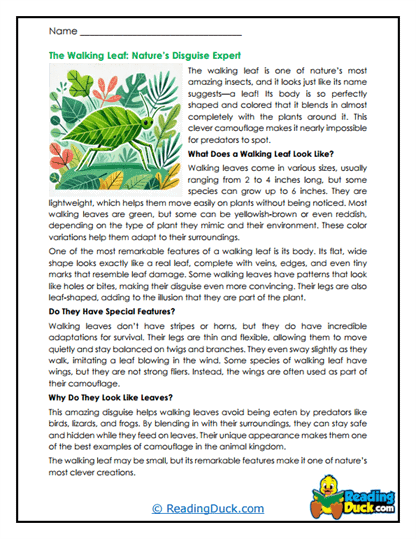
Walking leaves are among the most amazing insects in the natural world. At first glance, they look exactly like real leaves, complete with colors, shapes, and markings that help them disappear into their surroundings. These remarkable insects are masters of camouflage and provide a fascinating example of how animals adapt to survive. Learning about walking leaves helps students explore important science topics such as adaptation, habitats, life cycles, and ecosystems.
Our Walking Leaf Reading Comprehension Worksheets help students strengthen essential nonfiction reading skills while discovering the wonders of nature. As they read, students practice identifying main ideas, finding supporting details, expanding vocabulary, and understanding cause-and-effect relationships. The passages also encourage critical thinking by showing how physical traits and behaviors help animals survive in challenging environments. These skills support success in reading, science, and everyday learning.
Studying walking leaves encourages children to become curious observers and thoughtful learners. They discover how even the smallest creatures can have extraordinary adaptations and important roles within ecosystems. Along the way, students gain confidence in reading informational texts and explaining scientific ideas using evidence. We hope these worksheets inspire a deeper appreciation for nature and a lifelong love of learning.
Meet the Worksheets
A Quiet Life Among the Leaves
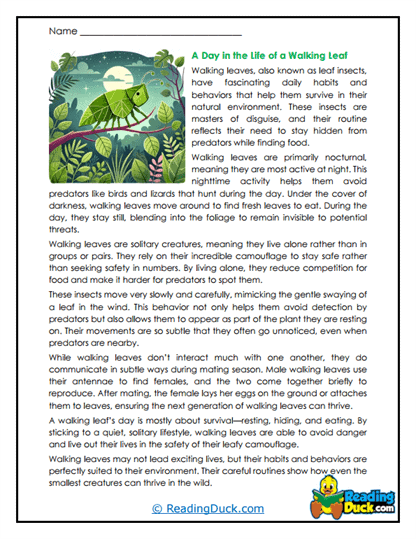
Students explore the daily routines and behaviors of walking leaves. They learn how these insects spend their days hidden among foliage and become active after sunset. This worksheet strengthens sequencing skills and helps readers understand how behavior supports survival. It reveals how patience and camouflage work together to keep walking leaves safe.
Communication Without Words
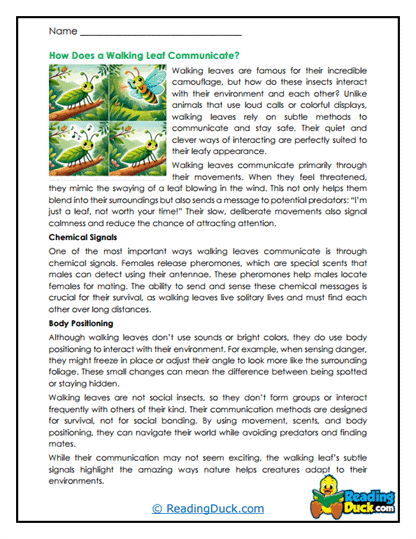
Students discover the subtle ways walking leaves communicate and respond to their surroundings. They learn about pheromones, body movements, and behaviors that help these insects avoid danger and locate mates. The passage develops analytical thinking while introducing fascinating communication strategies. Readers see that even quiet insects have effective ways to share information.
Disguise Experts of the Rainforest
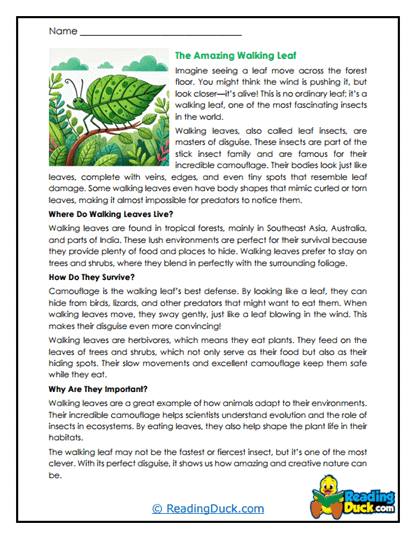
Students take a closer look at the physical features that make walking leaves so convincing. They learn how body shape, color, markings, and movement all contribute to their disguise. This worksheet strengthens observation skills and encourages careful reading of descriptive details. Readers gain a deeper appreciation for one of nature's most impressive adaptations.
Forest Homes of Walking Leaves
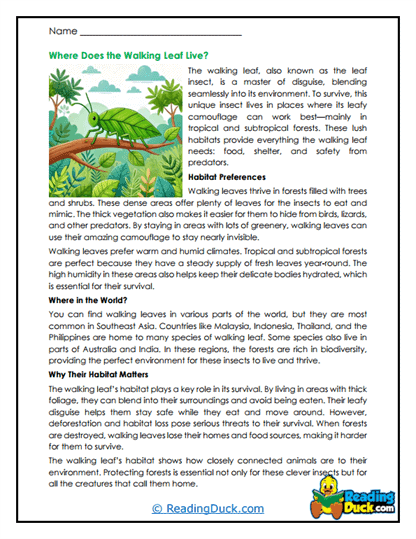
Students investigate the tropical habitats where walking leaves thrive. They learn how warm temperatures, dense vegetation, and abundant food sources help support these insects. The reading builds comprehension by connecting animals to the environments they depend upon. It also highlights the importance of protecting habitats from environmental threats.
From Seed-Like Egg to Living Leaf
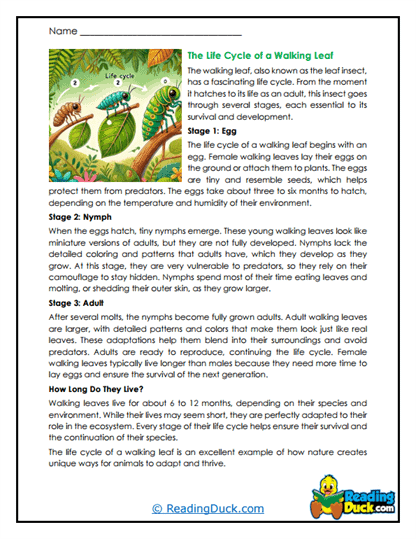
Students follow the complete life cycle of a walking leaf from egg to adulthood. They learn how nymphs grow through a series of molts and gradually develop their leaf-like appearance. This worksheet strengthens sequencing and process-based thinking skills. Readers discover how each stage prepares the insect for survival in its environment.
Graceful Climbers
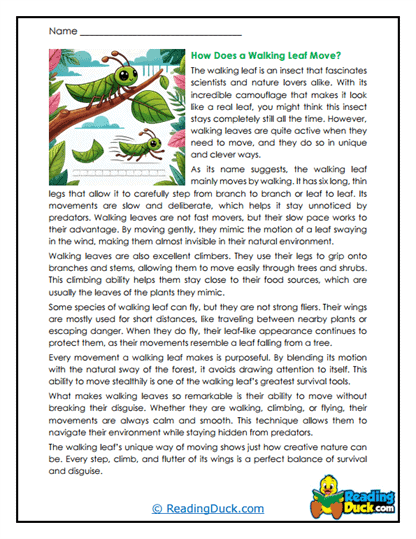
Students learn how walking leaves move through trees and shrubs while maintaining their disguise. They explore how swaying motions and careful climbing help these insects avoid detection. The passage helps readers connect movement with adaptation and survival. It shows that even simple actions can play an important role in camouflage.
More Than Just a Clever Disguise
Students discover the important role walking leaves play in forest ecosystems. They learn how these insects contribute to nutrient recycling, food webs, and the balance of nature. This worksheet strengthens understanding of ecosystems and ecological relationships. Readers see that hidden creatures can have a meaningful impact on their environments.
Nature's Living Leaves
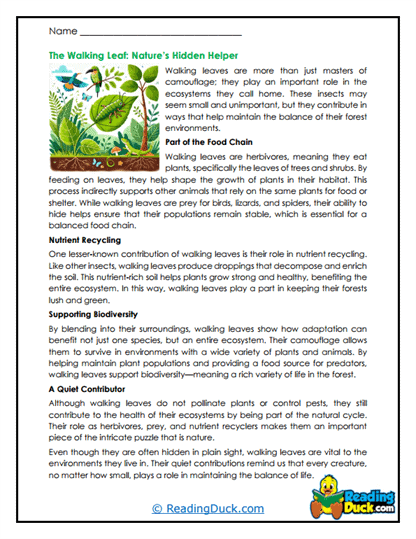
Students are introduced to the fascinating world of walking leaves and their incredible camouflage abilities. They learn how these insects resemble real leaves and why this adaptation is so effective. The passage strengthens nonfiction reading skills while building scientific vocabulary. Readers quickly understand why walking leaves are considered masters of disguise.
Nature's Quiet Gardeners
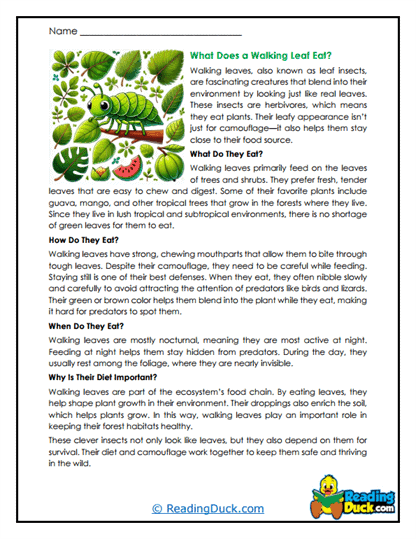
Students explore the feeding habits of walking leaves and the foods they eat. They learn how these herbivores use camouflage to feed safely on leaves and other plant material. This worksheet develops comprehension skills by connecting diet, behavior, and survival. It helps readers understand how animals meet their basic needs in nature.
Nature's Connections
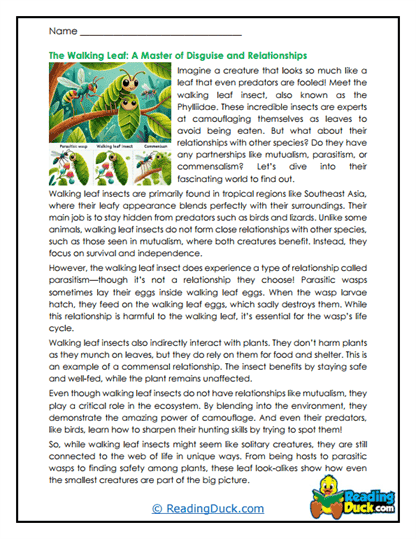
Students examine the relationships walking leaves have with plants, predators, parasites, and other organisms. They explore how these interactions help maintain balance within ecosystems. The passage encourages higher-level thinking and strengthens understanding of ecological concepts. Readers gain a broader perspective on how living things depend on one another.
Surviving in the Shadows
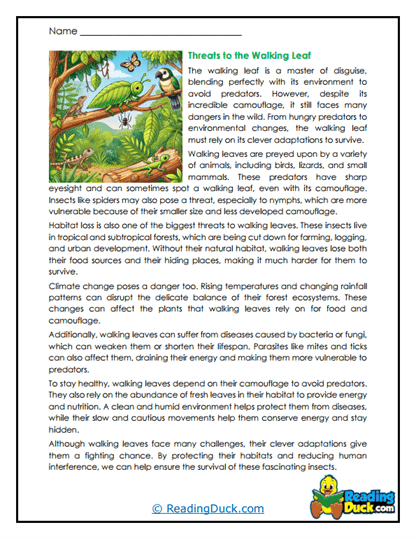
Students investigate the challenges walking leaves face despite their impressive camouflage. They learn about predators, habitat loss, climate change, and other threats to survival. This worksheet develops problem-and-solution reading skills and critical thinking. It demonstrates that adaptation is important, but healthy ecosystems are equally essential.
The Next Generation of Walking Leaves
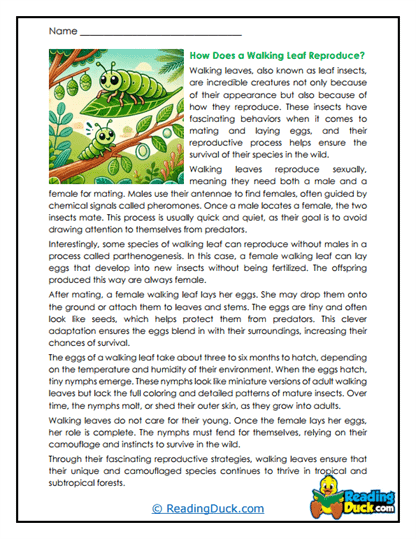
Students learn about the fascinating reproductive strategies of walking leaves. They explore egg-laying, parthenogenesis, and the development of young nymphs. This worksheet strengthens sequencing and scientific vocabulary skills. Readers discover the remarkable ways walking leaves ensure the survival of future generations.
A Better Look At Walking Leaves
Walking leaves are some of the best examples of adaptation found anywhere in nature. Their leaf-like appearance helps them blend into tropical forests, avoid predators, and thrive in environments where survival often depends on staying hidden. Beyond their remarkable camouflage, walking leaves contribute to ecosystems as herbivores and as part of the food web. Studying these insects helps students understand how physical traits, behaviors, and habitats work together to support life.
Reading about walking leaves also helps students become stronger readers and thinkers. They practice analyzing information, learning scientific vocabulary, identifying patterns, and explaining ideas using evidence from the text. These skills support success across many subjects while encouraging curiosity and careful observation. With every passage, students gain a deeper appreciation for the incredible diversity and interconnectedness of the natural world.
Make sure to bookmark our website now.
Enjoy all our free reading worksheets.
Our materials adhere to the principles of the Science of Reading.