
Chirps and Hops Short Answer
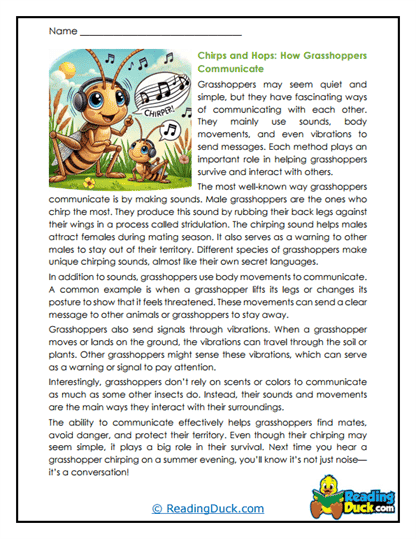
This passage explores the many ways grasshoppers communicate with one another. Students learn that grasshoppers create chirping sounds by rubbing their back legs against their wings in a process called stridulation. The text explains how these sounds can help attract mates, warn rivals, or send signals of danger. Readers also discover that grasshoppers communicate through body movements and vibrations that travel through plants and the ground. The passage shows students that insects may seem quiet at first, but they actually have fascinating ways of sharing information and surviving in the wild.
Passages about communication and animal behavior help students practice close reading and careful observation. Students learn to identify key details and understand how specific behaviors serve a purpose in nature. Reading this type of informational text also expands vocabulary and strengthens comprehension through exposure to descriptive and scientific language. As students explain how and why grasshoppers communicate, they build critical thinking and speaking skills. These readings encourage curiosity while helping students become stronger, more thoughtful readers.