
Menu Time Short Answer
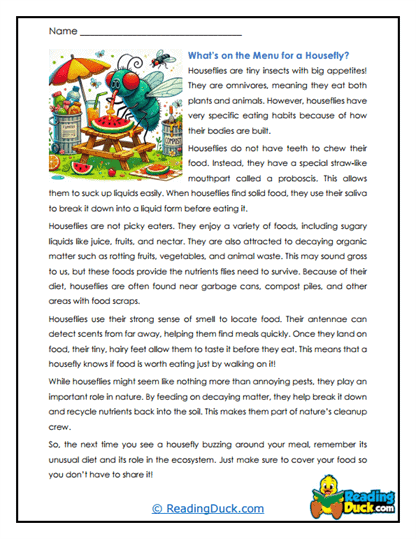
This passage explains the eating habits of houseflies and shows students how these tiny insects survive by feeding on many different kinds of food. Readers learn that houseflies are omnivores and prefer sugary liquids, rotting fruits, vegetables, garbage, and decaying matter. The passage describes how flies use their straw-like mouthparts, called a proboscis, to sip liquids because they cannot chew solid food. Students also discover how houseflies use their strong sense of smell and taste sensors on their feet to locate meals quickly. The text highlights the important role houseflies play in breaking down waste and recycling nutrients back into the environment.
Reading passages about animal diets and survival helps students strengthen comprehension and critical thinking skills. Students practice identifying cause-and-effect relationships, such as how body structures help animals eat and survive. Informational texts also build vocabulary with words like omnivores, proboscis, and nutrients. As students summarize information and explain scientific ideas, they improve fluency, organization, and confidence in reading nonfiction materials. These types of passages encourage curiosity while helping children become stronger readers and thinkers.