
Daily Flyers Multiple Choices
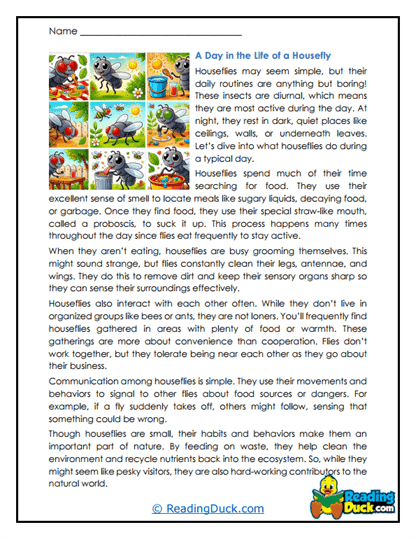
This passage gives readers a detailed look at a typical day in the life of a housefly. Students learn that houseflies are most active during the daytime and spend much of their time searching for food, cleaning themselves, and avoiding danger. The text explains how flies carefully groom their wings, legs, and antennae to keep their senses sharp and their bodies clean. Readers also discover that houseflies gather in areas with food and warmth, even though they do not live in organized groups like bees or ants. The passage shows how these tiny insects stay busy and active throughout the day.
Reading passages about daily animal behavior helps students strengthen sequencing and comprehension skills. Students practice following routines and identifying events in chronological order. Informational texts also improve vocabulary and fluency by exposing students to descriptive action words and scientific language. As students explain how houseflies survive and interact with their surroundings, they develop stronger speaking, writing, and analytical skills. These reading experiences help students become more thoughtful readers while encouraging them to observe the natural world more carefully.