
Busy Beetles
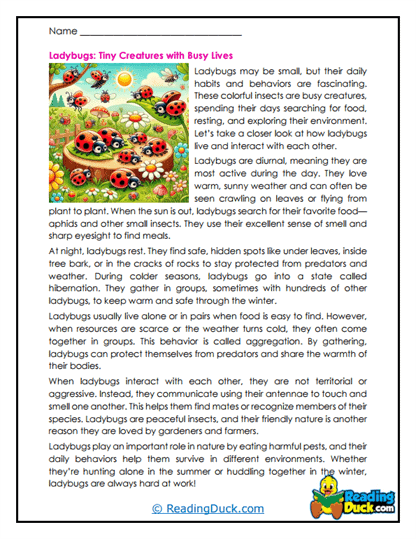
This passage gives readers a glimpse into the daily life and behaviors of ladybugs. Students learn that ladybugs are most active during the daytime and spend their time searching for food, exploring plants, and staying warm in sunny areas. The text explains how ladybugs protect themselves at night and gather together in groups during colder weather to survive the winter. Readers also discover that ladybugs communicate using touch and scent rather than fighting or acting aggressively. The passage paints a friendly and engaging picture of how these tiny insects live and interact in nature.
Reading passages about animal behavior helps students improve sequencing and comprehension skills by following routines and daily activities in order. Students also strengthen vocabulary and fluency through exposure to descriptive language and scientific terms. Informational texts encourage children to identify details, summarize ideas, and explain behaviors clearly using evidence from the passage. These reading experiences help students become more thoughtful readers while building confidence in understanding nonfiction materials.
Questions:
Answer Keys: