
Spotted Stages Short Answer
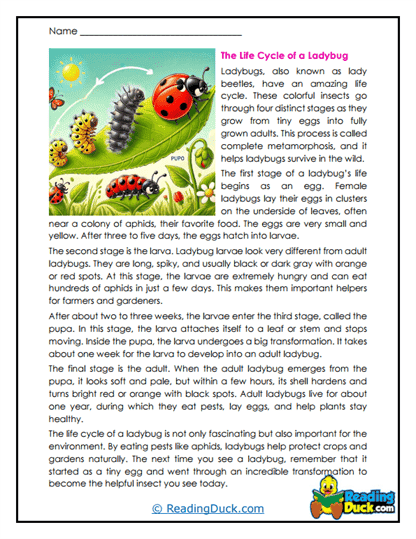
This passage explains the complete life cycle of a ladybug and helps students understand how these tiny beetles grow and change over time. Readers learn about the four stages of development: egg, larva, pupa, and adult. The text describes how female ladybugs lay eggs near aphid colonies so the larvae will have food once they hatch. Students discover that the larva stage looks very different from the adult stage and that the insect must go through metamorphosis before becoming the familiar spotted beetle. The passage highlights the incredible transformation ladybugs experience as they mature into helpful garden predators.
Reading passages about life cycles helps students strengthen sequencing and comprehension skills because they must follow stages in the correct order. Students build scientific vocabulary through words such as metamorphosis, larva, pupa, and transformation. Informational texts also improve students’ ability to summarize processes and explain changes clearly using evidence from the text. These experiences build reading fluency, organization, and confidence while encouraging curiosity about science and nature.