Water Beginnings Open Response
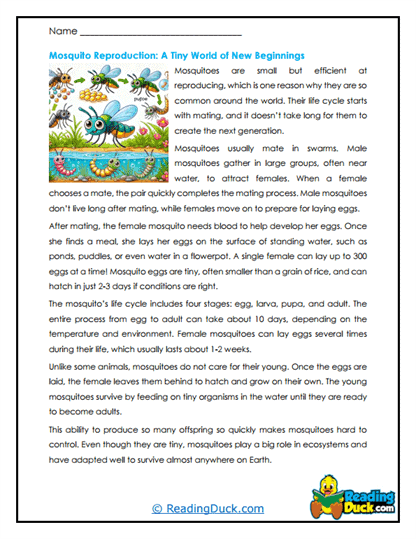
This passage explains how mosquitoes reproduce and develop through their unique life cycle. Readers learn that mosquitoes lay eggs in standing water, where the eggs hatch into larvae often called “wigglers.” The text describes the four stages of development: egg, larva, pupa, and adult. Students discover how mosquito larvae live and feed in water before transforming into pupae and eventually emerging as flying adults. The passage also explains how quickly mosquitoes reproduce and why they are found in so many environments around the world.
Reading passages about life cycles helps students strengthen sequencing and comprehension skills because they must follow stages in the correct order. Students build scientific vocabulary through words such as larva, pupa, and reproduction. Informational texts also help students recognize patterns, summarize important ideas, and explain scientific processes clearly. These reading experiences improve fluency, organization, and critical thinking while helping children feel more confident when reading nonfiction science passages independently.