
Nighttime Adventures Short Answer
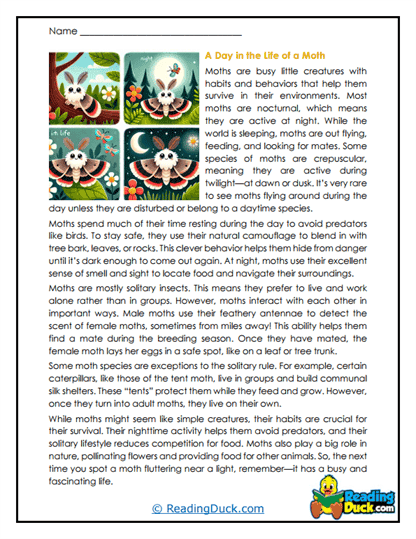
This passage gives readers a glimpse into the daily habits and behaviors of moths. Students learn that most moths are nocturnal, meaning they are active at night while resting during the day to avoid predators. The text explains how moths use camouflage and quiet movements to stay hidden in tree bark, leaves, and other natural surroundings. Readers also discover how moths search for food, locate mates, and sometimes gather in groups during certain stages of life. The passage highlights the fascinating nighttime routines that help moths survive and thrive in many environments.
Reading passages about daily animal behavior helps students improve sequencing and comprehension skills by following routines and activities in order. Students also strengthen vocabulary and fluency through exposure to descriptive language and scientific concepts. Informational texts encourage children to identify details, summarize information, and explain behaviors clearly using evidence from the passage. These reading experiences help students become more thoughtful readers while building confidence in understanding nonfiction materials.