Nature’s Neighbors Multiple Choices
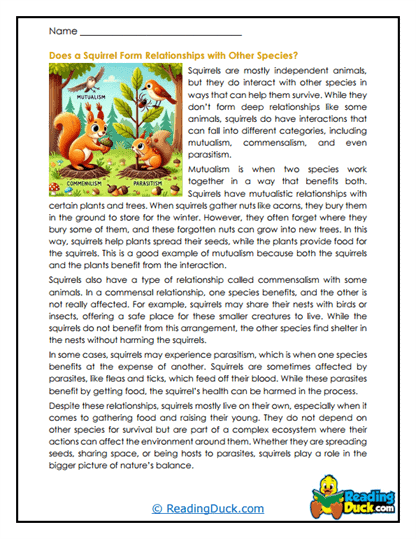
This passage explores how squirrels interact with other species through relationships like mutualism, commensalism, and parasitism. It explains how squirrels help trees by burying nuts that grow into new plants, while other animals may share their nests or feed on them. Readers learn that even parasites and shared habitats show how species are connected in nature. The text concludes that squirrels play an important role in the larger balance of ecosystems.
Students build skills in classification and analytical reading by learning to distinguish types of ecological relationships. Vocabulary such as mutualism, commensalism, and parasitism enhances scientific literacy. The passage supports critical thinking by encouraging students to interpret complex interactions among living things. Reading about these connections promotes deeper comprehension and an appreciation for biodiversity.