
Seed-Like Beginnings Multiple Choices
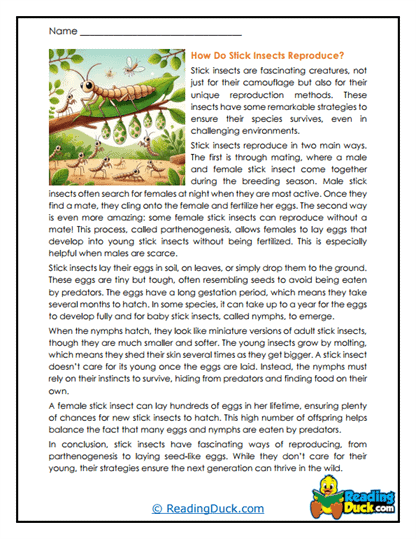
This passage explains how stick insects reproduce and continue their life cycle. Readers learn that stick insects can reproduce through traditional mating or, in some species, through a process called parthenogenesis, where females produce offspring without a mate. The text describes how females lay eggs that often resemble tiny seeds, helping them stay hidden from predators. Students discover that the eggs may take months to hatch and that young stick insects, called nymphs, look like miniature versions of adults. The passage highlights the fascinating strategies stick insects use to ensure their species survives.
Reading passages about life cycles helps students strengthen sequencing and comprehension skills because they must follow stages in the correct order. Students build scientific vocabulary through words such as *parthenogenesis*, *nymph*, and *reproduction*. Informational texts also help students recognize patterns, summarize important ideas, and explain scientific processes clearly. These reading experiences improve fluency, organization, and critical thinking while helping children feel more confident reading nonfiction science passages independently.