
Purposeful Travelers Multiple Choices
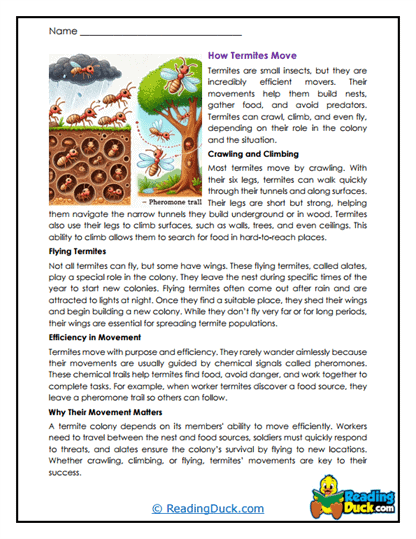
This passage explores how termites move and why movement is so important to the success of their colonies. Students learn that worker termites crawl through intricate tunnel systems to locate food and bring it back to the nest. The text explains that reproductive termites, known as alates, are the only termites that regularly fly, using their wings during mating flights to establish new colonies. Readers also discover how termites follow chemical trails left by other colony members, allowing thousands of individuals to travel efficiently and stay organized. The passage highlights how even simple movements contribute to the survival of the entire colony.
Reading passages about movement and adaptation helps students connect physical abilities with survival needs. Children practice understanding how body structures support specific functions while strengthening their comprehension of informational text. Vocabulary such as alates, tunnels, pheromone trails, and navigation introduces important scientific concepts. These readings also encourage students to explain processes clearly, summarize information, and recognize patterns in animal behavior. Such skills support success in both science and literacy learning.