
Nighttime Adventures Open Response
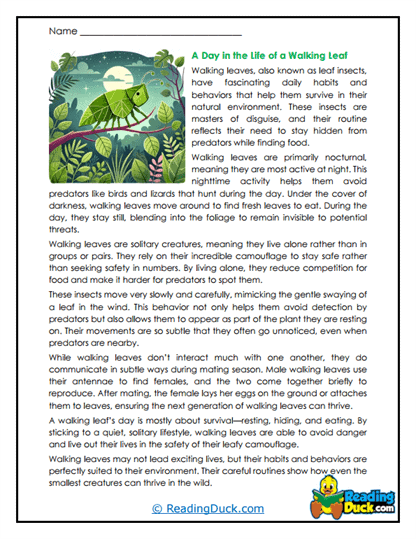
This passage gives students a glimpse into what a typical day looks like for a walking leaf. Readers learn that these insects are primarily nocturnal, spending most daylight hours remaining perfectly still among leaves and branches. The text describes how walking leaves become active after sunset, carefully moving through plants in search of food. Students discover that they are generally solitary creatures and rely on camouflage rather than strength or speed for protection. The passage also explores how walking leaves move in ways that mimic leaves swaying in the breeze, making them even more difficult for predators to detect.
Passages about animal behavior are excellent for helping students develop sequencing and comprehension skills. Children follow routines and patterns while learning how behavior contributes to survival. Informational texts like this also strengthen vocabulary and encourage students to summarize information using evidence from the passage. These reading experiences help students understand that even the quietest animals have complex behaviors that support their success in the wild.