Wild Friends Open Response
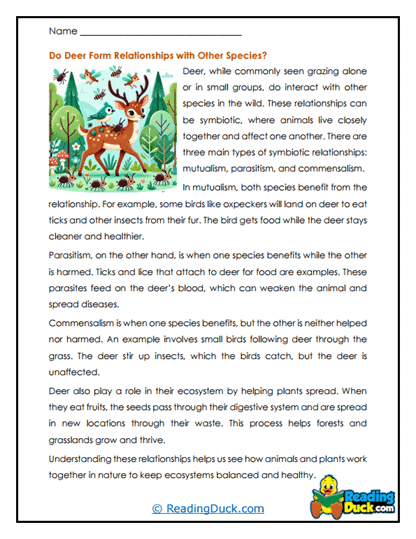
This passage introduces symbiotic relationships deer form with other species in the wild. It explains mutualism (e.g., birds eating ticks from deer), parasitism (e.g., ticks harming deer), and commensalism (e.g., birds following deer to catch insects). These interactions help maintain a healthy ecosystem. Deer also spread plant seeds through their droppings, supporting forest growth.
This worksheet expands students’ vocabulary and understanding of biology through terms like “mutualism” and “commensalism.” It encourages analytical thinking as students compare relationship types. Reading this type of nonfiction supports comprehension of complex ideas and fosters curiosity about ecological interdependence. It also reinforces content-area literacy while strengthening reading proficiency.