
Life Cycle Multiple Choices
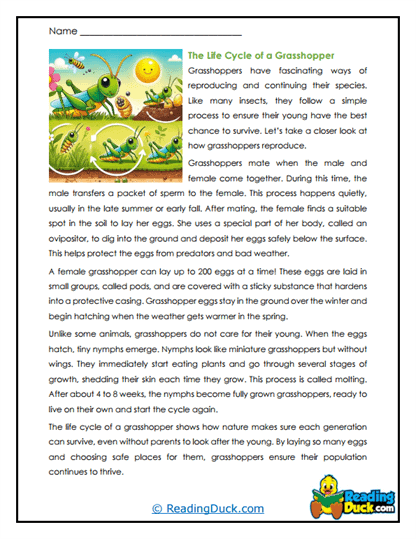
This passage explains the fascinating life cycle of a grasshopper from egg to adulthood. Students learn how female grasshoppers lay eggs in the soil and how the eggs remain protected through the winter months. The passage introduces the nymph stage and explains how young grasshoppers grow by shedding their outer skin several times before becoming adults. Readers also discover how grasshoppers continue the cycle by reproducing and laying eggs of their own. The passage highlights the importance of each stage in helping grasshoppers survive and thrive in nature.
Reading life cycle passages helps students strengthen comprehension by following step-by-step processes and understanding sequences. Students practice identifying stages, transitions, and important scientific concepts while expanding vocabulary with words such as *nymph*, *molt*, and *reproduction*. This type of nonfiction reading also encourages students to summarize information in order and recognize patterns in nature. Exposure to clear explanations and organized text structures improves both reading fluency and writing skills. These passages help students become more confident when reading scientific and informational materials independently.