
From Egg to Jumper Open Response
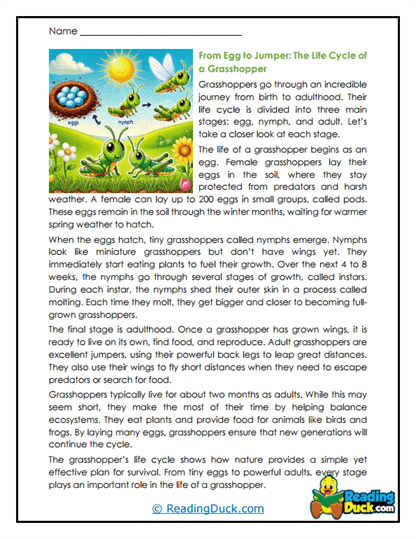
This passage walks students through the complete life cycle of a grasshopper, from tiny eggs hidden in the soil to active adult insects. Readers learn how female grasshoppers carefully lay their eggs in protected pods and how the eggs survive through the winter months. The passage explains the nymph stage and describes how young grasshoppers molt several times as they grow bigger and stronger. Students also discover how adult grasshoppers use their wings and powerful legs to survive, find food, and continue the life cycle. The text helps children understand how nature carefully supports growth and survival at every stage of life.
Reading passages about life cycles helps students strengthen sequencing and comprehension skills because they must follow events in a clear order. Students also build scientific vocabulary through words like *nymph*, *molting*, and *adulthood*. Informational texts encourage readers to summarize important ideas, identify transitions, and explain processes using evidence from the passage. These activities improve both reading fluency and writing organization. Over time, students become more comfortable reading complex nonfiction texts and explaining scientific ideas clearly and confidently.