Tiny Buzzers Open Response
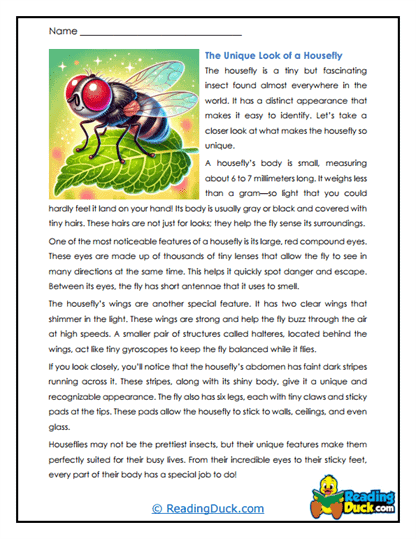
This passage takes a closer look at the physical features that make houseflies so unique. Students learn about the fly’s compound eyes, transparent wings, sticky feet, and tiny body hairs that help it survive in its environment. The text explains how houseflies use their quick reflexes and wide field of vision to escape danger and move rapidly through the air. Readers also discover how each body part serves a special purpose, helping the insect climb walls, balance during flight, and locate food. The passage highlights how even small creatures are specially designed for survival.
Passages about animal anatomy and adaptations help students practice close reading and careful observation. Students learn how to connect body structures with functions, which strengthens comprehension and analytical thinking. Rich descriptive language introduces new vocabulary and supports stronger sentence understanding. Informational reading also helps students improve their ability to explain ideas clearly using evidence from the text. Over time, this type of reading builds confidence with nonfiction materials while encouraging students to ask thoughtful questions about the natural world.