
Housefly Homes Multiple Choices
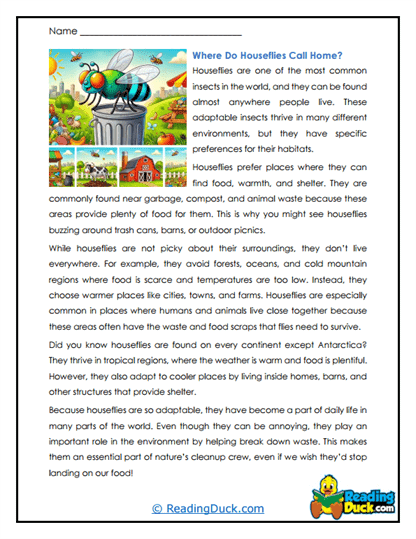
This passage explores the habitats where houseflies live and explains why they are commonly found near people. Students learn that houseflies prefer warm places with easy access to food, waste, and shelter. The passage describes how flies thrive near garbage cans, farms, compost piles, and picnic areas because these locations provide the nutrients they need to survive. Readers also discover that houseflies can adapt to many environments around the world, especially in warm climates. The text emphasizes both the adaptability of houseflies and their role in nature’s cleanup process.
Reading passages about habitats and animal survival helps students improve comprehension by connecting science concepts to real-world examples. Students practice identifying descriptive details and understanding how environments affect living things. Exposure to vocabulary such as adaptable, habitat, and environment strengthens language development and reading fluency. Informational texts also help students organize ideas, compare examples, and explain scientific concepts more clearly. These passages encourage curiosity and help students grow into thoughtful, confident readers of nonfiction text.