
Night Pollinators Open Response
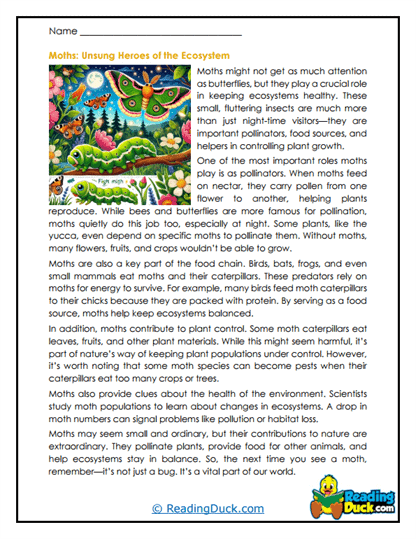
This passage explains the important role moths play in ecosystems and why they are often called unsung heroes of nature. Students learn that moths help pollinate flowers while feeding on nectar, especially plants that bloom at night. The text also describes how moths serve as an important food source for birds, bats, frogs, and other animals. Readers discover that caterpillars help control plant growth and that scientists use moth populations to study environmental health. The passage emphasizes that although moths are often overlooked, they are essential contributors to balanced ecosystems.
Reading passages about ecosystems and animal roles helps students strengthen comprehension and analytical thinking skills. Students practice identifying main ideas, supporting details, and cause-and-effect relationships within informational texts. Vocabulary words such as pollination, ecosystem, and predators help expand scientific understanding and language development. As students summarize and explain ideas from the text, they improve fluency, organization, and communication skills. These readings encourage thoughtful discussion while helping children become stronger nonfiction readers.