
Moonlight Meals
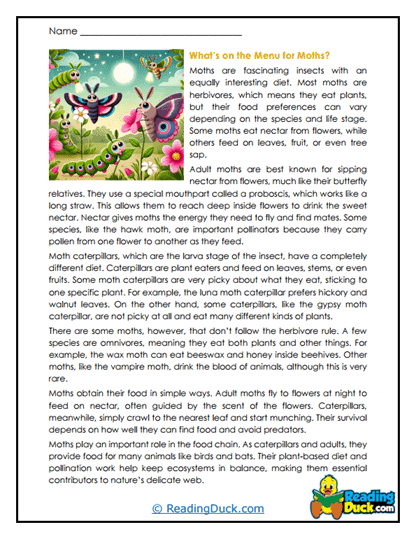
This passage explains the feeding habits of moths and shows students how these nighttime insects survive in different stages of life. Readers learn that most adult moths feed on nectar using a long tube-like mouthpart called a proboscis, while caterpillars mainly eat leaves, stems, and other plant materials. The text also explains how some moth species have unusual diets, including feeding on fruit, tree sap, or even beeswax. Students discover that moths play an important role in pollination as they move from flower to flower searching for food. The passage highlights how feeding behaviors help moths survive while also supporting ecosystems.
Reading passages about animal diets and survival helps students strengthen comprehension and analytical thinking skills. Students practice identifying cause-and-effect relationships and understanding how body structures connect to behavior. Informational texts also build vocabulary through words such as proboscis, nectar, and pollination. As students summarize and explain ideas from the text, they improve fluency, organization, and communication skills. These reading experiences encourage curiosity and help children become stronger readers of nonfiction text.
Questions:
Answer Keys: