
Moonlight Messages Multiple Choices
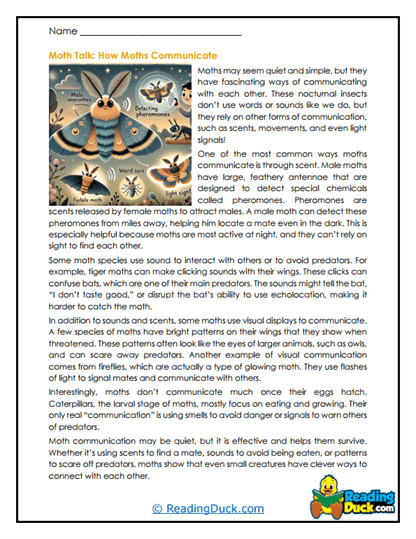
This passage explores the fascinating ways moths communicate with one another. Students learn that moths rely heavily on scents called pheromones to attract mates, especially because many species are active at night when vision is limited. The text also explains how some moths produce clicking sounds or use body patterns and movements to warn predators or confuse bats. Readers discover that certain moths use bright wing patterns as a defense mechanism while others communicate through vibrations and scent trails. The passage shows students that even quiet nighttime insects have advanced methods of interaction and survival.
Reading passages about communication and animal behavior helps students improve close-reading and analytical thinking skills. Students practice identifying important details and understanding how specific behaviors help animals survive. Informational texts also strengthen vocabulary development through words related to behavior, defense, and interaction. As students explain how moths communicate, they improve speaking, writing, and comprehension skills. These readings encourage thoughtful observation while helping children become more confident readers of nonfiction text.