
Bottom Feeders Multiple Choices
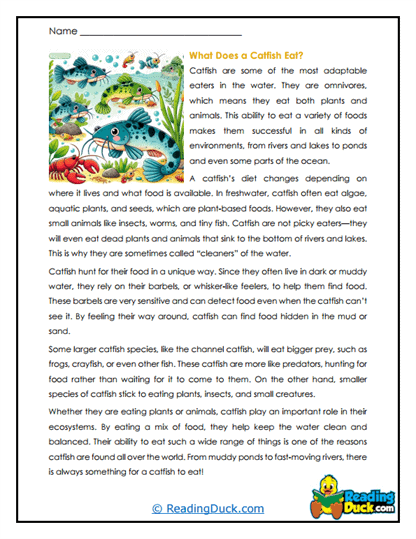
Catfish are flexible eaters, and this passage gives students a closer look at the wide variety of foods they can find in rivers, lakes, ponds, and other aquatic habitats. Readers learn that catfish are omnivores, feeding on plants, insects, worms, crustaceans, small fish, and other available food sources. The passage explains how their sensitive barbels help them locate meals in dark or muddy water and how larger species may actively hunt frogs, crayfish, or other fish. Students see that this broad diet helps catfish survive in many different environments and also influences the balance of the ecosystems where they live.
This worksheet helps students practice identifying supporting details and connecting feeding behavior with survival. They build vocabulary related to omnivores, crustaceans, prey, barbels, and aquatic food chains while working through clear cause-and-effect relationships. The passage also encourages students to think about how an animal’s diet can change depending on habitat and body size. It’s a strong nonfiction reading for helping children understand that feeding habits are closely tied to adaptation and ecosystem roles.