
Daily Rhythms Multiple Choices
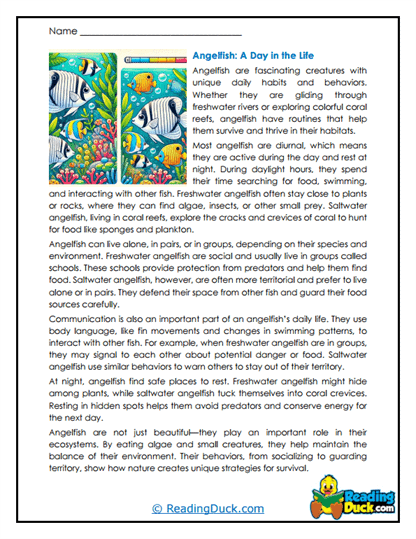
This passage gives students a look at what angelfish do throughout a typical day. Readers learn that most angelfish are active during daylight hours, spending time searching for food, swimming through reefs or plants, communicating with other fish, and guarding their space. The passage also shows how freshwater and saltwater angelfish can behave differently depending on their surroundings and social habits. By nighttime, these fish slow down and rest in sheltered areas where they can stay protected.
Reading about daily animal behavior gives students helpful practice with sequencing, routines, and comparing patterns. They learn to notice how behavior changes depending on time of day, habitat, and species. This kind of passage also supports stronger summarizing because students have to decide which daily activities are most important to the bigger picture.