
Daily Routines Open Response
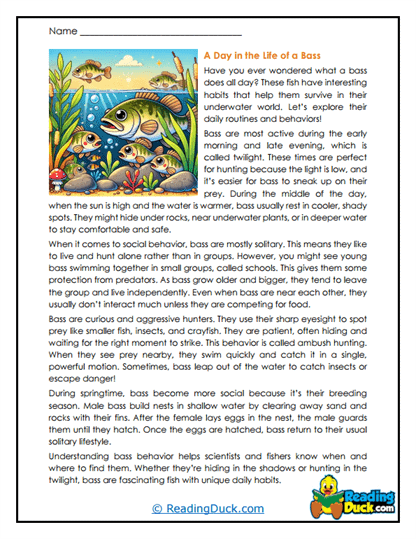
This passage gives students a look at the everyday habits that help bass survive in freshwater environments. Readers learn that bass are often most active during the early morning and late evening, when cooler temperatures and lower light make it easier to hunt. The text also explains how bass spend hotter parts of the day resting near plants, rocks, or deeper water, and how their behavior can change during the spring breeding season. Students discover that young bass may gather in small groups, while adults are usually more solitary and territorial.
Reading about daily animal behavior gives students useful practice with sequencing, patterns, and comparisons. They learn to organize details by time of day and season while also noticing how age can affect behavior. Vocabulary connected to territory, spawning, shelter, activity, and hunting strengthens science knowledge in context. For parents, this is a nice example of how a familiar animal topic can help students become more careful and organized nonfiction readers.