
Egg Guardians
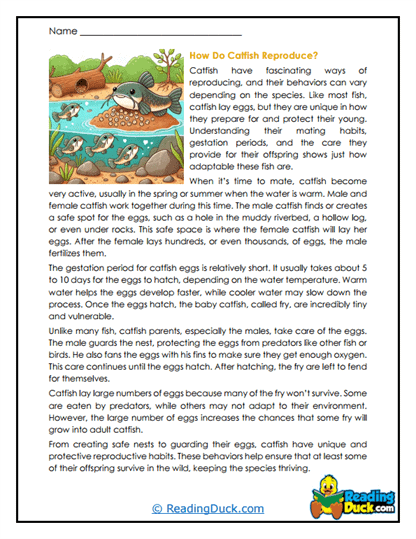
Catfish reproduction is especially interesting because some species show careful parental behavior after the eggs are laid. This passage explains how males and females come together during the breeding season, how nests are created in protected spaces, and how females may lay thousands of eggs at one time. Readers learn that male catfish often remain near the nest, guarding the eggs from predators and helping keep oxygen-rich water moving around them. The passage also explains that many eggs may not survive, which is one reason producing large numbers of offspring is so important.
This worksheet gives students strong practice with sequencing and process-based comprehension. They follow reproduction from nest building to egg laying, guarding, hatching, and early development while learning why each stage matters. Vocabulary such as breeding season, fertilization, nest, eggs, and fry helps build scientific literacy in a meaningful context. The passage also supports cause-and-effect thinking by showing how parental care can improve the chances that young catfish survive.
Questions:
Answer Keys: