
Flowing Colors Multiple Choices
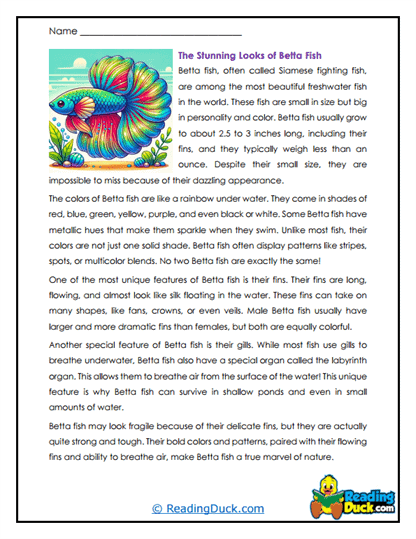
One of the first things students notice about a betta fish is its spectacular appearance, and this passage takes a much closer look at what makes these fish so distinctive. Readers explore the wide range of red, blue, green, yellow, purple, metallic, and multicolored patterns bettas can display, along with the many shapes their flowing fins can take. The passage also explains differences between males and females and introduces the labyrinth organ, a special structure that allows bettas to breathe air from the surface. Students discover that the betta’s beauty is matched by several physical adaptations that help it survive in shallow freshwater environments.
Reading about physical characteristics gives students valuable practice connecting structure with function. Rather than simply noticing that a betta has large fins or a special breathing organ, children begin asking what those features actually allow the fish to do. Descriptive vocabulary supports visualization, while comparisons between males and females strengthen close-reading skills. This worksheet is especially useful for helping students move from identifying facts to explaining why particular animal features matter.