
Tiny Explorers Short Answer
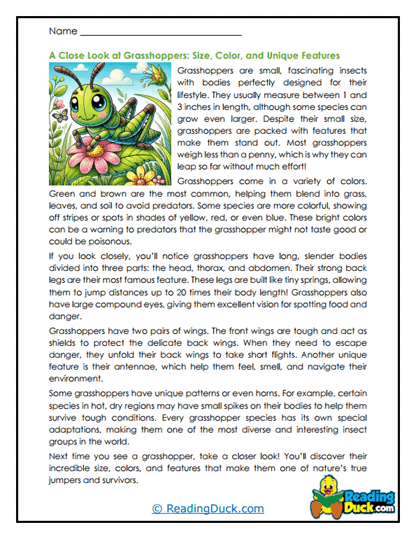
This passage takes a deeper look at the physical features of grasshoppers and explains how their bodies are perfectly designed for survival. Students learn about the different parts of a grasshopper’s body, including its thorax, abdomen, wings, and antennae. The passage describes how grasshoppers use camouflage to stay safe and how their powerful back legs allow them to leap long distances. It also explains how some species develop horns, spikes, or bright colors for protection. The text encourages students to observe insects carefully and appreciate the many adaptations found in nature.
Passages like this help students grow as thoughtful readers and observers. Children expand their scientific vocabulary while learning how authors organize information using description and explanation. They practice identifying cause-and-effect relationships, such as how a grasshopper’s body structure helps it survive. Informational texts also strengthen close-reading skills because students must pay attention to details and compare ideas across paragraphs. Over time, this type of reading improves comprehension, critical thinking, and confidence when approaching more advanced nonfiction material.