
Daily Hopper
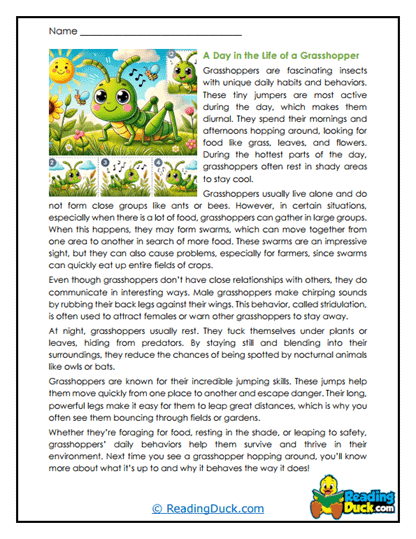
This passage gives readers a glimpse into a typical day in the life of a grasshopper. Students learn that grasshoppers are active during the daytime and spend much of their time searching for food, resting in shady areas, and avoiding predators. The passage explains how grasshoppers sometimes travel in large swarms and how they communicate using sounds created by rubbing their legs against their wings. Readers also discover how grasshoppers protect themselves at night and use their powerful jumping abilities to escape danger. The text paints a lively picture of how these insects survive and adapt throughout each day.
Passages that focus on daily animal behaviors help students practice sequencing and understanding chronological order. Students improve their ability to track events and explain routines using clear details from the text. Reading about animal behavior also introduces descriptive vocabulary and action verbs that strengthen language development. Informational texts like this build comprehension skills because students must connect behaviors to survival and adaptation. As students discuss and summarize what they learn, they become stronger readers, thinkers, and communicators.
Questions:
Answer Keys: