
Predator Problems Short Answer
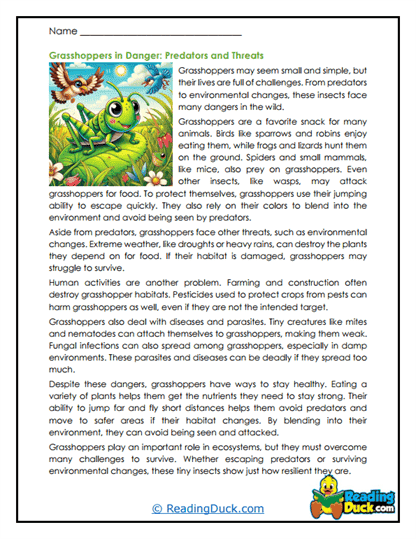
This passage explains the many dangers grasshoppers face in the wild and how they work hard to survive. Students learn about the predators that hunt grasshoppers, including birds, frogs, spiders, and small mammals. The passage also discusses environmental threats such as droughts, habitat loss, pesticides, parasites, and disease. Readers discover how grasshoppers protect themselves using camouflage, quick jumping abilities, and strong survival instincts. Even though grasshoppers face many challenges, the passage emphasizes their resilience and important role in keeping ecosystems balanced.
Reading passages about survival and environmental challenges helps students strengthen comprehension and analytical thinking. Students practice identifying problems and solutions while connecting ideas across paragraphs. Exposure to rich nonfiction vocabulary supports stronger language development and improves understanding of science concepts. Informational texts also teach students how authors organize facts and explanations clearly. By reading about real-world animal struggles, students become better at drawing conclusions, summarizing information, and thinking critically about the natural world.