
Growing Fry Multiple Choices
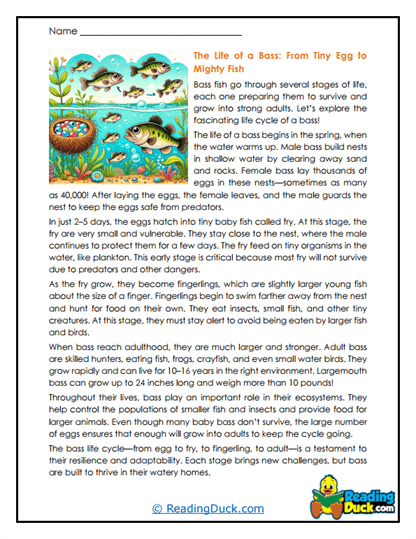
This passage follows bass through the different stages of life, beginning with tiny eggs and continuing through fry, fingerlings, and adulthood. Students learn how newly hatched bass stay close to the nest at first, feeding on very small organisms before gradually becoming stronger and more independent. As they grow, their diet changes, their swimming improves, and they begin hunting larger prey. The passage also explains that many young bass do not survive to adulthood, which is why producing large numbers of eggs is so important for the species.
This worksheet gives students excellent practice with sequencing and life-cycle comprehension. They work on putting stages in order, identifying how the fish changes over time, and connecting growth with changes in diet and behavior. Vocabulary such as fry, fingerling, juvenile, predator, and life cycle strengthens science understanding through context. It’s also a useful passage for helping students summarize a process from beginning to end.