
Aphid Chasers Short Answer
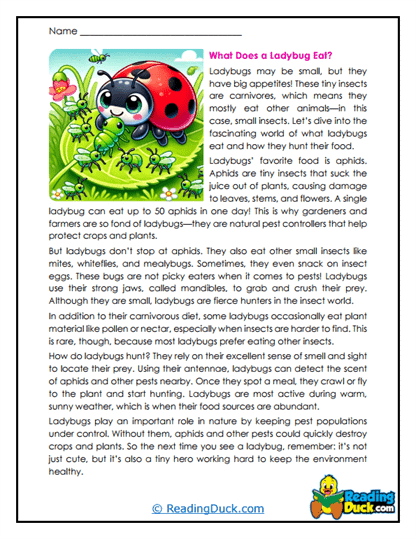
This passage explains the eating habits of ladybugs and shows students why these tiny insects are considered helpful predators in gardens and farms. Readers learn that ladybugs mainly feed on aphids, which are harmful insects that damage plants by sucking out their juices. The passage also describes how ladybugs hunt using their strong senses and sharp mouthparts to catch and eat pests. Students discover that ladybugs sometimes eat mites, whiteflies, and even pollen or nectar when insects are harder to find. The text highlights the important role ladybugs play in protecting crops and keeping ecosystems balanced.
Reading passages about animal diets and survival strengthens students’ comprehension and analytical thinking skills. Students practice identifying cause-and-effect relationships, such as how predators help control pest populations. Informational texts also expand vocabulary with words like carnivores, aphids, and ecosystem. As students summarize and explain scientific ideas, they improve fluency, organization, and communication skills. These types of passages encourage curiosity while helping students become stronger and more confident readers of nonfiction texts.