Garden Guardians Open Response
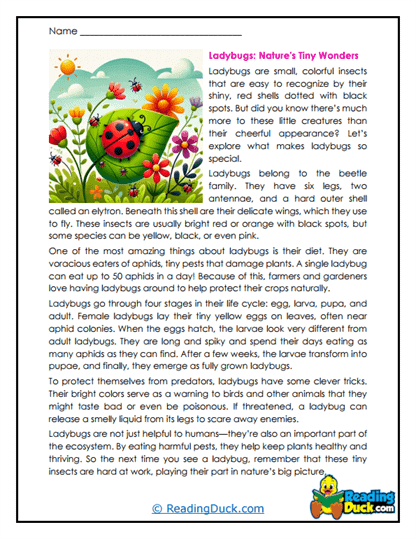
This passage introduces students to the fascinating world of ladybugs and explains why these tiny insects are so important in nature. Readers learn about the physical features of ladybugs, including their colorful shells, delicate wings, and spotted patterns. The passage also explains how ladybugs help farmers and gardeners by eating harmful pests like aphids that damage plants and crops. Students discover the stages of the ladybug life cycle and learn how these insects protect themselves from predators using bright warning colors and special defense methods. The text encourages children to appreciate how even the smallest creatures can make a big difference in the environment.
Reading passages like this helps students strengthen nonfiction comprehension and vocabulary skills while building curiosity about science and nature. Students practice identifying main ideas and supporting details while learning academic words such as elytron, larva, and predators. Informational texts also help students improve summarizing, sequencing, and critical thinking skills. As children discuss and explain what they read, they become more confident readers and communicators. These engaging science-based passages encourage students to connect reading with the real world around them.