
Nocturnal Neighbors Open Response
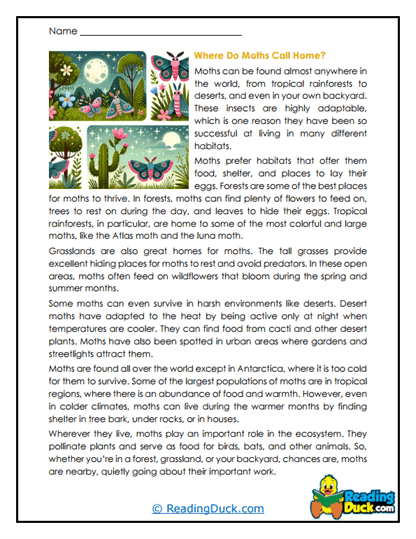
This passage explores the many habitats where moths live and explains how adaptable they are in different environments. Students learn that moths can be found in forests, grasslands, deserts, tropical rainforests, and even neighborhoods and gardens. The text describes how moths choose habitats that provide food, shelter, and safe places to lay eggs. Readers also discover how some moths survive in harsh climates by becoming active at cooler nighttime temperatures. The passage emphasizes that moths are found almost everywhere on Earth and quietly play important roles in ecosystems around the world.
Reading passages about habitats and survival helps students strengthen comprehension by connecting scientific concepts to real-world examples. Students practice identifying descriptive details and understanding how environments affect living things. Informational texts also expand vocabulary through words such as habitat, adaptable, and tropical. As students compare environments and explain survival strategies, they improve organization, fluency, and critical thinking skills. These types of readings encourage curiosity while helping children become more confident readers of nonfiction text.