
Night Dangers Open Response
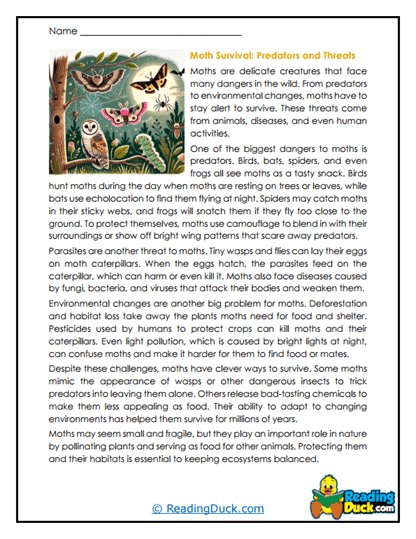
This passage explains the many dangers moths face in the wild and how they protect themselves from predators and environmental threats. Students learn that birds, bats, spiders, frogs, and wasps all hunt moths and caterpillars for food. The text also discusses challenges caused by habitat loss, pollution, pesticides, and climate changes that affect moth populations. Readers discover how moths use camouflage, warning colors, and chemical defenses to stay safe from predators. The passage emphasizes that although moths may seem delicate, they have developed many clever survival strategies over time.
Reading passages about survival and environmental challenges helps students strengthen comprehension and critical thinking skills. Students practice identifying problems and solutions while connecting ideas across multiple paragraphs. Exposure to rich nonfiction vocabulary supports stronger language development and scientific understanding. Informational reading also teaches students how to analyze details, summarize key ideas, and explain cause-and-effect relationships clearly. These passages help students become stronger readers while encouraging them to think more deeply about how animals adapt and survive in nature.