
Shallow Waters Short Answer
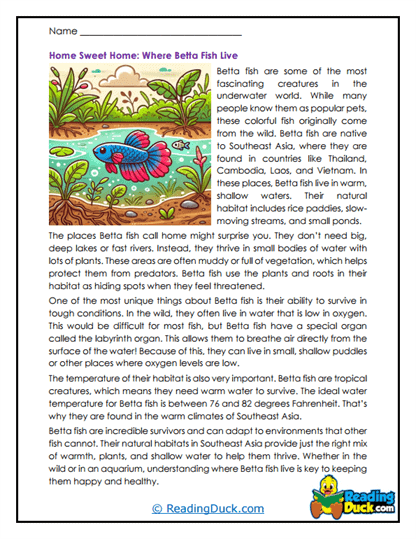
Wild betta fish come from environments that may look very different from the aquariums where many children see them today. This passage takes students into the warm, shallow waters of Southeast Asia, where bettas can be found in rice paddies, ponds, slow-moving streams, and other plant-filled habitats. Readers learn how vegetation provides hiding places and protection while muddy, low-oxygen water creates conditions that many other fish would struggle to tolerate. The passage explains how the betta’s labyrinth organ allows it to breathe directly from the surface, making it especially well suited for these challenging habitats.
This worksheet helps students make an important connection between habitat and adaptation. Children practice identifying environmental conditions and then determining which physical features or behaviors help the fish survive there. Vocabulary surrounding habitats, oxygen levels, shallow water, vegetation, and adaptation strengthens both science understanding and nonfiction reading. For parents, it’s a good example of how comprehension grows when students are encouraged to connect separate facts rather than simply remember them.