
Smooth Swimmers Multiple Choices
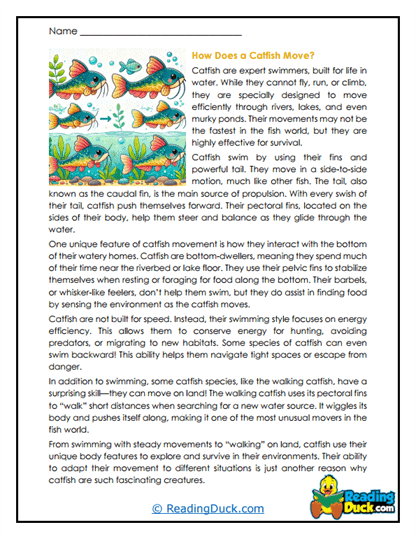
Catfish are built for efficient movement through rivers, lakes, and muddy bottom habitats. This passage explains how they use their tails and fins to move forward, steer, balance, and maneuver through tight spaces. Readers also learn that many catfish spend much of their time close to the bottom, using their barbels to help navigate and locate food, while some species have unusual abilities such as moving short distances on land. The reading shows how their swimming style is less about speed and more about control, energy conservation, and survival.
This worksheet helps students connect anatomy with movement and function. They practice identifying which body parts help with steering, balance, propulsion, and navigation while visualizing how catfish move through different environments. Vocabulary related to fins, propulsion, balance, bottom-dwelling behavior, and movement develops naturally through the text. It’s especially useful for helping students explain how an animal’s body design supports the way it lives.