Tiny Beginnings Open Response
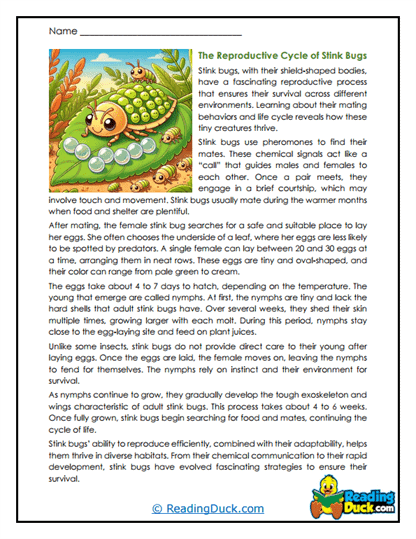
This passage explains how stink bugs reproduce and develop through their life cycle. Readers learn that stink bugs use chemical signals called pheromones to locate mates and begin the reproductive process. The text describes how females carefully lay clusters of eggs on the undersides of leaves where they will be protected from predators. Students discover that young stink bugs hatch as nymphs, which resemble small adults but must molt several times before reaching maturity. The passage highlights how the stink bug’s life cycle is carefully designed to help the species survive and thrive in a variety of environments.
Reading passages about life cycles helps students strengthen sequencing and comprehension skills because they must follow stages in the correct order. Students build scientific vocabulary through words such as pheromones, nymph, and reproduction. Informational texts also help students recognize patterns, summarize important ideas, and explain scientific processes clearly. These reading experiences improve fluency, organization, and critical thinking while helping children feel more confident reading nonfiction science passages independently.